
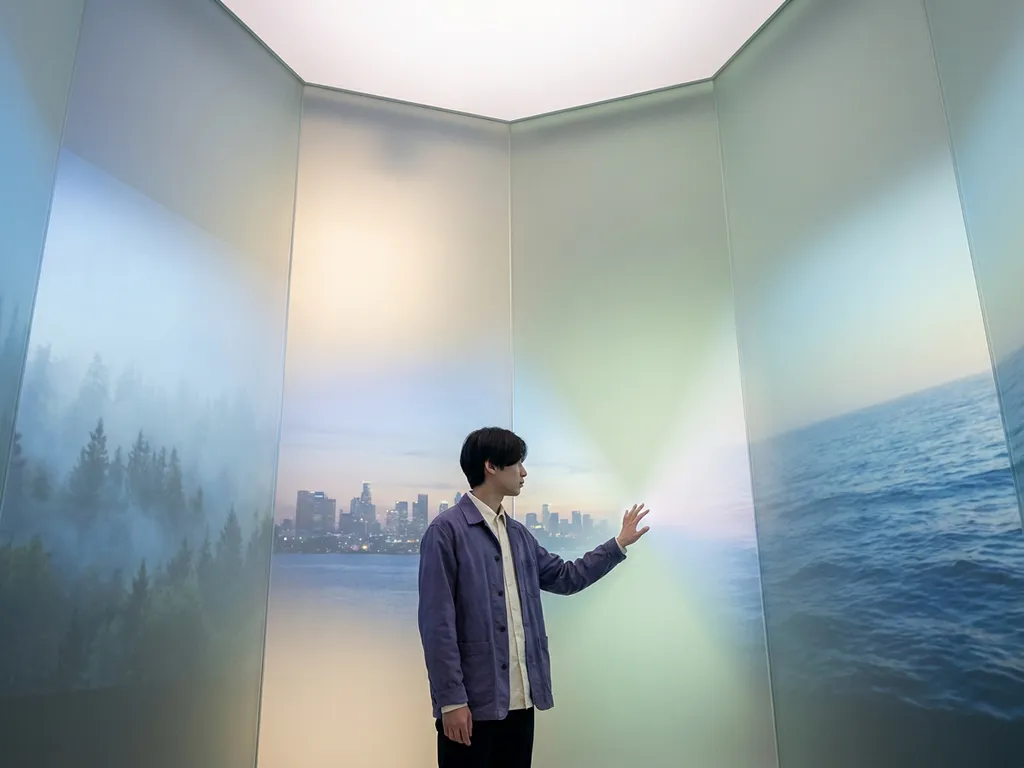
Immersive learning delivers significantly better knowledge retention, deeper engagement, and stronger empathy than traditional instruction methods. By placing learners inside experiences rather than in front of content, it activates multiple senses simultaneously, which is how the brain encodes memories most durably. The questions below unpack exactly how this works, who benefits most, and how organisations can measure and scale it.
How does immersive learning actually improve knowledge retention?
Immersive learning improves knowledge retention by engaging multiple sensory and cognitive channels at once. When a learner sees, hears, and physically interacts with content in a spatially coherent environment, the brain forms richer, more interconnected memory traces. Research in cognitive science consistently shows that multisensory encoding produces stronger recall than passive reading or viewing alone.
The underlying mechanism relates to what learning scientists call the forgetting curve. Without reinforcement, people forget a large proportion of new information within days. Immersive experiences counteract this by creating emotional and sensory anchors that make memories easier to retrieve. A learner who has virtually stepped inside a historical event, or navigated a simulated crisis scenario, remembers that experience the way they remember lived events, not the way they remember a slide deck.
There are several specific reasons why this works so effectively:
- Active participation: Learners make decisions, solve problems, and experience consequences rather than absorbing information passively.
- Emotional resonance: Experiences that generate genuine emotion, whether curiosity, surprise, or empathy, are encoded more deeply in long-term memory.
- Contextual learning: Knowledge acquired in a realistic context is easier to apply in real-world situations because the retrieval cues are richer.
- Immediate feedback loops: Interactive environments can respond to learner choices in real time, reinforcing correct understanding and correcting misconceptions on the spot.
This is why organisations in education, healthcare, and professional training are increasingly replacing static e-learning modules with VR simulations, AR-enhanced environments, and interactive spatial experiences. The investment in production quality pays back in measurably stronger learning outcomes.
What types of learners benefit most from immersive learning?
Immersive learning benefits a wide range of learner types, but it delivers the most pronounced gains for learners who struggle with abstract concepts, those who are disengaged by traditional instruction, and those who need to practise high-stakes skills in a safe environment. It is particularly powerful for visual, kinaesthetic, and experiential learners who rarely thrive in text-heavy formats.
That said, the advantages are not limited to one profile. Consider the following groups:
- Disengaged or reluctant learners: Young people who have tuned out of conventional classroom formats often re-engage sharply when learning becomes interactive and spatial. The novelty of the medium lowers resistance and raises intrinsic motivation.
- Professionals in high-stakes fields: Surgeons, emergency responders, engineers, and social workers all benefit from being able to practise complex procedures or difficult conversations in a consequence-free virtual environment before facing them in reality.
- Learners with diverse learning styles: Because immersive environments can engage sight, sound, touch, and spatial reasoning simultaneously, they naturally accommodate a broader spectrum of learning preferences than any single-channel medium.
- Learners with language or literacy barriers: Spatial and visual storytelling can convey meaning powerfully without depending on fluent reading, making immersive formats particularly inclusive.
AI-driven personalisation extends these benefits further. An immersive experience can adapt its pace, language, difficulty level, or narrative path based on individual learner responses, meaning the same environment can serve a novice and an advanced learner without either feeling under-challenged or overwhelmed.
How does immersive learning build empathy and perspective-taking?
Immersive learning builds empathy by placing learners literally inside another person’s perspective, physically inhabiting a different body, environment, or life situation. This embodied form of perspective-taking is fundamentally more powerful than reading about someone’s experience or watching a documentary, because the brain processes the simulated experience as something that happened to the learner, not something observed from a distance.
This is one of the most significant and distinctive benefits of immersive experiences, and it has profound implications for education, social awareness campaigns, and organisational training. When a learner puts on a VR headset and navigates a refugee camp, experiences age-related sensory decline, or witnesses a climate scenario from the inside, the emotional response is visceral and personal. That emotional engagement translates directly into attitude shifts and behavioural change in ways that statistics and reports rarely achieve.
The mechanism works on several levels:
- Embodied cognition: Moving through a simulated space activates the same neural pathways as physical movement, making the experience feel real rather than representational.
- Reduced psychological distance: Abstract social issues, whether poverty, discrimination, or environmental destruction, become immediate and personal rather than remote and theoretical.
- Narrative immersion: Strong spatial storytelling sustains emotional engagement over time, allowing empathy to deepen rather than fade as it often does with passive media.
This is why NGOs, human rights organisations, and public health campaigns have embraced immersive formats as tools for genuine behaviour change. The goal is not to inform, but to transform how people feel and what they choose to do next.
What’s the difference between immersive learning and traditional e-learning?
The core difference between immersive learning and traditional e-learning is the degree of learner agency and sensory engagement. Traditional e-learning is primarily screen-based and linear: the learner reads, watches, or clicks through content. Immersive learning places the learner inside a spatially coherent environment where they make meaningful choices, experience consequences, and engage multiple senses simultaneously.
This distinction matters because passive consumption and active participation produce fundamentally different learning outcomes. In traditional e-learning, the learner is an audience member. In an immersive learning experience, they are a participant whose actions shape the unfolding scenario.
Engagement and motivation
Traditional e-learning often struggles with completion rates and sustained attention, particularly for complex or emotionally demanding subject matter. Immersive formats maintain engagement because the environment responds to the learner, creating a feedback loop that keeps attention active. The sense of presence, of genuinely being somewhere rather than watching it, is intrinsically motivating in a way that a scrollable webpage is not.
Depth of learning and transferability
E-learning tends to be effective for knowledge transfer at a surface level: facts, procedures, compliance requirements. Immersive learning excels at deeper competency development, including judgement, emotional intelligence, situational awareness, and complex decision-making. Because the learning happens in a simulated real-world context, the skills transfer more readily to actual performance.
This does not mean immersive learning replaces e-learning in every situation. For straightforward information delivery or broad-reach onboarding, well-designed digital modules remain efficient and cost-effective. The strongest learning programmes typically blend both, using immersive experiences where depth, empathy, or behavioural change is the goal.
Can immersive learning be scaled across large groups or institutions?
Yes, immersive learning can be scaled effectively across large groups and institutions, but it requires deliberate design choices from the outset. Scalability depends on the technology format chosen, the deployment model, and how the experience is integrated into existing learning infrastructure.
Several approaches make large-scale deployment practical:
- Shared VR cinema formats: Synchronised headset experiences allow groups of up to 200 participants to share the same immersive journey simultaneously, making them suitable for assemblies, conferences, and large training cohorts.
- AR on personal devices: Augmented reality experiences delivered via smartphone or tablet require no specialist hardware and can reach thousands of users with a single deployment.
- Modular content architecture: Building experiences as modular units means content can be updated, localised, or extended without rebuilding from scratch, reducing the cost per learner over time.
- AI-driven personalisation at scale: Intelligent systems can adapt the experience for each individual learner within a shared framework, meaning a single environment serves diverse audiences without requiring bespoke versions for each group.
Institutional scalability also depends on integration with existing learning management systems, teacher or facilitator training, and ongoing technical support. The most successful large-scale deployments treat immersive technology not as a standalone novelty but as a core component of a broader educational or training programme.
How do you measure the impact of immersive learning experiences?
The impact of immersive learning is measured across three primary dimensions: knowledge acquisition, behavioural change, and emotional or attitudinal shift. Effective measurement requires defining success criteria before the experience is built, then using a combination of quantitative data and qualitative insight to assess outcomes against those benchmarks.
Practical measurement methods include:
- Pre- and post-assessments: Testing knowledge or attitudes before and after the experience provides a direct measure of learning gain and perspective change.
- Behavioural observation: For training applications, observing whether learners apply new skills in real-world settings is the most meaningful measure of transfer.
- In-experience analytics: Interactive environments can capture decision paths, time spent on specific elements, and response patterns, generating rich data about how learners engage with content.
- Longitudinal follow-up: Checking retention at 30, 60, or 90 days after the experience reveals whether immersive learning produces durable change or only short-term recall.
- Qualitative feedback: Structured reflection, facilitated discussion, and open-ended surveys capture the emotional and narrative dimensions of impact that quantitative data alone cannot reveal.
The most meaningful impact metrics align directly with the original learning objectives. For an empathy-focused experience, attitudinal surveys and narrative self-reports matter most. For a skills-based training simulation, performance data and error rates in subsequent real-world tasks are the primary indicators. Measuring immersive learning well is not about choosing one method but about combining the right tools to build a complete picture of what changed and why.
If you are exploring how immersive learning could transform your educational programme, training curriculum, or public awareness campaign, we would be glad to help you design an experience built for genuine impact. Reach out through our contact page to start the conversation.
Gerelateerde artikelen
- How to make an interactive exhibit?
- How do interactive museums engage visitors?
- What are the 5 dimensions of experiential marketing?
- How does virtual reality impact society?
- What are examples of immersive technology?
- How do you align immersive experiences with brand identity?
- What are the benefits of immersive installations for brands?
- How much do immersive installations cost?
- What kind of computer do I need for 3D modeling?