
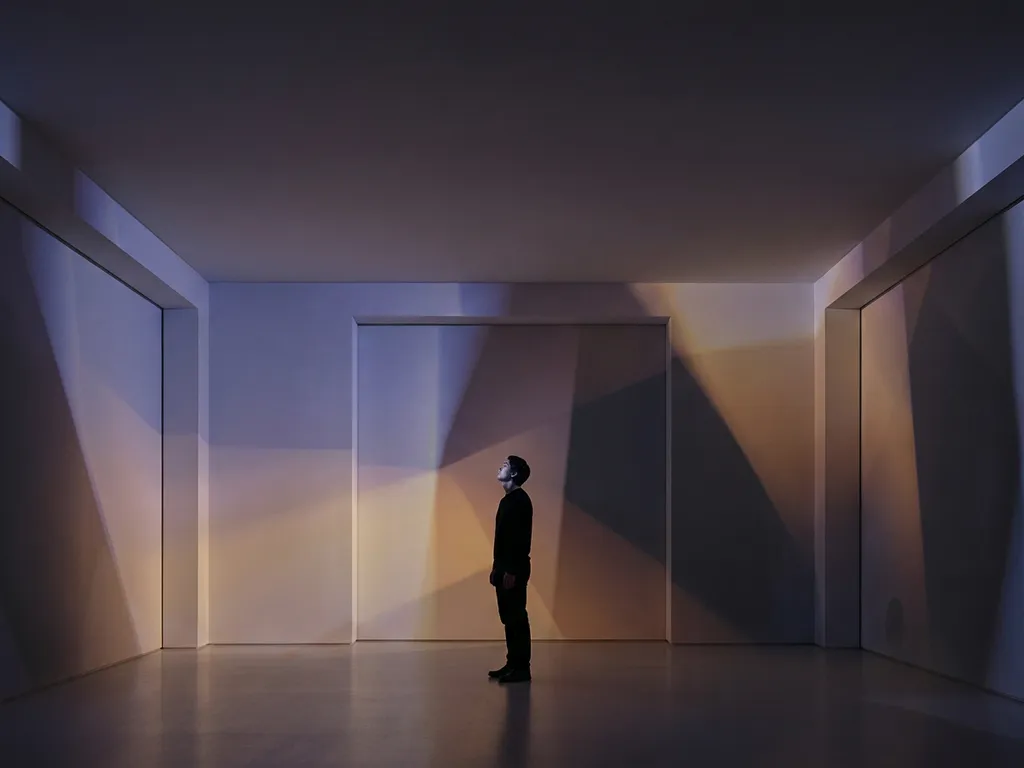
An immersive experience is one that surrounds participants in a multisensory environment, drawing them into a story, space, or scenario so completely that passive observation gives way to active presence. Unlike watching a screen or reading a page, immersive experiences engage sight, sound, touch, smell, and movement simultaneously, creating a state of deep psychological and emotional involvement. The sections below unpack what makes these experiences work, what technologies drive them, and how organizations across education, culture, and marketing are putting them to use.
How do immersive experiences differ from traditional media?
Traditional media delivers content to an audience; immersive experiences place the audience inside the content. Where a film asks viewers to watch a story unfold on a flat screen, an immersive experience asks them to inhabit it, make decisions within it, and feel its consequences. This shift from observation to participation is the defining distinction, and it fundamentally changes how information and emotion are processed.
Traditional media is linear and one-directional. A billboard, a television advertisement, or a printed brochure delivers a fixed message regardless of who receives it. The audience remains external to the content, consuming it from a distance. Immersive experiences invert this relationship entirely. The participant becomes a presence within the environment, and the environment responds to them.
This difference matters because engagement is not simply a matter of attention span. When a person physically moves through a space, interacts with objects, or makes choices that alter what happens next, their brain processes the experience differently than it would a passive broadcast. The emotional stakes feel real. Memory formation deepens. And the message, whether it is a brand story, a historical lesson, or a social cause, becomes something the audience has lived rather than merely witnessed.
What technologies power immersive experiences?
Immersive experiences are built on a layered stack of technologies that work together to create environments where the digital and physical worlds merge. The core technologies include virtual reality, augmented reality, mixed reality, spatial audio, real-time rendering engines, and increasingly, artificial intelligence. Together these form what the industry calls extended reality, or XR.
Virtual reality and augmented reality
Virtual reality places the user inside a fully digital environment through a headset that blocks out the physical world entirely. It is ideal for simulations, training scenarios, and narrative experiences where total environmental control matters. Augmented reality, by contrast, overlays digital content onto the real world through a smartphone, tablet, or AR glasses. This makes it highly accessible for public-facing activations, museum enhancements, and outdoor campaigns where participants keep their physical surroundings.
Mixed reality and spatial computing
Mixed reality sits between VR and AR. It allows digital objects to interact with the physical environment in real time, anchoring virtual elements to real surfaces and responding to real-world movement. Devices like the Apple Vision Pro represent the leading edge of this category, enabling what is now called spatial computing: a mode of interaction where digital content exists as a natural extension of the space around you. This technology opens new possibilities for product visualization, collaborative design, and next-generation visitor experiences.
Real-time rendering and multisensory hardware
Platforms like Unreal Engine and Unity allow developers to build photorealistic environments that respond to user input in real time. Beyond visuals, immersive experiences increasingly incorporate spatial audio systems, haptic feedback, scent diffusion, and environmental controls such as temperature and airflow. A 360-degree dome projection, for instance, can combine panoramic visuals with synchronized sound and scent to create a fully enveloping sensory environment. These physical layers are what elevate an experience from impressive to genuinely unforgettable.
Why do immersive experiences increase user engagement?
Immersive experiences increase engagement because they activate more of the brain simultaneously than any single-channel medium can. When multiple senses are engaged at once, the brain encodes the experience more deeply, making it easier to recall and more emotionally significant. This is not a design preference; it reflects how human memory and emotion actually work.
Research into learning and memory consistently shows that people retain far more from experiences they actively participate in than from content they passively consume. This is sometimes framed through the concept of the forgetting curve, which describes how rapidly information fades when it is not reinforced through meaningful context or emotional connection. Multisensory, participatory experiences counteract this by creating multiple memory anchors at once.
There is also an agency effect at work. When participants make choices that influence what happens next, they invest emotionally in the outcome. This sense of agency drives attention, sustains motivation, and creates a personal connection to the material that passive media simply cannot replicate. For brands, this translates into stronger recall and loyalty. For educators, it means concepts that once required weeks of repetition can be understood and retained after a single session. For NGOs and public campaigns, it means the difference between a message that is heard and one that genuinely changes behavior.
What types of immersive experiences exist?
Immersive experiences span a wide spectrum, from fully digital virtual environments to physical installations that blend technology with tangible space. The right type depends on the audience, the message, the budget, and the context in which the experience will be delivered.
- Virtual reality experiences range from passive 360-degree cinematic films to fully interactive simulations where users navigate, make decisions, and engage with characters in real time.
- Augmented reality activations layer digital content over the physical world, used in everything from product launches and museum exhibits to outdoor city campaigns and children’s books.
- Mixed reality installations blend physical and digital elements so that virtual objects coexist with real space, enabling new forms of collaborative and spatial interaction.
- Interactive 360-degree domes project panoramic content across an entire enclosed space, accommodating audiences from small groups to thousands of visitors at once.
- 4D cinema environments add physical sensations such as scent, heat, movement, and airflow to audiovisual content, creating full-body immersion.
- AI-driven avatars and NPCs are virtual characters capable of holding real-time conversations, used in brand activations, educational simulations, and visitor guidance.
- Geospatial AR anchors digital content to precise geographic coordinates, enabling location-based storytelling without QR codes or physical markers.
Each format carries its own strengths. The most powerful immersive experiences often combine several of these elements, using physical space, digital content, and sensory hardware in concert to create something that could not exist in any single medium alone.
Where are immersive experiences most effectively used?
Immersive experiences deliver their strongest results in contexts where emotional connection, behavioral change, or deep understanding is the goal. Four sectors consistently demonstrate the highest impact: education, cultural institutions, brand marketing, and social impact campaigns.
In education, immersive learning environments allow students to explore concepts that are otherwise abstract or inaccessible. A student studying climate science can stand inside a melting glacier. A medical trainee can practice a procedure in a risk-free virtual environment. Learning that would previously require expensive field trips, physical models, or years of accumulated experience becomes accessible, repeatable, and measurable.
Museums and cultural institutions use immersive technology to breathe new life into collections and attract younger, more digitally native audiences. AR layers added to physical artworks reveal hidden details, historical context, or alternative interpretations. VR portals transport visitors to the time and place an artifact was created. These additions do not replace the original work; they deepen the encounter with it.
For brands, immersive activations create the kind of memorable, shareable moments that traditional advertising cannot manufacture. A product launch that places participants inside the brand’s world generates genuine emotional associations and social amplification. For NGOs and government communicators, immersive formats allow complex social issues, such as poverty, displacement, and environmental degradation, to be felt rather than simply reported, generating the empathy that drives real behavior change.
How does AI personalization change immersive experiences?
AI personalization transforms immersive experiences from fixed journeys into adaptive ones. Rather than every participant following the same path, an AI-driven experience can adjust its content, pacing, language, and difficulty in real time based on who is engaging with it. This makes immersive experiences more relevant, more effective, and more scalable across diverse audiences.
In an educational context, this might mean the experience recognizes that a participant is struggling with a concept and introduces a different explanation or a more visual demonstration. In a brand activation, it might mean the experience adapts its tone and product focus based on preferences the participant has expressed. In a multilingual museum setting, it might mean seamless transitions between languages without any friction in the visitor journey.
We integrate AI personalization across our immersive projects precisely because it addresses one of the central challenges of scale: how to deliver a deeply personal experience to thousands of different people without losing the intimacy that makes immersive formats so powerful. AI does not replace human creativity in this process; it amplifies it, allowing the creative vision to reach every individual in the way that resonates most with them.
What should organizations consider before creating an immersive experience?
Before investing in an immersive experience, organizations should clarify their core objective, understand their audience deeply, and think carefully about the context in which the experience will be delivered. These three considerations shape every subsequent decision, from technology selection to content design to budget allocation.
The most common mistake is starting with the technology rather than the story. The question is never “should we do VR or AR?” but rather “what do we want people to feel, understand, or do differently after this experience?” The technology is the delivery mechanism. The human outcome is the goal. Organizations that anchor their brief in a clear behavioral or emotional objective consistently produce more effective results than those chasing novelty.
Audience understanding is equally critical. An immersive experience designed for primary school children requires entirely different design decisions than one built for corporate training or a public museum installation. Factors such as digital literacy, physical accessibility, group size, and the setting in which the experience will be encountered all influence what is technically feasible and creatively appropriate.
On the question of cost, several factors shape the investment required: the complexity of the technology stack, the degree of interactivity, the length and depth of the content, the number of simultaneous users the experience must support, and whether the experience is a one-time installation or a scalable product deployed across multiple locations. A well-scoped brief that clearly defines the audience, the objective, and the delivery context allows a production partner to design an experience that delivers maximum impact within a realistic budget.
Finally, consider longevity and iteration. The best immersive experiences are not static. They are designed with the flexibility to evolve, update, and respond to new audiences and new contexts over time. If your organization is ready to explore what a genuinely immersive experience could look like for your goals, we invite you to contact us and start the conversation.
Gerelateerde artikelen
- What services does an immersive-content agency provide?
- What is an immersive display?
- What is experiential marketing theory?
- What is the 20 20 20 rule for VR?
- Can immersive experiences reduce anxiety?
- What is an experimental immersive design?
- How do you create an immersive experience?
- How to create an immersive room?
- How do you create compelling interactive narratives?