
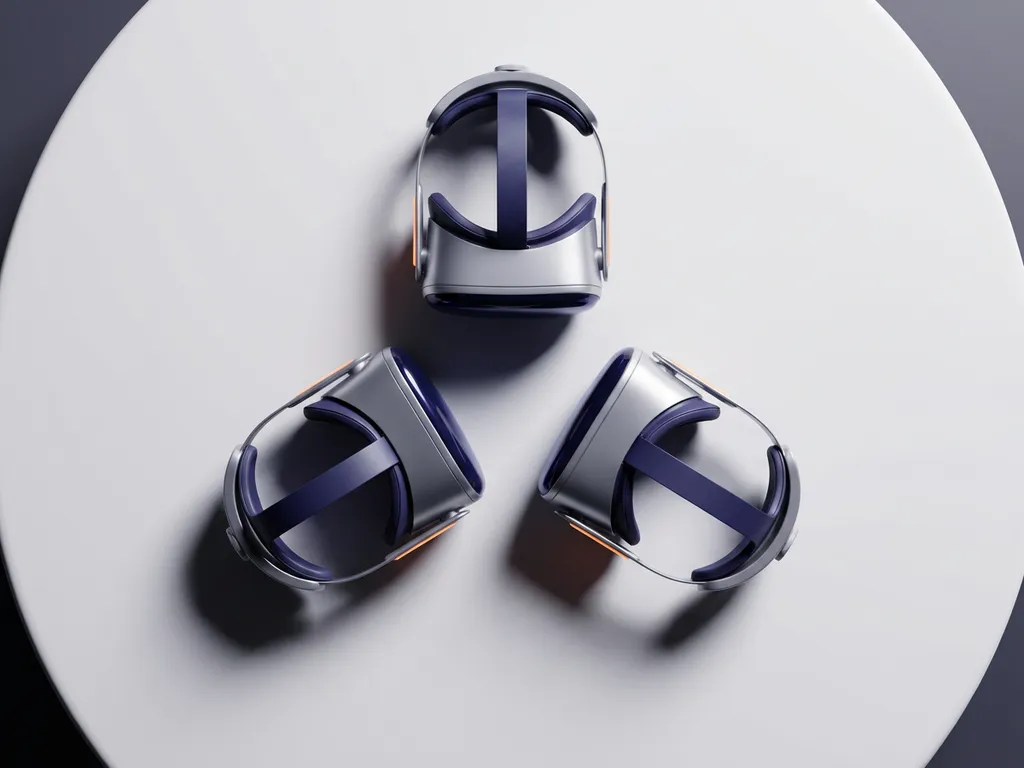
There are three types of virtual reality: non-immersive, semi-immersive, and fully immersive. Each type differs in how completely it replaces or supplements the user’s perception of the real world, and in the hardware required to deliver that experience. Understanding these distinctions helps educators, brands, and cultural institutions choose the right format for their goals.
From desktop simulations to full-body VR environments, the spectrum of virtual reality is broader than most people realize. This article walks through each type, compares their practical applications, and clarifies how VR relates to augmented and mixed reality.
What makes each type of virtual reality different from the others?
The three types of virtual reality differ primarily in the degree of sensory immersion they provide and the level of hardware involvement required. Non-immersive VR keeps the user anchored in the physical world while interacting with a virtual environment on a screen. Semi-immersive VR surrounds the user with virtual imagery but maintains some physical awareness. Fully immersive VR cuts off the physical environment entirely, replacing it with a digital world experienced through a headset and motion tracking.
The defining factor across all three types is presence, the psychological sensation of actually being inside a virtual space. The more sensory channels a system engages (sight, sound, touch, movement), the stronger the sense of presence, and the more deeply the experience tends to affect behavior, memory, and emotional response. This is why the distinction between types is not merely technical. It has direct consequences for how effective an experience will be for learning, empathy-building, or brand engagement.
Each type also carries different implications for cost, deployment, and audience accessibility. A non-immersive experience can run on a standard laptop; a fully immersive installation may require custom hardware, physical space, and dedicated facilitation. Choosing the right type depends on the outcome you are designing for, not simply on what is technologically possible.
What is non-immersive virtual reality and where is it used?
Non-immersive virtual reality is a computer-generated environment that users interact with through a standard screen, keyboard, mouse, or controller, without any headset or spatial tracking. The user remains fully aware of their physical surroundings while navigating the virtual space. Video games, architectural walkthroughs, and flight simulators on desktop computers are classic examples of this type.
Because non-immersive VR requires no specialized hardware beyond a computer or tablet, it is the most widely deployed form of virtual reality in the world. It powers training platforms in healthcare and aviation, interactive museum websites, and educational simulations used in classrooms across every age group. The barrier to entry is low, which makes it an attractive starting point for organizations exploring virtual experiences for the first time.
The trade-off is presence. Without surrounding visuals or motion tracking, the user never fully forgets they are sitting at a desk. This limits the emotional depth of the experience and reduces its effectiveness for applications where empathy, perspective-taking, or behavioral change are the primary goals. Non-immersive VR works well for knowledge transfer and procedural training, but it rarely produces the kind of lasting emotional impact that more immersive formats can achieve.
What is semi-immersive virtual reality and how does it work?
Semi-immersive virtual reality surrounds the user with virtual imagery across a large or curved display, or through multiple screens arranged in a dome or CAVE environment, without requiring a head-mounted display. The user sees a virtual world that fills most of their visual field but can still perceive the physical space around them. Flight simulators with wraparound cockpit screens and large-format projection rooms are well-known examples.
The technology behind semi-immersive systems typically combines high-resolution projection mapping, spatial audio, and sometimes motion platforms or haptic feedback to deepen the sense of presence. In a CAVE Automatic Virtual Environment, for instance, projections cover the walls, floor, and ceiling of a room, allowing multiple users to share the same virtual space simultaneously without wearing individual headsets. This makes semi-immersive formats particularly well suited to group experiences in museums, science centers, and corporate training environments.
Semi-immersive VR strikes a practical balance. It delivers significantly more presence than a desktop screen while remaining accessible to audiences who may be unfamiliar or uncomfortable with head-mounted displays. For cultural institutions and educational venues, this format offers a compelling middle ground: visually powerful, socially inclusive, and technically manageable without the logistical complexity of equipping every visitor with a headset.
What is fully immersive virtual reality and what hardware does it require?
Fully immersive virtual reality is a digital environment that replaces the user’s entire sensory experience of the physical world, most commonly through a head-mounted display (HMD) that tracks head movement in real time, combined with spatial audio and motion controllers. At this level of immersion, the user has no visual access to the physical environment and experiences a strong, sustained sense of being present inside the virtual world.
The hardware ecosystem for fully immersive VR has matured considerably. Standalone headsets such as the Meta Quest series allow untethered experiences without a connected PC, making deployment far more scalable than early VR systems. High-end tethered headsets offer greater graphical fidelity for applications where visual realism is critical. Next-generation spatial computing devices, such as the Apple Vision Pro, blend fully immersive capability with passthrough awareness, opening new possibilities for mixed-reality interaction.
Beyond the headset, advanced fully immersive installations may incorporate full-body haptic suits, omnidirectional treadmills, scent diffusers, temperature variation, and physical props that match virtual objects. These multisensory layers are what transform a VR headset experience into a genuinely immersive installation. At Rooftop Immersive, our fully immersive productions are designed with all of these sensory dimensions in mind, because we know that memory and emotional impact are strongest when the whole body is engaged, not just the eyes.
Which type of virtual reality is best for education and training?
Fully immersive virtual reality consistently produces the strongest outcomes for education and training when the goal is deep understanding, behavioral change, or perspective-taking. The heightened sense of presence accelerates emotional engagement and helps learners retain information more effectively than passive formats. For procedural skills training, safety simulations, and empathy-building programs, full immersion delivers results that non-immersive and semi-immersive formats struggle to match.
That said, the best type of VR for education depends on the specific learning objective, the audience, and the deployment context.
- Non-immersive VR is effective for knowledge-based learning, concept exploration, and self-paced study where emotional depth is less critical than accessibility and scalability.
- Semi-immersive VR works well for group learning, classroom demonstrations, and museum environments where shared experience and discussion are part of the pedagogical design.
- Fully immersive VR is most powerful for scenario-based training, empathy programs, complex procedural skills, and any application where the learner needs to feel genuinely present in the situation being taught.
Research in experiential learning consistently shows that people retain information more effectively when they are active participants rather than passive observers. Fully immersive VR pushes this principle to its logical extreme, placing the learner inside the scenario rather than simply showing it to them. For organizations working on social impact, healthcare training, or complex subject matter that is difficult to convey through traditional media, this distinction is not a luxury. It is the difference between information that fades and understanding that sticks.
How do the three VR types compare in cost and accessibility?
The three types of virtual reality vary significantly in cost and accessibility, with non-immersive VR being the most affordable and widely available, semi-immersive occupying a middle tier, and fully immersive installations representing the highest investment in both production and deployment. However, the cost of any VR experience is shaped by far more than the type of hardware involved.
Several factors influence the total investment across all three types:
- Content complexity: A fully interactive, branching narrative requires substantially more development time than a linear walkthrough, regardless of the hardware platform.
- Custom versus off-the-shelf: Bespoke experiences built around a specific brand, curriculum, or cultural collection cost more than adapted templates but deliver far greater relevance and impact.
- Scale of deployment: A single installation in one location has a very different cost profile from a modular experience designed to travel across multiple venues or be distributed digitally.
- Hardware requirements: Standalone headsets have lowered the entry cost for fully immersive VR considerably, but large-group installations, high-fidelity projection systems, and multisensory add-ons each add layers of investment.
- Ongoing support and updates: Experiences that need to evolve over time, incorporating new content or adapting to different audiences, require a longer-term partnership with the production team.
Accessibility is also a multidimensional consideration. Non-immersive VR is accessible on any device, but it may exclude users who are not digitally confident. Semi-immersive group formats are highly inclusive because they require no individual hardware. Fully immersive headset experiences can create physical discomfort for some users, particularly those prone to motion sensitivity, and require facilitation to ensure safe and meaningful participation. A well-designed immersive experience accounts for these variables from the outset, building accessibility into the creative brief rather than treating it as an afterthought.
What’s the difference between VR, AR, and mixed reality?
Virtual reality (VR), augmented reality (AR), and mixed reality (MR) are three distinct points on the extended reality (XR) spectrum, differentiated by how they relate to the physical world. VR replaces the physical environment entirely with a digital one. AR overlays digital content onto the real world without blocking physical perception. Mixed reality blends virtual and physical elements so that digital objects can interact with the real environment in real time.
Understanding these distinctions helps clarify which technology is right for a given application:
- Virtual reality is best when total presence inside a digital world is the goal, training simulations, immersive storytelling, or empathy experiences where the physical environment would be a distraction.
- Augmented reality is most effective when digital content needs to coexist with the real world, product visualization, interactive exhibitions, outdoor activations, or educational overlays on physical objects.
- Mixed reality goes further by allowing virtual objects to respond to and interact with the physical space around them. A virtual character that walks around a real table, or a digital architectural model that sits convincingly on a physical floor, are examples of MR in action.
The boundaries between these categories continue to blur as hardware evolves. Devices like the Apple Vision Pro are designed to operate fluidly across the AR, MR, and even fully immersive VR spectrum depending on the experience being delivered. For organizations designing experiences in 2026, the more useful question is rarely “which technology?” but rather “what do we want people to feel, understand, or do?” and then working backward to the format that best serves that outcome.
If you are exploring how virtual reality or any form of immersive technology could serve your organization’s goals, whether in education, culture, brand experience, or social impact, we would love to help you find the right approach. Contact us to start the conversation.
Gerelateerde artikelen
- How do you design an immersive installation for public spaces?
- Is XR training expensive?
- Can installation art be interactive?
- What does an experiential marketing agency do?
- What is experiential marketing theory?
- What are immersive experiences and how do they enhance user interaction?
- Why is experiential marketing the future?
- How do immersive experiences improve experiential marketing?
- What are the benefits of immersive museum experiences?