
Extended reality, or XR, is an umbrella term that covers all technologies blending the real and virtual worlds, including augmented reality (AR), virtual reality (VR), and mixed reality (MR). It describes a spectrum of experiences that range from a thin digital layer placed over the physical world to complete immersion in a fully virtual environment. Understanding XR means understanding a fundamental shift in how humans interact with information, space, and each other.
XR is not a single technology but a family of related approaches, each with its own hardware, interaction model, and use case. As spatial computing matures and devices become more accessible, XR is rapidly moving from specialist tool to mainstream medium across education, culture, marketing, and entertainment. The sections below answer the most important questions about what extended reality is, how it works, and where it is going.
What are AR, VR, and MR, and how do they differ?
AR, VR, and MR are three distinct types of immersive technology that sit at different points on the XR spectrum. Augmented reality adds digital content on top of the real world. Virtual reality replaces the real world entirely with a digital environment. Mixed reality allows virtual and physical objects to interact with each other in real time. The key difference is the degree to which the physical world remains present and interactive.
Augmented Reality (AR)
AR overlays digital elements, 3D models, animations, text, or interactive layers, onto a live view of the physical world, typically through a smartphone camera or a transparent headset. The user always remains anchored in their real environment. This makes AR highly accessible and well suited to applications like retail try-ons, outdoor activations, museum enhancements, and educational overlays. Because it requires no dedicated headset for most applications, AR has the widest potential audience of any XR format.
Virtual Reality (VR)
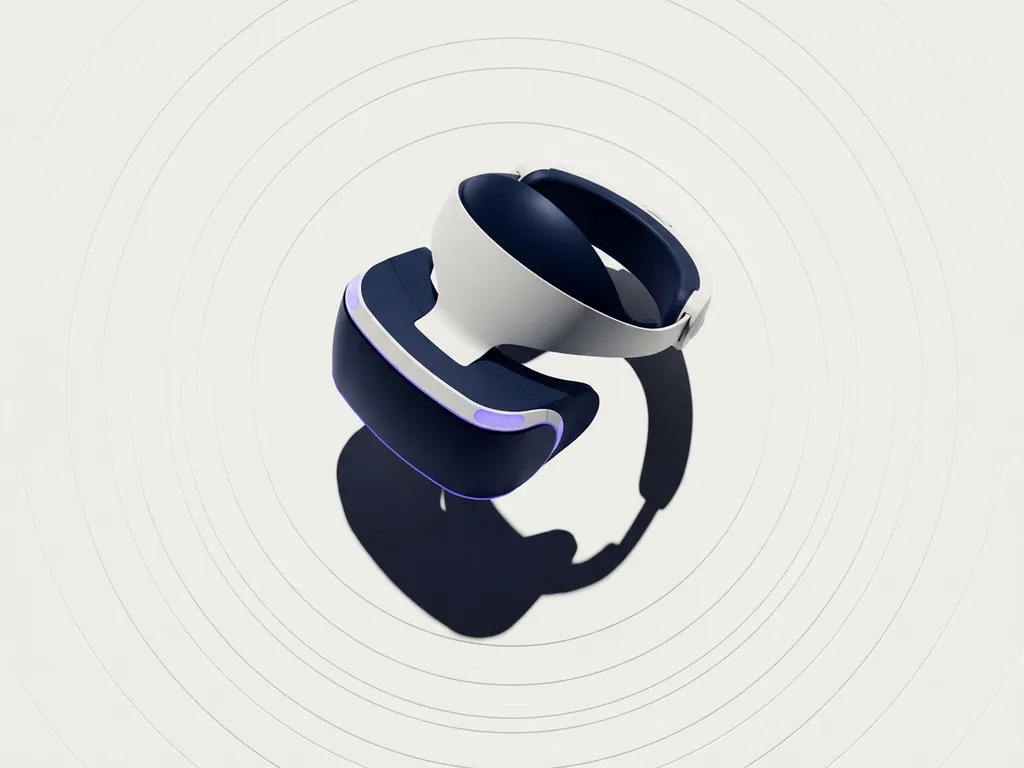
VR immerses the user in a fully rendered digital environment, blocking out the physical world entirely through a head-mounted display. This complete sensory substitution makes VR exceptionally powerful for training simulations, empathy-driven storytelling, and experiences that need to transport someone to a place or situation they could not otherwise access. The trade-off is that VR requires dedicated hardware and a controlled physical space, which shapes how and where it is deployed.
Mixed Reality (MR)
Mixed reality goes further than AR by allowing virtual objects to respond to and interact with the physical environment in real time. A virtual character can walk around a real table. A digital architectural model can be placed on an actual floor and viewed from every angle. Platforms like Apple Vision Pro represent the current frontier of MR, enabling seamless blending of real and virtual that feels genuinely spatial rather than simply overlaid.
How does extended reality actually work?
Extended reality works by combining real-time computer rendering, spatial tracking, and sensory output to create the perception that digital content exists in or around physical space. The technology relies on sensors and cameras to understand the user’s position and environment, a processor to render digital content at high frame rates, and a display system to deliver that content convincingly to the eyes, and increasingly to other senses as well.
In AR systems, computer vision algorithms detect surfaces, objects, and spatial anchors so that digital elements appear to sit correctly in the real world without drifting or floating. In VR, head-tracking sensors monitor movement dozens of times per second so the virtual environment updates in sync with the user’s head position, creating a convincing sense of presence. In MR, depth sensors map the physical environment in real time, allowing the system to understand geometry and enable virtual objects to occlude and interact with real ones.
Beyond visuals, fully immersive XR experiences can incorporate spatial audio, haptic feedback, scent, and temperature to engage multiple senses simultaneously. This multisensory dimension is what separates genuinely immersive experiences from simple 3D visualisation. When the brain receives consistent signals across sight, sound, and touch, the sense of presence deepens significantly, and with it, emotional engagement and memory retention.
What is XR used for in the real world?
XR is used across a wide range of industries to solve real engagement, training, and communication challenges. In education, it makes abstract or dangerous concepts tangible through simulation. In marketing, it creates memorable brand activations that go beyond passive advertising. In healthcare, it supports surgical training and patient therapy. In cultural institutions, it adds interactive layers to physical collections, attracting new audiences and deepening the visitor experience.
Some of the most impactful real-world applications include:
- Immersive education: Students can explore historical events, biological systems, or engineering principles from inside a simulation rather than reading about them on a page.
- Corporate training: High-stakes scenarios, safety procedures, emergency response, complex machinery, can be rehearsed in VR without real-world risk.
- Museum and cultural experiences: AR portals, VR art environments, and interactive installations give cultural institutions tools to engage visitors who expect more than static displays.
- Brand activations: AR games, hologram twins, and geospatial AR campaigns create shareable, physically engaging moments that traditional advertising cannot replicate.
- Social impact and NGO campaigns: VR empathy experiences place audiences inside the perspective of someone facing displacement, poverty, or environmental crisis, driving awareness and action more effectively than statistics alone.
- Architecture and real estate: Digital twins and AR miniatures allow clients to explore spaces before they are built, transforming how projects are communicated and sold.
What unites these applications is the shift from passive consumption to active participation. When people move through an experience rather than watch it, their engagement, comprehension, and emotional connection increase substantially.
What’s the difference between XR and the metaverse?
XR and the metaverse are related but distinct concepts. XR is a technology category describing the spectrum of AR, VR, and MR tools and experiences. The metaverse is a vision of a persistent, interconnected virtual world where people live, work, and socialise, a concept that would rely on XR technologies to be accessed but is not the same thing as XR itself. Think of XR as the medium and the metaverse as one possible destination within it.
The metaverse, as it is commonly discussed, implies a shared, always-on digital space with its own economy, identity systems, and social structures. XR, by contrast, simply describes the technology that blends physical and digital realities. You can use VR for a training simulation with no connection to any metaverse platform whatsoever. You can use AR to enhance a museum exhibit without any persistent virtual world being involved.
In practice, much of what is called “the metaverse” in 2026 remains fragmented, platform-specific, and limited in adoption. XR, meanwhile, is delivering measurable value in education, healthcare, culture, and marketing right now, without waiting for a unified virtual world to materialise. The distinction matters because organisations making decisions about immersive technology should evaluate XR on its current, proven capabilities rather than on the broader and less defined promise of the metaverse.
What hardware do you need to experience XR?
The hardware required for XR depends entirely on the type of experience. AR experiences can run on a standard smartphone or tablet, making them the most accessible form of XR with no specialist equipment needed. VR requires a head-mounted display, ranging from standalone headsets to PC-tethered devices. Mixed reality currently requires more advanced spatial computing devices such as Apple Vision Pro or enterprise-grade headsets designed for real-time environment mapping.
For audiences engaging with XR content, the hardware landscape in 2026 includes:
- Smartphones and tablets: Sufficient for most AR experiences, including image tracking, geospatial AR, AR games, and AR portals.
- Standalone VR headsets: Self-contained devices that need no external computer, suitable for passive and interactive VR experiences in both consumer and enterprise settings.
- PC-tethered VR headsets: Higher-fidelity experiences for applications where visual quality and processing power are critical, such as architectural visualisation or high-end training simulations.
- Mixed reality headsets: Devices like Apple Vision Pro that blend real and virtual environments with high spatial precision, suited to next-generation spatial computing applications.
- Large-format installations: 360-degree projection domes, 4D cinema environments, and interactive screens that deliver immersive experiences to groups without requiring individual headsets.
For organisations deploying XR at scale, in schools, museums, or events, the hardware choice has significant implications for logistics, cost, and audience reach. Smartphone-based AR maximises accessibility. Headset-based VR maximises depth of immersion. The right choice depends on the experience goal, the audience, and the deployment context.
How is XR different from traditional screen-based media?
XR is fundamentally different from traditional screen-based media because it places the audience inside the experience rather than in front of it. A screen presents content at a distance; XR surrounds you with it. This spatial shift changes not just how content is delivered but how it is processed, remembered, and felt. The brain responds to immersive environments more like real experiences than like media consumption, which is why XR tends to produce stronger emotional responses and longer-lasting memory.
Traditional media, video, display advertising, presentations, is inherently passive. The viewer receives information but does not interact with the space or narrative. XR introduces agency: the ability to look where you choose, move through an environment, interact with objects, and influence outcomes. This interactivity transforms the audience from observer to participant, which has significant implications for learning, persuasion, and emotional engagement.
There is also a sensory dimension that screens cannot replicate. A film can show you a rainforest. An immersive XR experience can place you inside one, with spatial audio, ambient temperature, and scent working alongside visuals to create a coherent sensory environment. This multisensory quality is not a gimmick, it reflects how human memory and emotion actually work. Experiences that engage multiple senses simultaneously are encoded more deeply and recalled more vividly than those that engage only sight and hearing.
For organisations trying to communicate complex ideas, drive behaviour change, or create lasting brand impressions, this difference is not incremental. It represents a qualitative shift in what is possible.
Where is XR technology heading in the next five years?
Over the next five years, XR technology is heading toward lighter hardware, more seamless integration with everyday environments, and deeper personalisation driven by AI. The barriers that have historically limited XR adoption, bulky headsets, high costs, complex deployment, are eroding rapidly. As devices become smaller and more affordable, and as AI enables experiences to adapt in real time to individual users, XR will move from specialised application to standard communication medium.
Several specific directions are already clearly in motion:
- AI-driven personalisation: Experiences that adapt dynamically to the user’s language, pace, learning style, or emotional state, making XR genuinely responsive rather than one-size-fits-all.
- Spatial computing as a platform: As devices like Apple Vision Pro mature and competitors emerge, spatial computing will become a distinct computing paradigm alongside mobile and desktop, with its own design language, application ecosystem, and audience expectations.
- Geospatial AR at scale: The ability to anchor persistent AR content to precise geographic coordinates without QR codes is opening up entirely new possibilities for outdoor campaigns, urban storytelling, and location-based education.
- Immersive learning infrastructure: Educational institutions are beginning to treat XR not as a novelty but as a core pedagogical tool, investing in curricula, hardware, and partnerships that make immersive learning a standard part of the educational experience.
- Multisensory integration: As haptic, olfactory, and thermal technologies mature, the gap between virtual experience and physical reality will continue to narrow, enabling deeper immersion across more contexts.
What is clear is that organisations that begin building XR literacy and capability now will be significantly better positioned than those that wait. The technology is no longer experimental, it is delivering measurable impact in education, culture, brand engagement, and social change today. The next five years will determine which organisations lead in spatial storytelling and which ones are still catching up.
If you are exploring how extended reality could work for your organisation, whether for education, cultural programming, brand activation, or social impact, we would welcome the conversation. Contact us to talk through what an immersive experience could look like for your specific goals.
Gerelateerde artikelen
- What is a full dome planetarium?
- What are the positive effects of virtual reality?
- What is the strongest trigger to memory?
- Can AI make AR?
- How to create an immersive exhibition?
- What technologies are used in immersive experiences?
- How much do immersive installations cost?
- What is VR content production?
- Do 3D artists get paid well?