
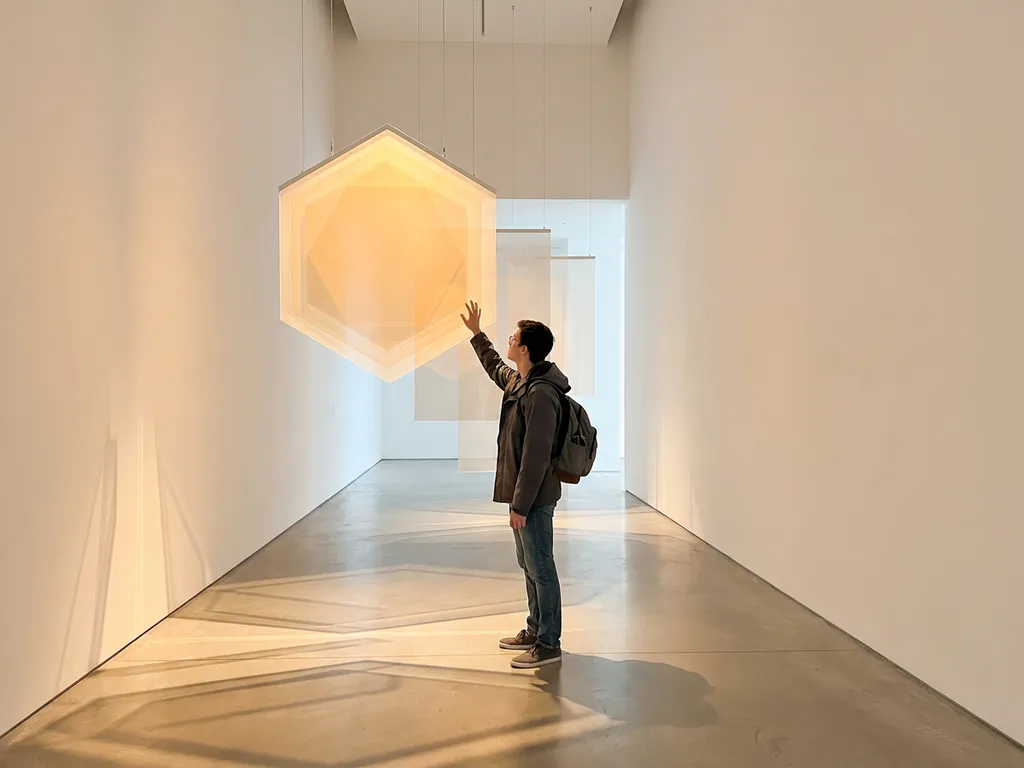
Creating educational immersive content means designing learning experiences that place the learner inside the subject matter, rather than presenting information to them from a distance. At its core, it combines spatial environments, interactive technology, and purposeful storytelling to make abstract concepts tangible, emotionally resonant, and genuinely memorable. The sections below unpack every major question behind that process, from defining learning objectives to measuring real-world impact.
What makes content truly ‘immersive’ in an educational context?
Educational content becomes truly immersive when it activates multiple senses simultaneously, demands active participation, and places the learner in a context where the subject matter feels real rather than described. Immersion is not about spectacle. It is about removing the psychological distance between a learner and the thing they are trying to understand.
In traditional education, learners receive information through text, slides, or spoken instruction. They process it cognitively, but rarely feel it. Immersive educational content changes that relationship by creating environments where learners must navigate, make decisions, and experience consequences. A student learning about climate migration does not read statistics. They walk through a displaced community, hear voices, and make choices that shape outcomes.
Several qualities distinguish genuinely immersive educational content from content that simply uses technology:
- Multisensory engagement: Sound, spatial design, tactile feedback, and even scent can all reinforce learning. The more senses involved, the stronger the memory encoding.
- Agency and interaction: Learners who make choices within an experience retain information far better than passive observers.
- Narrative context: A story or scenario that gives information emotional and situational meaning.
- Presence: The psychological sensation of actually being somewhere, rather than watching it on a screen.
The difference between immersive and interactive is worth clarifying here. Interactive content responds to user input. Immersive content surrounds the user entirely, making the environment itself part of the message. The most effective educational experiences are both.
What types of immersive technology are used in education?
The main types of immersive technology used in education are virtual reality (VR), augmented reality (AR), mixed reality (MR), 360-degree video, and AI-driven interactive environments. Each serves different learning objectives, audience types, and deployment contexts.
Virtual Reality (VR)
VR places learners inside fully digital environments using a headset that blocks out the physical world. It is particularly powerful for high-stakes simulations, historical reconstructions, and scenarios that would be impossible or unsafe to recreate physically. Medical students can practice procedures. History students can walk through ancient civilizations. NGO trainees can experience refugee displacement firsthand.
Augmented Reality (AR)
AR overlays digital content onto the physical world through smartphones, tablets, or headsets. In education, AR is especially effective for bringing static materials to life, whether that is a textbook diagram that becomes a 3D model, or a museum exhibit that gains additional narrative layers when viewed through a device. AR treasure hunts and AR children’s books are strong examples of how this technology makes learning active and exploratory.
Mixed Reality and Spatial Computing
Mixed reality, as enabled by platforms like Apple Vision Pro, blends physical and digital elements in real time. Objects can be placed in real space and interacted with naturally. For education, this opens possibilities for collaborative learning where multiple participants interact with shared virtual objects in a shared physical room.
360-Degree Video and Immersive Domes
360-degree video does not require headsets and can reach large audiences simultaneously. Immersive dome installations project content across a full spherical surface, creating a sense of being surrounded by the subject. These formats work well in museums, schools, and public awareness campaigns where group experiences are valuable.
How do you define clear learning objectives for immersive content?
Clear learning objectives for immersive content are defined by starting with the desired behavioral or attitudinal outcome, not the technology. The question is not “what can we build?” but “what should a learner be able to do, feel, or understand differently after this experience?”
This distinction matters because immersive technology is compelling enough to distract from purpose. A visually spectacular VR experience that does not anchor to a specific learning goal produces engagement without retention. Effective immersive educational content is always built backwards from a clearly stated outcome.
A useful framework for defining these objectives involves three layers:
- Cognitive objectives: What knowledge or understanding should the learner gain? This might be factual knowledge, conceptual understanding, or the ability to apply a framework.
- Affective objectives: What emotional shift or perspective change is intended? Empathy-building experiences, for example, aim to change how learners feel about a group of people or a situation.
- Behavioral objectives: What should the learner do differently after the experience? For corporate training or NGO programs, this is often the primary measure of success.
Once objectives are defined at all three levels, every design decision, from the narrative structure to the interaction mechanics, can be evaluated against them. This is how we approach every immersive education project: the learning goal shapes the experience architecture, not the other way around.
How is immersive educational content actually built?
Immersive educational content is built through a structured process that moves from learning strategy and narrative design through to technical production, hardware integration, and iterative testing. It requires close collaboration between educators, designers, developers, and the commissioning organization.
The production process typically follows these phases:
- Discovery and co-creation: Working with subject matter experts, educators, and stakeholders to define objectives, audience, and constraints. This phase determines whether VR, AR, or another format is the right fit.
- Concept and narrative design: Developing the scenario, story, or environment that will carry the learning. This includes scripting, storyboarding, and defining interaction logic.
- Technical production: 3D modeling, animation, environment building in game engines like Unreal Engine or Unity, audio design, and integration of interactive mechanics.
- Hardware and deployment planning: Selecting and configuring the right devices, whether headsets, tablets, dome systems, or interactive screens, and planning how the experience will be delivered at scale.
- Testing and iteration: Piloting with representative learners, gathering feedback, and refining both the content and the technical performance before full deployment.
One of the most important factors in this process is the integration of pedagogical expertise alongside technical capability. Technology alone does not teach. The learning design must be as rigorous as the production quality.
How does AI personalize immersive learning experiences?
AI personalizes immersive learning experiences by adapting the content, pacing, language, and narrative pathways in real time based on a learner’s choices, progress, and profile. Rather than delivering a fixed sequence, an AI-driven experience responds to each individual, making the learning journey feel relevant and appropriately challenging.
In practice, this personalization can take several forms. An AI-powered virtual character, or NPC, can hold genuine conversations with learners, answer questions in their own language, and adjust the complexity of its responses based on what the learner appears to understand. A training simulation can dynamically increase difficulty when a learner progresses quickly, or offer additional scaffolding when they struggle.
For organizations working across diverse audiences, such as schools with mixed learning needs or NGOs operating in multiple countries, AI-driven personalization is transformative. A single immersive experience can serve a wide range of learners without requiring separate versions for each group. Language, cultural context, and learning pace can all adapt automatically.
We integrate AI personalization as a core capability, recognizing that the most impactful educational experiences are those that meet each learner where they are, not where the average learner is assumed to be.
What’s the difference between immersive content for schools and for corporate training?
The key difference between immersive content for schools and corporate training lies in the learning objectives, the audience’s prior knowledge, the deployment environment, and the success metrics. Schools prioritize conceptual understanding, curiosity, and emotional engagement. Corporate training prioritizes skill acquisition, behavior change, and measurable performance outcomes.
In school settings, immersive content often needs to be accessible to learners with no prior experience of the subject, and the experience itself may be the primary introduction to a topic. Engagement and motivation are critical, particularly for subjects that learners find abstract or distant from their lives. The format needs to be intuitive, safe to explore, and supportive of a teacher-led session structure.
Corporate and professional training operates under different pressures. Learners are often time-constrained, outcomes need to be demonstrable to stakeholders, and the content must align with specific competency frameworks. Immersive simulations for corporate training frequently focus on decision-making under pressure, compliance scenarios, leadership situations, or complex procedural skills.
There are also differences in hardware access, budget cycles, and the level of institutional support available. Schools often require hardware-inclusive solutions, whereas corporate clients may have existing device infrastructure. Both contexts benefit from immersive approaches, but the design logic, narrative tone, and evaluation criteria differ significantly between them.
How do you measure whether immersive educational content actually works?
Immersive educational content works when learners demonstrate measurable improvement in knowledge, attitude, or behavior compared to a baseline, and when that improvement persists beyond the immediate experience. Measurement requires clear predefined objectives, appropriate assessment tools, and a framework that captures both immediate and longer-term outcomes.
Effective evaluation typically combines several methods:
- Pre- and post-assessments: Measuring knowledge or attitude change directly before and after the experience provides the clearest evidence of immediate learning impact.
- Behavioral observation: For skill-based or compliance training, observing whether learners apply new behaviors in real situations is the most meaningful measure of success.
- Engagement analytics: Immersive platforms can track interaction data, time spent in specific environments, choices made, and points of disengagement, offering insight into which elements of the experience are working and which are not.
- Delayed retention testing: Testing learners weeks after the experience reveals whether the content produced durable memory, not just immediate recall.
- Qualitative feedback: Learner reflections, interviews, and facilitator observations add context that quantitative data alone cannot capture.
The reason immersive experiences tend to outperform traditional instruction on these measures relates to how multisensory, emotionally engaging environments affect memory encoding. Experiences that activate emotion, agency, and spatial awareness create stronger and more durable memories than passive information delivery.
What are the biggest challenges when creating immersive educational content?
The biggest challenges when creating immersive educational content are balancing technological ambition with pedagogical rigor, managing production complexity and cost, ensuring accessibility across diverse learner groups, and planning for scalable deployment beyond a single event or pilot.
Each of these deserves honest attention:
Technology versus learning design: The most common failure mode in immersive education is prioritizing what the technology can do over what the learner needs. Spectacular environments that lack clear learning logic produce memorable moments but poor retention. Keeping learning objectives central throughout production requires discipline and ongoing collaboration between educators and developers.
Production complexity: Immersive educational content involves multiple disciplines working in parallel, including narrative design, 3D production, audio engineering, interaction design, and hardware integration. Coordinating these without losing coherence requires experienced project management and a clear creative vision from the outset. The factors that influence production scope and therefore investment include the length and complexity of the experience, the number of interactive pathways, the level of visual fidelity required, and the deployment format.
Accessibility and inclusion: Not all learners can use VR headsets comfortably. Some have physical, cognitive, or sensory needs that require alternative formats or additional support. Designing for accessibility from the beginning, rather than retrofitting it later, is essential for educational content that claims to reach diverse audiences.
Scalability and sustainability: A pilot experience that works brilliantly for thirty students in a controlled setting must be adapted, maintained, and deployed at scale to deliver real educational value. Planning for hardware logistics, facilitator training, content updates, and technical support is as important as the creative production itself.
These challenges are solvable, but they require a partner who understands both the creative and the operational dimensions of immersive education. If you are exploring what this kind of experience could look like for your organization, we would welcome the conversation. Contact us to start exploring what is possible.
Gerelateerde artikelen
- What are some examples of digital cultural heritage?
- What are examples of interactive activities?
- What does AR stand for in marketing?
- What kind of technology is used in museums?
- What are the challenges of spatial computing?
- What is XR (extended reality)?
- How do I create an immersive experience?
- What is an example of an immersive experience?
- How does XR technology enhance brand experiences?