
Sensory experience learning directly strengthens memory retention by engaging multiple brain systems at once. When learning activates more than one sense, the brain creates richer, more interconnected memory traces that are significantly easier to retrieve later. The sections below explore the science behind this connection and what it means for education, training, and immersive design.
How does the brain encode memories through sensory input?
The brain encodes memories through sensory input by routing incoming signals through the sensory cortex and hippocampus, where they are tagged, connected to existing knowledge, and stored as long-term memory. Each sense activates a distinct neural pathway, and when multiple pathways fire simultaneously, the resulting memory trace is stronger, more detailed, and more durable than one formed through a single channel.
When you hear a piece of music while smelling something familiar, both signals travel to the brain’s limbic system, the region responsible for emotion and memory consolidation. The hippocampus acts as a kind of filing system, linking these sensory fragments together into a unified memory event. The more sensory threads woven into that event, the more retrieval cues the brain has available when trying to recall it later.
This is why people often remember where they were when they learned something important, not just what they learned. The context, the temperature of the room, the ambient sound, even a faint scent, all become part of the encoded memory. In learning design, this principle is foundational: the richer the sensory environment during encoding, the more robust the memory formed.
Why does multisensory learning improve retention rates?
Multisensory learning improves retention because it activates multiple neural pathways simultaneously, creating redundant memory traces that reinforce one another. When a learner sees, hears, and physically interacts with information at the same time, the brain processes that input as more significant and more worthy of long-term storage than passive, single-channel exposure.
The cognitive science behind this is well established. Working memory, the brain’s short-term processing space, has limited capacity. When information arrives through only one channel, it competes with other inputs in that channel. But when the same concept is delivered through sight, sound, and touch together, each channel carries part of the load, reducing cognitive overload and freeing the brain to move information into long-term storage more efficiently.
There is also a repetition effect at work. Multisensory experiences essentially expose the learner to the same concept multiple times through different modalities, without the monotony of literal repetition. Each sensory channel adds a slightly different angle on the same idea, deepening comprehension and making the material more retrievable from multiple directions.
What role does emotion play in sensory memory formation?
Emotion plays a central role in sensory memory formation because the amygdala, the brain’s emotional processing centre, sits directly adjacent to the hippocampus and actively amplifies memory consolidation when emotional arousal is present. Experiences that trigger genuine emotional responses are remembered more vividly, more accurately, and for longer than emotionally neutral ones.
This is not simply a matter of paying more attention. Emotional arousal triggers the release of neurochemicals including norepinephrine and cortisol, which signal to the hippocampus that the current experience is important and should be preserved. This biological prioritisation is why a single emotionally charged moment can be recalled decades later with striking clarity, while hours of neutral instruction fade within days.
For learning designers and experience creators, this has profound implications. An experience that makes someone feel something, whether curiosity, empathy, awe, or even mild discomfort, is an experience that will be remembered. Sensory richness amplifies emotional impact: a smell, a physical sensation, or an unexpected sound can shift a learner from passive observation to genuine emotional engagement in seconds.
How does sensory learning compare to traditional classroom instruction?
Sensory learning outperforms traditional classroom instruction on long-term retention because it engages active processing rather than passive reception. Conventional instruction typically relies on visual and auditory channels alone, asking learners to absorb information rather than experience it. Sensory learning, by contrast, places the learner inside the subject matter, creating personal, embodied memory rather than abstract knowledge.
Traditional classroom instruction has real strengths. It is efficient, scalable, and effective for delivering structured knowledge to large groups. But its limitations become apparent when the goal is deep understanding, behaviour change, or emotional resonance. Listening to a lecture about climate change is fundamentally different from standing inside a simulation of a flooded coastal city. Both deliver information, but only one creates the kind of visceral, personal memory that drives lasting attitude and behaviour shifts.
The comparison is not about replacing one with the other. Sensory and experiential learning work best when they are used to anchor and contextualise knowledge that has already been introduced conceptually. The two approaches are complementary: classroom instruction can build the framework, and sensory experience can make that framework unforgettable.
Which senses have the strongest impact on long-term memory?
Smell and touch have a disproportionately strong impact on long-term memory compared to other senses, largely because of their direct neural connections to the brain’s limbic system. Vision and hearing carry the most information volume, but olfactory and tactile inputs bypass the thalamus and connect more directly to emotional and memory-processing regions, creating unusually durable and emotionally charged memories.
The power of smell in memory encoding
The olfactory system is the only sensory system with a direct pathway to the hippocampus and amygdala, which is why scent is so powerfully linked to autobiographical memory. A single smell can transport someone back to a childhood moment with a vividness that visual or auditory cues rarely match. In immersive learning environments, carefully chosen scents can anchor specific concepts or emotional states, making them significantly easier to recall.
Touch and proprioception as memory anchors
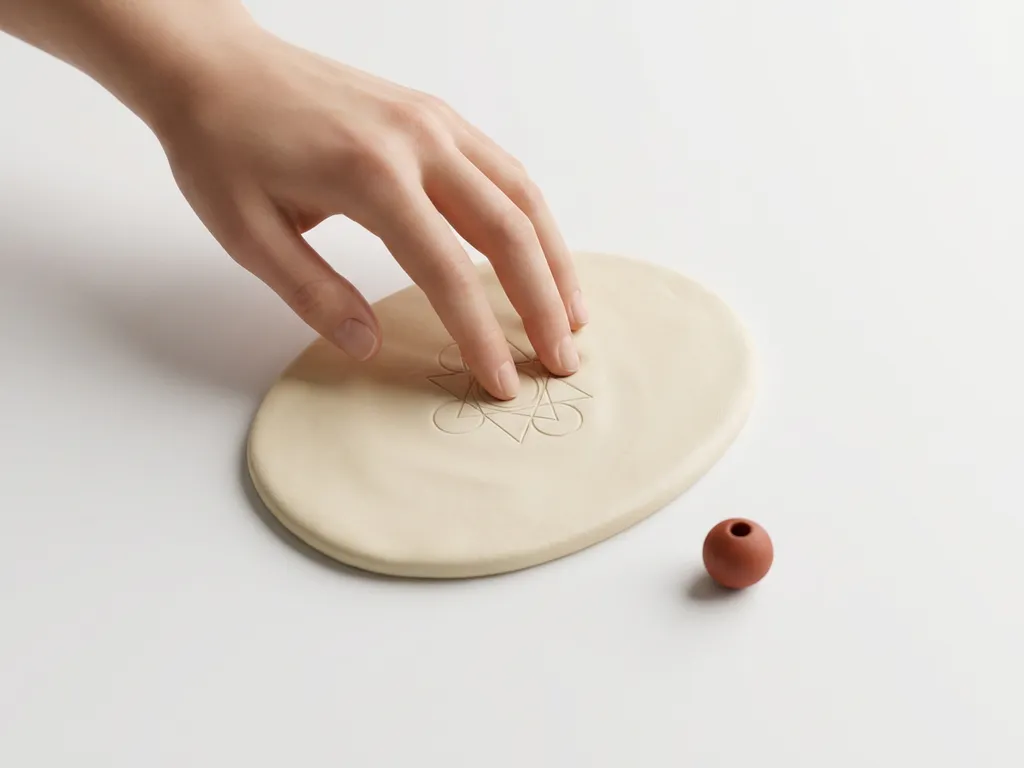
Physical touch and bodily movement, known as proprioception, create what researchers call embodied cognition. When learners physically handle an object, navigate a space, or use their hands to interact with information, the motor cortex becomes involved in encoding that memory. This adds another neural layer to the memory trace, making it more robust and more easily retrieved through physical cues or re-enactment.
Vision and hearing remain essential because they carry the narrative and conceptual content of most learning experiences. But for maximum retention, the most effective experiences layer all available senses, giving the brain as many retrieval pathways as possible.
How can immersive technologies replicate sensory learning at scale?
Immersive technologies replicate sensory learning at scale by using virtual reality, augmented reality, spatial audio, haptic feedback, and environmental controls to recreate the conditions of direct sensory experience in a reproducible, deployable format. A single immersive environment can deliver consistent multisensory learning to thousands of participants across different locations without the logistical constraints of physical field experiences.
Virtual reality is particularly powerful here because it creates a sense of presence, the feeling of actually being somewhere, that activates the same neural responses as real physical experience. When the brain perceives an environment as real, it encodes the information encountered there as experiential memory rather than abstract knowledge. This is why VR-based training consistently outperforms video- and text-based instruction on retention and transfer of learning.
At Rooftop Immersive, we design experiences that go beyond screens and headsets to engage smell, touch, and spatial movement alongside digital content. Our immersive installations combine physical environments with AR and VR layers, creating multisensory learning conditions that can be scaled for schools, museums, corporate training programmes, and public awareness campaigns. The technology serves the sensory principle, not the other way around.
What types of learning outcomes benefit most from sensory experiences?
Learning outcomes that involve empathy, complex perspective-taking, procedural skill development, and behaviour change benefit most from sensory experiences. These are the areas where abstract instruction consistently falls short and where direct, embodied experience creates measurably stronger results in understanding, attitude shift, and long-term behavioural impact.
Empathy-driven learning is perhaps the clearest example. Understanding the lived experience of another person, whether a refugee, a person with a disability, or someone navigating a historical event, is genuinely difficult to achieve through text or lecture. Placing a learner inside a first-person sensory simulation of that experience creates a qualitatively different kind of understanding, one grounded in felt experience rather than intellectual acknowledgement.
Procedural learning, the kind required in medical training, emergency response, engineering, and skilled trades, also benefits enormously from sensory immersion. When learners practise procedures in realistic, multi-sensory simulated environments, their muscle memory and situational awareness develop alongside their conceptual knowledge, producing performance that transfers more reliably to real-world conditions.
Beyond these, social and civic education on topics like climate change, public health, and human rights consistently shows stronger engagement and attitude change when delivered through immersive, emotionally resonant experiences than through conventional media. The combination of sensory richness, emotional activation, and personal agency creates the conditions for genuine learning that lasts.
If you are working on an educational programme, awareness campaign, or training initiative where deep retention and real behaviour change matter, we would welcome the conversation. Contact us to explore how sensory experience design can transform your learning outcomes.
Gerelateerde artikelen
- How do you combine live performance with immersive visuals?
- What is immersive branding and how does it work?
- What is an example of augmented reality advertising?
- What are the positive effects of virtual reality?
- How much does extended reality cost?
- What is immersive learning?
- What is an experimental immersive design?
- What are the benefits of immersive experiences?
- How do I measure the success of an AR marketing campaign?