
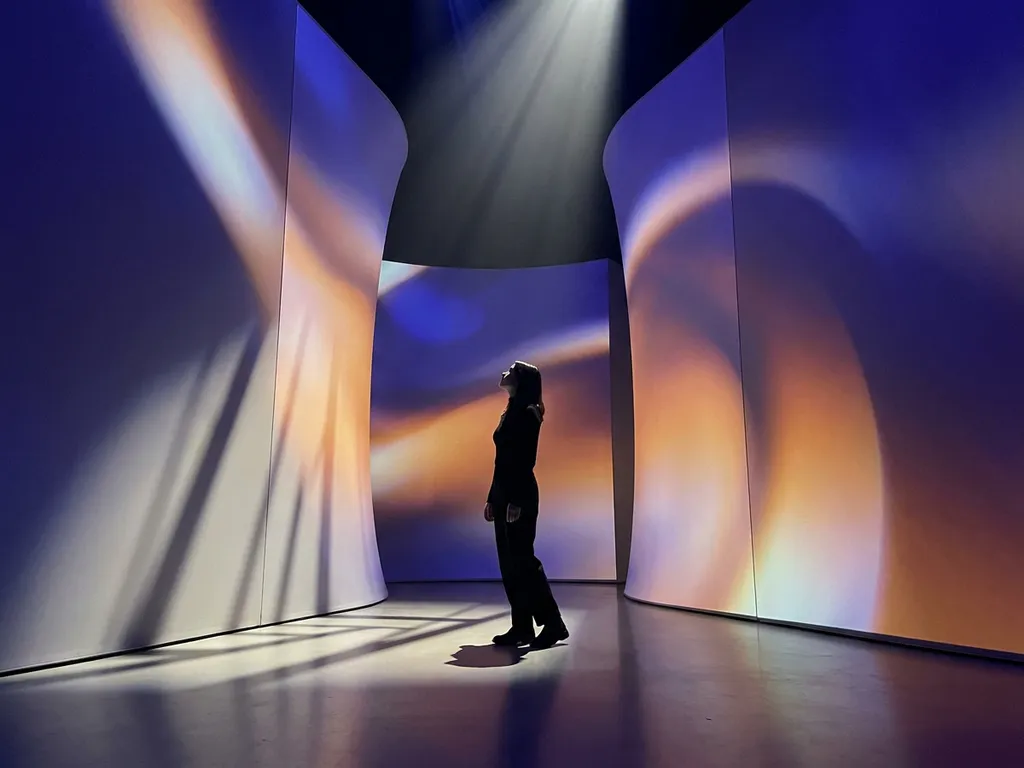
Two standout examples of experiential marketing are Nike’s pop-up running labs, where participants receive personalized gait analysis and product trials, and UNICEF’s immersive awareness installations, where visitors step inside a refugee camp or crisis scenario to build genuine empathy. Both campaigns share a defining quality: they replace passive observation with active, physical participation.
What separates these activations from a standard promotional event is the depth of engagement they create. Participants do not just see a brand message, they feel it, move through it, and carry the memory of that feeling long after the experience ends. That emotional residue is precisely what makes experiential marketing so powerful for brands, NGOs, and cultural institutions alike.
The questions below unpack what experiential marketing actually is, how it works, and when it delivers the greatest return on creative investment.
What makes a marketing activation count as experiential?
A marketing activation counts as experiential when it places the audience inside the brand story rather than in front of it. The defining criteria are physical participation, emotional engagement, and a sensory dimension that goes beyond looking at a screen or reading a message. If a person can only observe it, it is an advertisement. If they must engage with it to experience it, it is experiential.
Three qualities consistently define experiential activations:
- Participation over observation: The audience makes choices, moves through a space, or interacts with content that responds to them.
- Multisensory design: The activation engages more than one sense, sound, touch, smell, and spatial awareness deepen the impression far beyond what visual media alone can achieve.
- Emotional narrative: There is a story at the core. The physical or digital environment is a vehicle for meaning, not just spectacle.
Augmented reality brand activations, interactive 360-degree dome installations, and location-based VR experiences all meet this definition. So do low-tech activations built around live performance or tactile product discovery, the medium matters less than the quality of engagement it creates.
What are two real-world examples of experiential marketing?
Two compelling real-world examples of experiential marketing are Nike’s personalized fitness activations and immersive awareness campaigns by humanitarian organizations like UNICEF. Nike has consistently used pop-up environments where consumers physically test products under expert guidance, making the brand promise tangible. UNICEF and similar NGOs have deployed immersive VR and spatial installations that place audiences inside crisis scenarios, transforming abstract statistics into lived emotional understanding.
Nike: turning product claims into physical proof
Nike’s experiential strategy centers on removing doubt through direct experience. Rather than telling runners a shoe will improve performance, they build environments where runners feel the difference themselves. Gait analysis, personalized coaching, and product trials in a controlled but brand-immersed space create a memory that no billboard can replicate. The brand becomes associated not with a claim but with a moment of personal achievement.
UNICEF: immersive storytelling for social impact
UNICEF’s use of immersive media, including 360-degree video and spatial installations, has demonstrated how experiential techniques translate directly into empathy and action. When a visitor steps through a virtual portal into a displacement camp or a crisis-affected community, the emotional response is categorically different from watching a documentary. Donations, volunteer sign-ups, and advocacy behavior all increase measurably after immersive exposure. This is precisely the kind of purpose-driven experiential work we design at Rooftop Immersive, where impact is the primary metric of success.
What types of experiences fall under experiential marketing?
Experiential marketing encompasses any activation where the audience physically or digitally participates in a branded environment. This includes augmented reality activations, virtual reality experiences, interactive installations, live brand events, immersive pop-ups, location-based digital experiences, and multisensory exhibitions. The unifying thread is that the audience is an active participant rather than a passive recipient.
A practical breakdown of the most common formats:
- AR activations: Smartphone- or headset-based experiences that overlay digital content onto the physical world, used for product launches, retail, and outdoor campaigns.
- VR experiences: Fully immersive virtual environments for training, storytelling, education, or entertainment.
- Interactive installations: Physical spaces equipped with responsive technology, projection mapping, motion tracking, or touch interfaces, that react to the audience.
- 360-degree dome experiences: Full-surround projection environments that envelop audiences in a narrative or visual world.
- Geospatial and location-based experiences: AR or GPS-triggered content anchored to specific real-world coordinates, ideal for outdoor campaigns or cultural tours.
- Live brand events with digital layers: Physical gatherings enhanced by interactive screens, AI avatars, or mixed reality elements that deepen engagement beyond what a standard event offers.
Each format serves different objectives. A product launch may call for an AR activation that lets consumers visualize ownership before purchase. A social awareness campaign may demand a VR experience that builds empathy at scale. Choosing the right format depends on the audience, the message, and the emotional response the brand wants to generate.
How does experiential marketing differ from event marketing?
Experiential marketing differs from event marketing in its primary objective. Event marketing organizes an occasion, a launch, a conference, a festival, where the brand is present. Experiential marketing designs an encounter where the brand is the experience itself. Events can exist without experiential elements; experiential activations can exist without being events in the traditional sense.
The distinction matters practically. A product launch event where guests attend a presentation and receive branded merchandise is event marketing. The same launch where guests step into an immersive AR environment that lets them virtually configure and test the product before it exists in stores is experiential marketing. The first communicates information. The second creates a memory.
Event marketing tends to measure success by attendance and reach. Experiential marketing measures success by depth of engagement, emotional response, and behavior change after the experience. These are fundamentally different success criteria that require different design thinking from the outset.
Why do experiential campaigns outperform traditional ads in brand recall?
Experiential campaigns outperform traditional advertising in brand recall because physical and emotional participation creates stronger memory encoding than passive exposure. When the brain processes a multisensory experience, involving movement, spatial awareness, touch, and emotional response, it stores that memory with greater depth and durability than information received through a screen or page.
This is not a marketing claim but a well-established principle of cognitive science. Memory consolidation is strengthened by emotional arousal, novelty, and active engagement. Traditional advertising typically delivers none of these at meaningful intensity. A thirty-second television spot competes with hundreds of other stimuli in a viewer’s day. An immersive experience that places someone inside a story, asks them to make choices, and engages multiple senses creates a category of memory that is far harder to displace.
There is also a social amplification effect. Experiences that feel extraordinary are shared. When someone walks through an AR portal at a brand activation and finds themselves standing in a virtual version of a product’s origin story, they photograph it, share it, and describe it to others. The experiential moment generates organic reach that no paid media budget can fully replicate.
How can brands measure the success of an experiential campaign?
Brands can measure the success of an experiential campaign through a combination of engagement metrics, behavioral indicators, and post-experience research. Unlike traditional advertising, where impressions and click-through rates are the primary signals, experiential campaigns produce richer and more varied data points that reflect the depth of the audience relationship.
Key measurement approaches include:
- Dwell time: How long participants engage with the experience is a direct indicator of its pull. Longer dwell time correlates with stronger emotional investment.
- Social sharing and earned media: Organic sharing of experience content, photographs, and stories signals that the activation generated genuine enthusiasm rather than polite attendance.
- Post-experience surveys: Structured questions about brand perception, message recall, and emotional response before and after the experience reveal whether the activation shifted attitudes.
- Behavioral conversion: For campaigns with a direct action goal, a donation, a purchase, a sign-up, conversion rates before and after experiential exposure measure real-world impact.
- Net Promoter Score (NPS): Asking participants whether they would recommend the brand or the experience captures advocacy intent, which is one of the most valuable long-term outcomes.
- Interaction data: For digital and interactive experiences, in-experience analytics track which moments held attention, where participants paused, and which choices they made.
The most meaningful measurement framework combines quantitative data from interaction tracking with qualitative insight from participant feedback. Together, these paint a picture not just of how many people engaged, but how deeply and in what direction that engagement moved them.
When should a brand choose experiential marketing over digital advertising?
A brand should choose experiential marketing over digital advertising when the goal is emotional connection, behavior change, or long-term brand differentiation rather than immediate reach or direct response. Experiential is the stronger choice when the message is complex, when trust needs to be built, or when the brand wants to be remembered rather than merely seen.
Specific scenarios where experiential consistently outperforms digital advertising:
- High-consideration purchases: When the audience needs to feel confident before committing, to a luxury product, a major service, or a significant decision, experiential removes doubt in a way that display ads cannot.
- Complex or sensitive messages: NGOs addressing humanitarian crises, educators tackling difficult social topics, and public health campaigns all benefit from experiential formats that build genuine understanding rather than surface awareness.
- Brand repositioning: When a brand needs to shift how it is perceived, not just increase visibility, experiential creates new associations through direct encounter rather than repeated messaging.
- Audience segments resistant to advertising: Younger audiences in particular have developed strong filters against traditional advertising. An experience they choose to enter and actively participate in bypasses those filters entirely.
- Launch moments: Product launches, institutional openings, and campaign debuts benefit from experiential activations that create a defining first impression with lasting emotional resonance.
Digital advertising remains the right tool for scalable reach, retargeting, and performance-driven campaigns with measurable short-term conversion goals. Experiential marketing is the right tool when the brand needs to mean something. The most sophisticated strategies use both in sequence: experiential to create the emotional anchor, digital to extend and sustain the relationship it builds. If you are ready to explore what an immersive activation could achieve for your brand, audience, or institution, we would love to start that conversation: contact us to discuss what is possible.
Gerelateerde artikelen
- What are the advantages and disadvantages of immersive technology?
- What are the key components of a VR system?
- What are the positive effects of virtual reality?
- What are the challenges of creating immersive experiences?
- What are experiential marketing techniques?
- What is the difference between WebAR and app-based AR for marketing?
- Is 3D modeling a good career choice?
- How long does AR content production take?
- What are the technical requirements for immersive installations?