
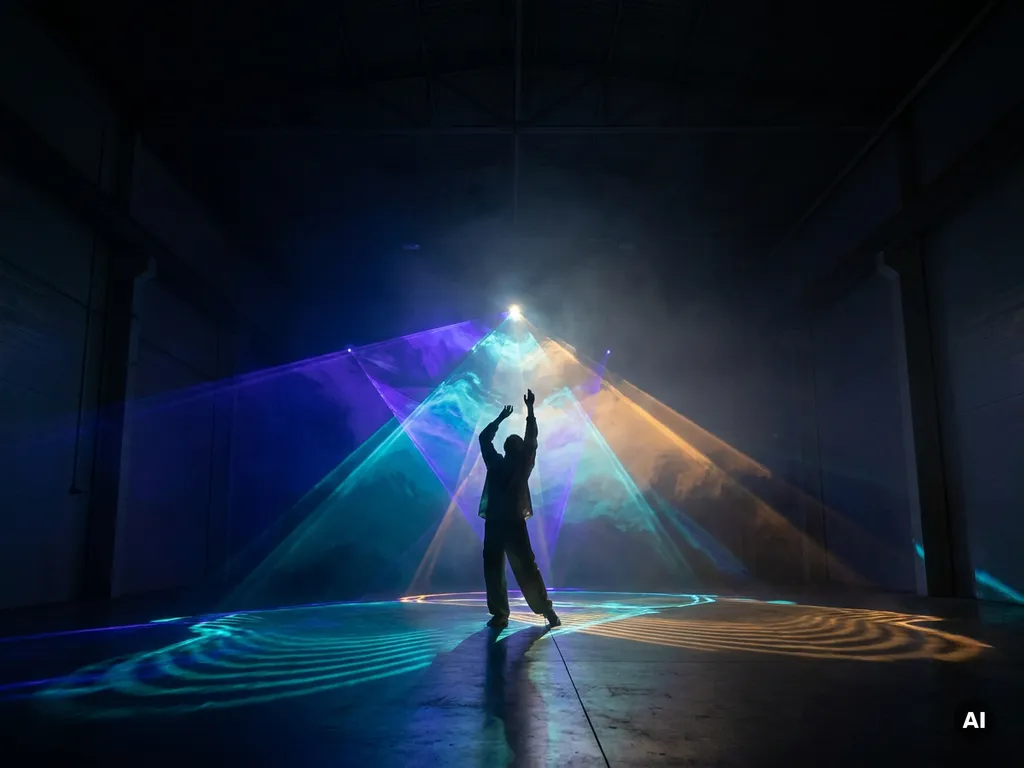
Yes, an audience can absolutely interact with a projection show. Modern interactive projection systems use sensors, cameras, and real-time rendering to detect movement, touch, or sound and respond instantly with visual changes, turning a passive viewing experience into a live, participatory one. The technology has matured to the point where meaningful audience interaction is possible at virtually any scale, from intimate museum galleries to outdoor festivals with thousands of visitors. This article unpacks the key questions around how it works, what forms that interaction takes, and how to choose the right setup for your goals.
What technologies make a projection show interactive?
Interactive projection shows rely on a combination of real-time tracking, responsive software, and projection hardware working in sync. The core technologies are motion sensors, depth cameras (such as LiDAR or infrared), computer vision systems, and game-engine-based rendering platforms like Unreal Engine or Unity. Together, these allow a projection system to detect what an audience is doing and respond to it in real time.
At the input layer, sensors and cameras capture audience behavior, movement, gestures, touch, or even sound levels. That data is fed into middleware or a custom software layer that interprets the input and triggers specific visual responses. The output is then rendered instantly and projected onto surfaces, floors, walls, or complex three-dimensional structures.
Other enabling technologies include:
- Infrared and depth sensors that track body position and movement without requiring physical contact
- Touch-sensitive projection surfaces that respond like a giant touchscreen
- Smartphone and app-based interaction where audience members use their own devices as controllers
- AI-driven systems that adapt the visual content based on crowd behavior or individual responses
- Multi-projector blending that creates seamless large-scale canvases across curved or irregular surfaces
The sophistication of the interaction depends on how these layers are combined. A simple motion-triggered installation might use a single depth camera. A fully adaptive immersive projection experience designed for a major brand activation or museum might integrate AI, multi-channel audio, and dozens of synchronized projectors.
What kinds of interaction can audiences have with a projection?
Audience interaction with a projection show falls into several distinct categories, ranging from physical movement responses to device-based participation. The most common forms include motion interaction, touch interaction, voice or sound response, and collective participation, where the entire crowd’s behavior shapes what appears on screen.
Movement and gesture-based interaction
This is the most immediately intuitive form of audience interaction projection. When visitors walk across an interactive floor projection, ripples, colors, or creatures appear beneath their feet. When someone raises a hand in front of a wall installation, the imagery responds to their gesture. This type of interaction requires no instruction, it is discovered naturally, which makes it especially powerful in public spaces and exhibitions.
Device and touch-based interaction
Audiences can also interact through smartphones, tablets, or dedicated touch interfaces. In some installations, visitors scan a QR code and their device becomes a controller that influences what appears on a shared projection surface. In others, touch-sensitive panels or floors allow direct manipulation of the projected content. This approach works well when you want to give individuals agency within a larger shared experience.
Collective and crowd-driven interaction
One of the most compelling possibilities in interactive projection is designing for collective behavior. Rather than responding to one person, the system reads the energy of an entire crowd, noise levels, movement density, or aggregated input from multiple devices, and shifts the visual narrative accordingly. This creates a sense of shared authorship that traditional passive shows cannot replicate.
How does interactive projection mapping work?
Interactive projection mapping works by precisely aligning projected digital content onto physical surfaces, buildings, sculptures, irregular objects, and then layering a real-time interaction system on top. The result is a surface that appears to move, transform, or respond to the audience, even though it is physically static.
The process begins with a detailed 3D scan or model of the projection surface. Specialized mapping software uses this model to warp and align the digital imagery so it fits perfectly onto the physical geometry, even across corners, curves, and recesses. This alignment is called projection calibration.
The interactive layer is added by integrating sensor data into the rendering pipeline. When a sensor detects input, a person walking close to a building facade, for example, that signal is processed and used to trigger or modify the visual content in real time. The projection system then outputs the updated imagery within milliseconds, creating the illusion of direct response.
What makes interactive projection mapping technically demanding is the precision required. Any misalignment between the digital content and the physical surface breaks the illusion. At the same time, the real-time rendering must be fast enough that the interaction feels immediate. Achieving both simultaneously requires experienced technical direction and robust hardware.
What’s the difference between an immersive projection room and a standard projection show?
A standard projection show is a linear, pre-rendered experience where audiences watch content play out on a screen or surface. An immersive projection room surrounds the audience on multiple sides, walls, floor, and sometimes ceiling, with synchronized, continuous imagery that places viewers inside the visual world rather than in front of it. The key distinction is spatial envelopment combined with the possibility of interaction.
In a standard projection show, the relationship between audience and content is observational. In an immersive projection experience, that boundary dissolves. Visitors are not watching a story unfold, they are standing within it. This shift in spatial relationship changes how people emotionally process the experience. Research in experiential design consistently shows that physical immersion deepens emotional engagement and memory retention compared to screen-based viewing.
Immersive projection rooms also differ in their technical architecture. They require multiple projectors with edge-blending software to create seamless imagery across surfaces, high-resolution content designed specifically for wrap-around viewing, and often spatial audio systems that match the visual environment. When interactive elements are added, the complexity increases further, but so does the impact.
For cultural institutions, brands, and educators, this distinction matters because an immersive room changes visitor behavior. People slow down, look around, reach out, and stay longer. That extended dwell time creates more opportunity for meaningful storytelling and deeper audience connection.
Can interactive projections work for large audiences or events?
Yes, interactive projections scale effectively to large audiences and live events. The key is designing the interaction model to suit the crowd size. Systems that respond to collective behavior, crowd movement, aggregate sound levels, or shared device input, work particularly well at scale because they do not require each individual to have a personal interaction moment.
For large-scale events, interactive projection setups typically use high-lumen projectors (often laser-based for reliability and brightness), robust sensor arrays distributed across the space, and server infrastructure capable of processing crowd data in real time. Outdoor festivals, stadium activations, and large public installations have all demonstrated that projection show audience engagement at scale is not only achievable but often more spectacular than smaller formats.
The practical considerations for large-audience interactive projection include:
- Sensor coverage ensuring detection zones cover the full audience area without blind spots
- Latency management keeping the response time fast enough to feel connected even when processing crowd-wide data
- Content design for simultaneity creating visuals that respond meaningfully whether one person or five hundred people are interacting at once
- Redundancy and reliability live events require failsafe systems because technical failures in front of large audiences are costly
- Audience flow and safety interactive floor projections and motion-responsive installations must be designed so that engagement does not create physical hazards in crowded spaces
We have delivered immersive projects at event scale, and the consistent finding is that well-designed interactive projection draws crowds in rather than overwhelming them, the spectacle becomes a social magnet.
What are interactive projections used for in education and museums?
In education and museums, interactive projections are used to transform passive information delivery into active, participatory learning. They make abstract or complex subjects tangible, support multiple learning styles simultaneously, and create emotional resonance that helps audiences retain what they have experienced long after leaving.
Museum and cultural institution applications
Museums use interactive projection to animate static collections, extend the narrative around artifacts, and attract audiences who might not engage with traditional display formats. A historical map can become an explorable landscape. A painted portrait can respond to a visitor’s gaze. A natural history exhibit can place visitors inside an ecosystem. These applications deepen the connection between visitor and collection without requiring the physical alteration of irreplaceable objects.
Cultural institutions also use large-scale projection mapping on building facades for public programming, creating accessible, high-impact experiences that reach audiences who never enter the building itself. This is particularly effective for broadening reach to younger or more diverse visitor demographics.
Educational and NGO applications
For schools, training programs, and NGOs, interactive projection creates environments where learners engage with subject matter rather than simply receiving it. A climate change installation can let students visualize the impact of different choices. A social awareness program can place participants inside the perspective of someone with a different lived experience. These approaches align with established principles of experiential learning, that doing and experiencing produce deeper understanding than watching or reading alone.
Our work with organizations including UNICEF and educational institutions reflects this philosophy: technology should serve the learning goal, not become the subject itself. The projection is the medium; the understanding it generates is the outcome.
How do you choose the right interactive projection setup for your project?
Choosing the right interactive projection setup depends on five core factors: your audience size and behavior, the physical space, the nature of the interaction you want to enable, the content and story you need to tell, and the operational context in which the experience will run. There is no universal solution, the right setup is always the one that serves your specific goals most effectively.
Start by defining the interaction model. Ask whether you want individual interactions, collective responses, or a blend of both. This determines the sensor and software architecture before any hardware decisions are made. A touch-responsive educational installation for a classroom of thirty students requires a fundamentally different system than a crowd-reactive outdoor projection for a public festival.
Then assess the space. Projection brightness, throw distance, surface texture, and ambient light levels all affect which projector technology is appropriate. Indoor controlled environments allow for more nuanced, lower-lumen setups. Outdoor or high-ambient-light spaces demand laser projectors with significantly higher output. Irregular surfaces require more complex mapping calibration and content design.
Consider the content and narrative requirements. Interactive projection works best when the interaction is meaningful, when what the audience does changes the story in a way that feels intentional, not arbitrary. This means content design and interaction design must be developed together, not as separate workstreams.
Finally, think about operational sustainability. A temporary event installation has different reliability and maintenance requirements than a permanent museum exhibit that runs daily for three years. The right setup accounts for longevity, ease of operation, and technical support availability.
If you are weighing these factors for an upcoming project, we are ready to help you think it through. Explore what we do at Rooftop Immersive and reach out via contact, we would be glad to help you design an interactive projection experience that genuinely connects with your audience.
Gerelateerde artikelen
- What are the key elements of a successful exhibition?
- How do you create content for a 360 dome experience?
- What are the different types of immersive theater experiences?
- What are examples of immersive art?
- What are some ideas for interactive museum exhibits?
- How much does a planetarium dome cost?
- How much do brand activations cost?
- How to create an immersive exhibition?
- How do I measure the success of an AR marketing campaign?