
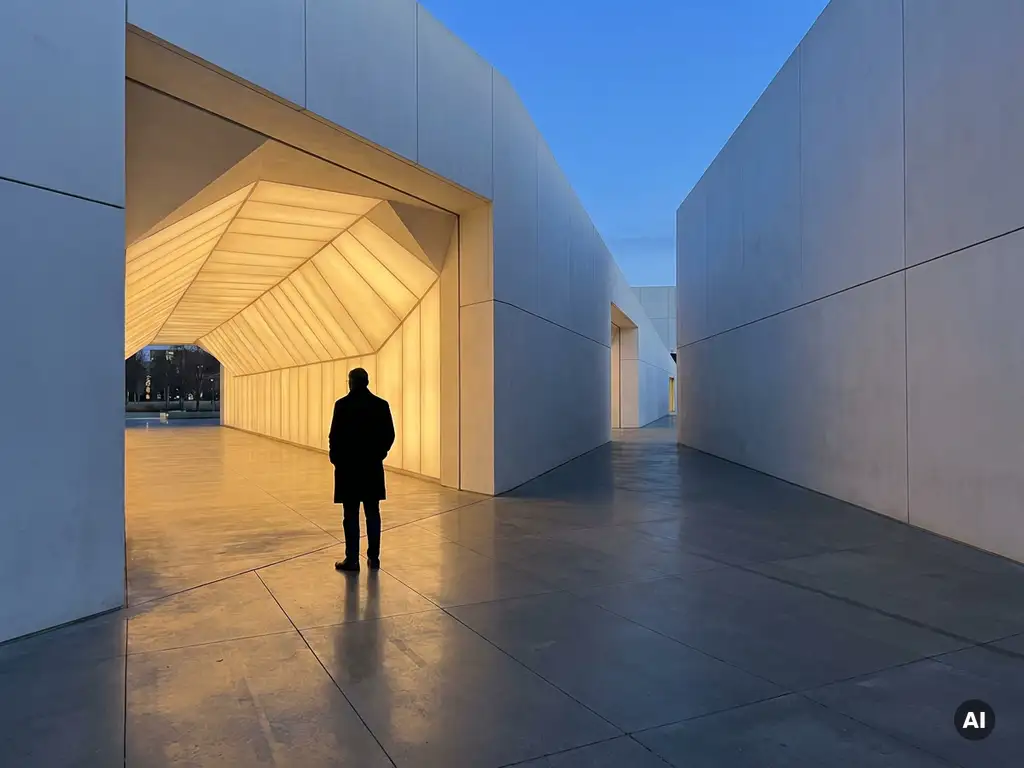
Designing an immersive installation for a public space means engineering a physical environment where digital technology, sensory stimuli, and spatial storytelling combine to create a meaningful, participatory experience accessible to any passerby. The process spans site analysis, narrative development, technology selection, and audience-centered design, all working together to transform an ordinary location into something extraordinary. The questions below unpack every dimension of that process, from evaluating your site to measuring real-world impact.
What makes a public space suitable for an immersive installation?
A public space is suitable for an immersive installation when it offers the right combination of foot traffic, physical infrastructure, and contextual meaning. The best sites have natural dwell time, places where people already pause, gather, or move slowly, combined with sufficient power access, structural integrity, and ambient conditions that can support technology without degrading the experience.
Beyond the technical checklist, suitability is also about narrative fit. A space carries its own history, architecture, and social meaning. When an immersive installation responds to that existing character rather than ignoring it, the experience feels purposeful rather than dropped in from outside. A train station concourse, a museum atrium, a public square, or a waterfront promenade each creates a different emotional starting point for the audience, and the best installations begin by reading that starting point carefully.
Practical factors that determine suitability include:
- Lighting conditions – natural light levels affect projection quality, screen visibility, and AR legibility at different times of day
- Acoustic environment – ambient noise shapes how sound design must be engineered or isolated
- Power and connectivity – reliable electrical supply and network access are non-negotiable for most interactive installations
- Pedestrian flow – understanding how people move through the space determines where to place triggers, focal points, and exit paths
- Permitting and ownership – public spaces involve multiple stakeholders, from local authorities to property managers, whose requirements shape what is technically and legally possible
What are the core elements of an immersive installation design?
The core elements of an immersive installation design are spatial narrative, sensory layering, interactivity, and technical infrastructure. Every successful public immersive experience design integrates these four dimensions into a coherent whole, where the story drives the sensory choices, and the technology serves both without becoming the point itself.
Spatial narrative is the backbone. Before any technology is selected, the experience needs a story, a question it poses, an emotion it evokes, or a perspective it shifts. That narrative determines how visitors move through the space, what they discover, and what they take away.
Sensory layering extends the experience beyond the visual. Sound design creates atmosphere and guides attention. Scent can anchor a memory or transport a visitor to another context entirely. Temperature, texture, and spatial scale all communicate meaning that screens alone cannot. The most resonant immersive art installations treat every sense as a design channel.
Interactivity transforms visitors from passive observers into active participants. Whether through gesture recognition, touch interfaces, mobile triggers, or physical objects embedded in the environment, interaction creates personal investment in the experience. When a visitor influences what happens next, they remember it differently.
Technical infrastructure is what makes the vision reliable at scale. Projection mapping systems, audio arrays, AR platforms, sensor networks, and content management tools must all perform consistently across varying conditions and visitor volumes. Infrastructure that fails under pressure undermines even the most compelling narrative.
How does the design process for an immersive installation work?
The design process for an immersive installation moves through five broad phases: discovery and site analysis, concept development, prototype and iteration, production and integration, and installation with ongoing management. Each phase builds on the last, and the most effective projects maintain a feedback loop between creative ambition and technical feasibility throughout.
Discovery and concept development
The process begins with a deep understanding of the site, the audience, and the intended outcome. What should visitors feel, understand, or do differently after the experience? What does the space already communicate? At this stage, the creative team develops the narrative framework, the central idea that will govern every subsequent decision. Stakeholder input, audience research, and site visits all feed into a concept document that aligns creative vision with practical constraints.
Prototyping, production, and integration
Before full production begins, key experience moments are prototyped and tested, often in a studio environment that simulates the target space. This is where interaction logic is validated, sensory combinations are refined, and technical risks are identified early. Production then builds out the full experience: 3D environments, motion graphics, sound design, physical fabrication, and hardware configuration. Integration brings every element together in the actual space, where real-world variables like lighting, acoustics, and crowd behavior require final adjustments. The installation phase ends not when the doors open, but when the system has been tested under live conditions and the team has confirmed it performs reliably for real visitors.
What technologies are used in public immersive installations?
Public immersive installations draw on a wide range of technologies, including projection mapping, augmented reality, spatial audio, interactive sensors, LED environments, and AI-driven personalization. The specific combination depends on the narrative goals, site conditions, audience scale, and whether the installation is temporary or permanent.
Projection mapping transforms irregular architectural surfaces into dynamic canvases, allowing content to respond to the geometry of a building facade or interior wall. Augmented reality layers digital content onto the physical world through smartphones or headsets, enabling visitors to unlock hidden stories without any permanent physical modification to the space. Spatial audio systems create directional soundscapes that change as visitors move, reinforcing the sense of physical immersion.
Interactive sensors, including motion detectors, cameras with computer vision, pressure-sensitive floors, and RFID tags, allow the installation to respond to individual visitors in real time. AI-driven systems take this further, adapting content to visitor behavior, language, or pace. For large-scale public installations, content management platforms coordinate all of these elements simultaneously, ensuring synchronization across multiple zones and output devices.
Our work across immersive projects reflects how these technologies combine differently for each context, what works in a museum atrium requires a fundamentally different technical architecture than what works in an outdoor plaza or a trade fair pavilion.
How do you design for diverse audiences in a public setting?
Designing for diverse audiences in a public immersive installation means building experiences that are accessible, multilingual, and legible at multiple levels of engagement, so that a child, an older adult, a first-time visitor, and a domain expert can all find meaning in the same space without the design compromising itself for any of them.
The first principle is layered depth. The surface of the experience should be immediately readable and emotionally engaging without prior knowledge. Deeper layers of content, interaction, or narrative complexity reward those who choose to explore further. This structure prevents alienation at the entry point while sustaining engagement for curious visitors.
Accessibility is not an afterthought, it is a design constraint from the beginning. This means considering visual contrast and text size for visitors with low vision, audio descriptions for the visually impaired, tactile elements for multi-sensory engagement, and physical layouts that accommodate mobility aids. Multilingual content delivery, whether through AI-driven personalization or selectable language interfaces, ensures that language is never a barrier to participation.
Emotional universality matters as much as technical accessibility. Experiences grounded in shared human emotions, curiosity, wonder, empathy, recognition, transcend cultural and demographic differences more reliably than experiences built around specific cultural references or assumed knowledge.
What’s the difference between a temporary and a permanent immersive installation?
The key difference between a temporary and a permanent immersive installation lies in their design priorities: temporary installations optimize for impact, portability, and speed of deployment, while permanent installations prioritize durability, maintainability, and long-term relevance. Both can be equally ambitious creatively, but they require fundamentally different engineering and production approaches.
Temporary installations
Temporary installations, designed for events, festivals, brand activations, or short-term exhibitions, are built for rapid setup and breakdown, often across multiple venues. They favor modular structures, wireless or easily routed cabling, and hardware that can be transported and reconfigured without specialist tools on-site. The creative brief typically centers on a single, concentrated emotional peak: a moment of surprise, delight, or connection that visitors carry with them after leaving. The compressed timeframe also means that content can be highly topical and culturally specific without the risk of becoming dated.
Permanent installations
Permanent public installations are designed to remain meaningful and functional over years or decades. This demands hardware built to withstand continuous operation, content that ages gracefully or can be updated remotely, and maintenance contracts that ensure the experience never degrades for returning visitors. The narrative must be broad enough to resonate with audiences who will encounter it across different cultural moments and life stages. Permanent installations also carry greater responsibility for their relationship with the site, they become part of the identity of the space itself, which raises the stakes for both creative and institutional alignment.
How do you measure the impact of an immersive public installation?
The impact of an immersive public installation is measured through a combination of quantitative engagement metrics and qualitative outcome indicators, visitor numbers and dwell time on one side, and shifts in understanding, attitude, or behavior on the other. Which metrics matter most depends entirely on what the installation was designed to achieve.
For commercially oriented installations, engagement metrics are typically primary: total visitor interactions, average time spent, social media sharing, conversion rates, and post-experience brand recall. Sensor data and camera analytics can track movement patterns, interaction frequency, and crowd behavior in real time, providing granular insight into which moments of the experience are working and which are losing attention.
For educational and social impact installations, the measurement framework shifts toward learning outcomes and behavioral change. Pre- and post-experience surveys assess shifts in knowledge or attitude. Structured observation captures how visitors engage with content. Follow-up research, conducted weeks or months later, tests whether the experience produced lasting change rather than momentary impact.
Qualitative data, visitor testimonials, facilitator observations, and stakeholder interviews, adds texture that numbers alone cannot provide. The most rigorous impact assessments combine both, building a picture of the experience that is honest about what it achieved and what it could do differently.
Designing an immersive installation for a public space is one of the most demanding and rewarding creative challenges in spatial experience design. It requires holding together technical complexity, narrative clarity, and genuine human empathy, all at once, in a space that belongs to everyone. If you are exploring what this could look like for your institution, brand, or public program, we would be glad to think through it with you. Contact us to start the conversation.
Gerelateerde artikelen
- What are interactive Experiences?
- How to create a brand activation?
- How much do brand activations cost?
- What are the pros and cons of experiential marketing?
- What is the immersive learning method?
- What are two examples of experiential marketing?
- What are the psychological effects of immersion?
- How do you create VR content for marketing campaigns?
- What software is used for VR content production?