
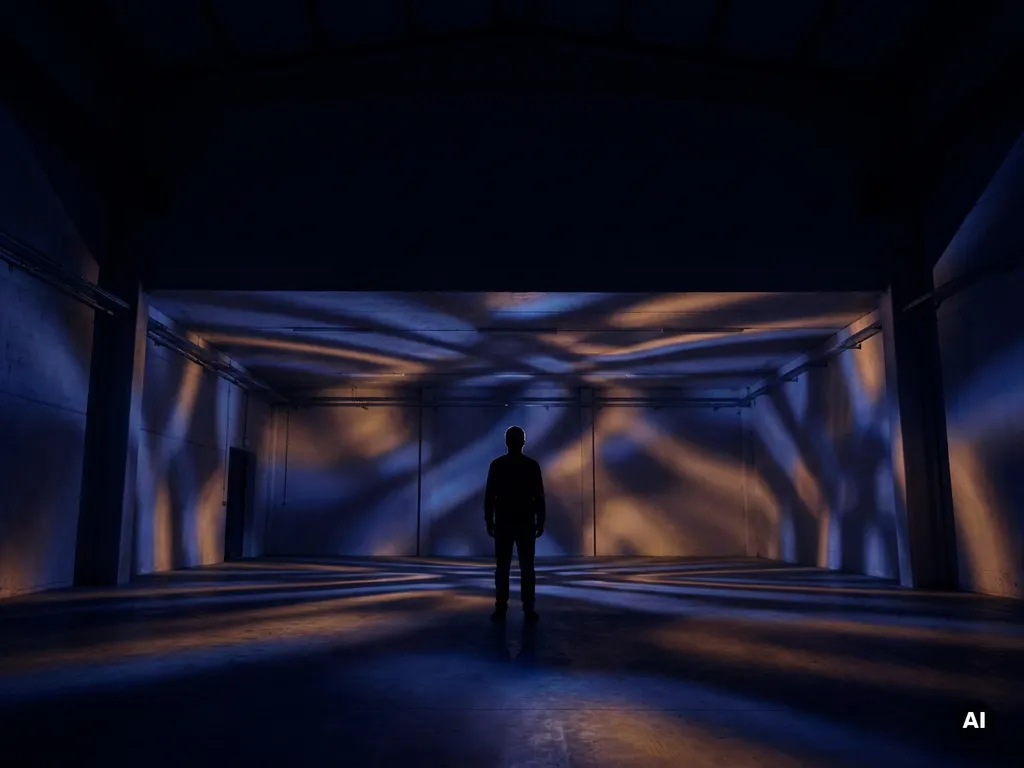
An immersive art installation is a large-scale, multi-sensory artwork that surrounds visitors and invites them to step inside the experience rather than observe it from a distance. Unlike a painting on a wall or a sculpture on a plinth, an immersive art installation transforms the entire space, using light, sound, projection, scent, and sometimes touch, so that the visitor becomes part of the work itself. These experiences exist across museums, galleries, public spaces, and branded environments, and they are reshaping how people connect with art, culture, and ideas.
How is an immersive art installation different from traditional art?
The core difference between an immersive art installation and traditional art is the relationship between the artwork and the viewer. Traditional art asks you to stand in front of it. An immersive art installation asks you to enter it. The visitor is no longer a passive observer, they become an active participant whose presence, movement, and choices shape what they experience.
Traditional art is bounded, a canvas has edges, a sculpture has a base. Immersive art installations dissolve those boundaries. They fill rooms, wrap around ceilings and floors, respond to human movement, and engage senses beyond sight. Where a painting communicates through a single visual plane, an immersive art experience communicates through space, time, and sensation simultaneously.
This shift also changes the emotional register of the encounter. When you are surrounded by an artwork rather than looking at it, the experience becomes embodied. You feel it physically. That physical dimension is precisely why immersive exhibitions generate a depth of emotional response that traditional display formats rarely achieve.
What technologies power immersive art installations?
Immersive art installations are powered by a combination of projection mapping, spatial audio, augmented reality, virtual reality, interactive sensors, and artificial intelligence. These technologies work together to create environments that respond to visitors, fill architectural spaces with dynamic content, and engage multiple senses at once.
The specific toolkit varies depending on the scale and intent of the installation, but the most commonly used technologies include:
- Projection mapping – Video content is mapped precisely onto irregular surfaces such as walls, floors, and architectural features, transforming entire rooms into living canvases.
- Spatial audio – Sound is positioned and layered in three-dimensional space, so visitors hear different audio depending on where they stand, deepening the sense of presence.
- Augmented reality (AR) – Digital layers are overlaid onto the physical world through smartphones or headsets, adding interactive storytelling to physical artworks or spaces.
- Virtual reality (VR) – Visitors wear headsets to enter fully rendered digital environments, experiencing art from the inside of a completely virtual world.
- Interactive sensors and motion tracking – Cameras and sensors detect visitor movement and trigger real-time responses in the installation, making each visit unique.
- AI-driven personalization – Artificial intelligence adapts the experience based on visitor behavior, language, or learning style, ensuring the installation speaks to each person individually.
- Scent and haptic systems – Physical sensations such as fragrance, temperature, and tactile feedback add layers of sensory depth that screens alone cannot deliver.
At Rooftop Immersive, we design with all of these technologies and more, combining them under one roof to build experiences that go far beyond the visual.
What types of immersive art installations exist?
Immersive art installations span a wide range of formats, from walk-through projection environments and interactive digital sculptures to AR-enhanced gallery walls and multi-sensory 4D cinemas. The type of installation chosen depends on the audience, the space, the story being told, and the intended emotional outcome.
The most prominent categories include:
- Projection-based environments – Large-scale rooms where walls, floors, and ceilings become screens, typically displaying animated interpretations of artworks or natural phenomena.
- Interactive art installations – Works that respond directly to visitor input, touch, movement, voice, or proximity, so that the audience co-creates the experience in real time.
- AR art activations – Physical artworks or spaces enhanced with augmented reality layers that reveal hidden narratives, animations, or interactive elements through a device.
- VR art experiences – Visitors enter a fully virtual environment, often stepping inside a reimagined version of a famous painting or an entirely original digital world.
- 360-degree dome installations – Spherical projection environments that envelop audiences completely, used in museums, festivals, and educational settings.
- Multi-sensory 4D installations – Experiences that combine visual projection with scent, sound, airflow, and temperature to create full-body immersion.
- Geospatial and outdoor AR installations – AR content anchored to specific geographic coordinates, turning public spaces, city streets, or heritage sites into interactive art environments.
Where are immersive art installations typically found?
Immersive art installations are most commonly found in museums, dedicated immersive experience venues, cultural festivals, brand activation spaces, and educational institutions. In 2026, the format has expanded well beyond traditional gallery walls, it now appears in shopping centers, airports, corporate headquarters, and outdoor public spaces.
Museums and cultural institutions have embraced immersive exhibitions as a way to attract new audiences and breathe new life into permanent collections. Dedicated immersive art museums, purpose-built venues with no physical collection of their own, have become popular destinations in major cities across Europe and North America, drawing visitors specifically for the experiential format.
Brands and experiential marketing teams use immersive art installations at product launches, trade fairs, and flagship retail environments to create memorable moments that extend far beyond a standard campaign. Educational institutions and NGOs deploy them in learning environments and public awareness campaigns, where the goal is behavior change and emotional understanding rather than entertainment alone.
The growing accessibility of the technology means that immersive art experiences are no longer confined to large organizations with large budgets. Traveling installations, modular formats, and location-based VR solutions have made it possible to bring these experiences to schools, community spaces, and smaller cultural venues across the world.
Why do museums and brands invest in immersive art installations?
Museums invest in immersive art installations to attract younger and more diverse audiences, increase dwell time, and create experiences that are genuinely shareable. Brands invest in them to break through the noise of passive advertising and generate authentic emotional connections that translate into loyalty and advocacy. Both motivations share a common root: the recognition that passive consumption no longer holds attention.
For cultural institutions, the challenge is acute. Visitor expectations have shifted dramatically. Audiences who spend their daily lives navigating interactive digital environments expect the same level of engagement from a museum visit. An immersive exhibition delivers that, it turns a visit into an event, something worth traveling for and worth talking about afterward.
For brands and marketing leaders, the value proposition is equally clear. An interactive art installation creates a physical moment that lives on in photographs, social media posts, and personal memory. The emotional intensity of a well-designed immersive art experience is something a banner ad or a pre-roll video simply cannot replicate.
Beyond engagement metrics, there is a deeper strategic reason. Immersive experiences signal ambition. They communicate that an organization is willing to invest in meaning, not just messaging, and that distinction resonates powerfully with both visitors and consumers.
How long does it take to create an immersive art installation?
Creating an immersive art installation typically takes between three and twelve months from initial concept to opening, depending on the scale, complexity, and technology involved. Smaller interactive installations or AR-enhanced experiences can be delivered more quickly, while large-scale projection environments or custom multi-sensory builds require longer development cycles.
The timeline is shaped by several interconnected factors:
- Concept and creative development – Defining the narrative, sensory goals, and audience journey before any technology is selected.
- Technology selection and integration – Choosing the right combination of projection, audio, AR, VR, or interactive systems and ensuring they work together seamlessly.
- Content production – Creating the visual, audio, and interactive content that fills the installation, which can include 3D modeling, animation, film production, and software development.
- Space design and build – Adapting or constructing the physical environment to support the installation, including structural, electrical, and acoustic requirements.
- Testing and calibration – Ensuring every element performs correctly under real-world conditions before visitors arrive.
Working with a partner who manages the full process, from concept to execution under one roof, significantly reduces coordination time and the risk of delays caused by handoffs between separate suppliers.
What makes an immersive art installation emotionally impactful?
An immersive art installation becomes emotionally impactful when it engages multiple senses simultaneously, places the visitor at the center of the story, and creates moments of genuine surprise, recognition, or empathy. The emotional power comes not from spectacle alone, but from the feeling of being truly inside an experience rather than watching it from the outside.
Several design principles consistently elevate emotional impact:
- Multi-sensory engagement – When sound, scent, temperature, and touch accompany the visual experience, the brain processes the encounter as real rather than representational. That physiological response deepens emotional memory.
- Narrative coherence – A strong story arc gives visitors something to follow and care about. Without narrative, even technically impressive installations can feel hollow.
- Interactivity and agency – When visitors can influence what happens in an installation, they invest emotionally in the outcome. Agency transforms a spectator into a participant.
- Scale and spatial surprise – The physical sensation of being surrounded by something vast or unexpected triggers an emotional response that smaller formats cannot replicate.
- Personalization – Experiences that adapt to the individual, through AI, language selection, or responsive design, feel more relevant and therefore more meaningful.
The most enduring immersive art experiences are those that make visitors feel seen, moved, or changed, not just impressed. That distinction between spectacle and genuine impact is what separates a truly memorable installation from one that fades from memory the moment you leave the room.
If you are exploring what an immersive art installation could look like for your museum, brand, or organization, we would be glad to think through the possibilities with you. Contact us to start the conversation.
Gerelateerde artikelen
- Can you give me an example of an immersive learning experience?
- How to create a brand activation?
- What is the relationship between sensory experience learning and retention?
- What is an example of multi sensory learning?
- What is an immersive experience?
- What are 360-degree experiences?
- What is an immersive installation?
- What are the ROI benefits of experiential marketing campaigns?
- What technology is used in immersive installations?