
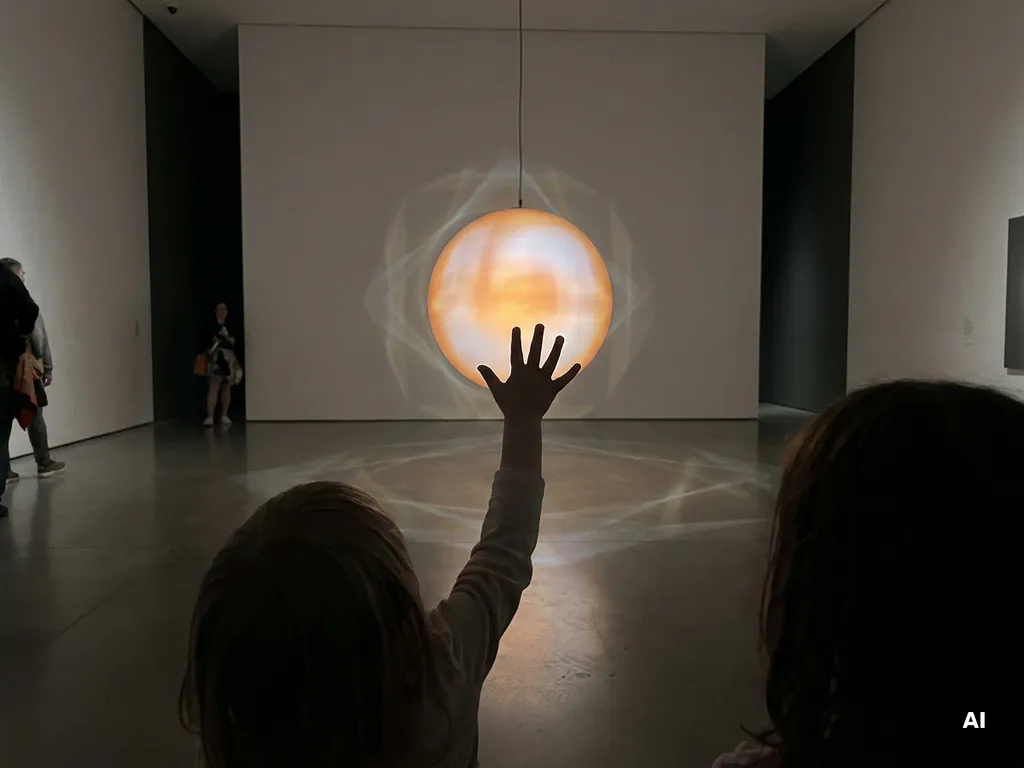
Interactive museums engage visitors by transforming passive observation into active participation, inviting people to touch, explore, respond, and co-create meaning rather than simply look at objects behind glass. The most effective interactive museums combine physical design, digital technology, and compelling storytelling to make every visit feel personal and memorable. Below, we unpack the key questions that cultural leaders, exhibition designers, and curious visitors are asking about museum engagement in 2026.
What makes a museum experience truly interactive?
A museum experience is truly interactive when visitors become active participants rather than passive observers. Interactivity means the exhibit responds to the visitor, through touch, movement, voice, or choice, and that the visitor’s actions shape what they see, hear, or discover next. Genuine interactivity creates agency, and agency creates emotional investment.
The distinction matters because not all digital additions qualify as interactive. A touchscreen that plays a video when tapped is a step forward, but a truly interactive exhibit changes its response based on who is engaging with it, what choices they make, or how they move through a space. The experience feels alive because it is, in a sense, listening.
Several qualities define authentic museum interactivity:
- Responsiveness: The exhibit reacts to visitor input in real time, whether through gesture, touch, proximity, or voice.
- Meaningful choice: Visitors can explore in their own order, at their own pace, and follow their own curiosity.
- Multisensory engagement: Sight and sound are just the beginning. Smell, texture, spatial awareness, and even temperature can deepen the sense of presence.
- Narrative consequence: Choices feel significant because they lead somewhere different, revealing new layers of a story or a collection.
When these elements combine, a museum visit stops feeling like a tour and starts feeling like an experience that belongs to the visitor.
What types of technology do interactive museums use?
Interactive museums use a wide range of technologies including augmented reality (AR), virtual reality (VR), mixed reality, projection mapping, AI-driven avatars, interactive screens, digital twins, and sensor-based installations. The right technology depends on the museum’s collection, audience, physical space, and storytelling goals.
In practice, the most engaging museum technology implementations tend to layer multiple tools rather than rely on a single solution:
- Augmented Reality (AR): Overlays digital content onto physical objects or spaces, bringing a painting to life, revealing hidden layers of an artifact, or placing historical figures back into a room.
- Virtual Reality (VR): Transports visitors entirely into another world, inside a historical event, beneath the ocean, or through a cultural landscape that no longer exists.
- Projection mapping: Transforms walls, floors, and architectural features into dynamic canvases for storytelling, creating immersive 360-degree environments without headsets.
- AI avatars and interactive characters: Virtual guides or historical figures that hold real conversations with visitors, adapting their responses based on what the visitor asks.
- Sensor-based and motion-responsive installations: Exhibits that react to a visitor’s proximity, movement, or touch, creating a sense of dialogue between the person and the space.
- Digital twins: Photogrammetric 3D recreations of real objects, buildings, or environments that visitors can explore virtually, handle digitally, or examine from impossible angles.
Museum technology is evolving rapidly. In 2026, the frontier lies in combining AI personalization with physical installation design, creating experiences that adapt in real time to the individual visitor’s language, learning style, or emotional response.
How does storytelling drive visitor engagement in museums?
Storytelling drives visitor engagement in museums by giving facts an emotional context that makes them memorable. When visitors connect with a human story, a personal account, a moment of crisis, a triumph or loss, they are far more likely to care about the artifact, place, or idea that story surrounds. Information informs; story transforms.
The most visited and most discussed museum exhibitions are rarely those with the most objects. They are the ones that take visitors on a journey. That journey has structure: a beginning that draws you in, a middle that challenges or surprises you, and an ending that leaves you changed. When physical space, digital media, and curatorial intent align around a narrative arc, the result is an experience that visitors carry with them long after they leave.
Effective museum storytelling works on several levels simultaneously:
- Personal perspective: First-person accounts, survivor testimonies, and individual voices make abstract historical events feel immediate and human.
- Environmental storytelling: The physical design of a space, its light, sound, scale, and texture, tells a story before a single word is read.
- Layered discovery: Interactive elements allow visitors to peel back layers of a story at their own pace, rewarding curiosity with deeper meaning.
- Emotional pacing: Skilled exhibition designers alternate between moments of tension and relief, wonder and reflection, ensuring visitors remain emotionally engaged throughout.
Technology amplifies storytelling when it serves the narrative rather than competing with it. The best immersive museum experiences use digital tools invisibly, the visitor is aware of the story, not the screen.
What’s the difference between AR and VR in museum settings?
In museum settings, AR (augmented reality) enhances the physical environment by layering digital content onto real objects and spaces, while VR (virtual reality) replaces the physical environment entirely with a simulated world. AR keeps visitors present in the museum; VR transports them somewhere else. Both serve distinct purposes depending on the exhibition’s goals.
When AR works best in museums
AR is particularly powerful when the physical collection is the anchor. A visitor standing in front of a centuries-old painting can use AR to see the brushwork in extraordinary detail, watch the scene animate, or hear the artist speak. The object remains central; the digital layer enriches it. AR is also more accessible, it typically requires only a smartphone or tablet, and visitors can engage with it without removing themselves from the shared social experience of the gallery.
When VR works best in museums
VR excels when the subject matter cannot be physically present. A museum about deep-sea ecosystems, ancient civilizations, or outer space can use VR to place visitors inside environments that are otherwise unreachable. It is also highly effective for empathy-driven storytelling, experiencing a historical event, a refugee journey, or a climate-threatened landscape from the inside creates a depth of understanding that no photograph or film can replicate. VR typically requires dedicated headsets and more controlled visitor flow, making it better suited to specific exhibit zones rather than general gallery use.
Many leading museums now use both in complementary ways, AR to enrich the physical collection, VR to extend the narrative into worlds beyond the walls.
How do interactive exhibits improve learning outcomes for visitors?
Interactive exhibits improve learning outcomes by engaging multiple senses and requiring active participation, which strengthens memory encoding and deepens understanding. When visitors do something, make a choice, solve a problem, handle a replica, or navigate a simulation, they process information more deeply than when they simply read a label or watch a video.
This aligns with well-established principles of experiential learning: people retain more of what they experience than what they are told. Interactive museum exhibits apply this principle at scale, creating environments where learning happens through exploration rather than instruction.
The learning benefits of interactive exhibits are particularly strong in several areas:
- Complex or abstract concepts: Subjects that are difficult to visualize, climate systems, historical timescales, molecular biology, become tangible when visitors can manipulate them in a simulated environment.
- Empathy and perspective-taking: Immersive experiences that place visitors in another person’s situation develop emotional understanding that purely factual content cannot achieve.
- Differentiated learning styles: Interactive exhibits naturally accommodate visual, auditory, and kinesthetic learners, making museum education more inclusive.
- Sustained attention: When visitors are active participants, their attention spans extend significantly compared to passive formats like text panels or linear video.
For schools and educational groups, this makes interactive museums powerful partners in curriculum delivery, particularly for topics that benefit from emotional engagement alongside factual knowledge.
How can museums attract younger and more diverse audiences?
Museums attract younger and more diverse audiences by designing experiences that reflect those audiences’ lives, values, and expectations, not by simply adding technology for its own sake. Younger visitors in particular expect participation, personalization, and relevance. They want to see themselves in the story, and they want the experience to feel made for them, not just adapted for them.
Several strategies consistently prove effective:
- Participatory design: Involving young people and underrepresented communities in the creation of exhibitions ensures the content reflects their perspectives from the outset rather than as an afterthought.
- Digital-first touchpoints: AR activations, gamified elements, and social-sharing moments meet younger audiences on platforms and in formats they already inhabit.
- Multilingual and adaptive experiences: AI-driven personalization can adjust language, complexity, and cultural framing in real time, making the same exhibit feel relevant to visitors from very different backgrounds.
- Community storytelling: Featuring the stories of living communities, not only historical figures, signals that the museum is a living institution, not a monument to the past.
- Flexible formats: Evening events, pop-up activations, school partnerships, and digital extensions of physical exhibitions all broaden the entry points into a museum’s world.
The museums making the most progress on audience diversity in 2026 are those treating it as a design challenge, not a marketing challenge. The experience itself must be the invitation.
What should museums consider before implementing immersive technology?
Before implementing immersive technology, museums should consider their narrative goals, audience needs, physical infrastructure, staff capacity, and long-term maintenance requirements. Technology is a means, not an end, the most important question is not “what technology can we use?” but “what experience do we want to create, and does this technology serve that goal?”
A structured evaluation process typically involves the following considerations:
- Curatorial and narrative alignment: Does the technology enhance the story the museum wants to tell, or does it distract from the collection’s integrity? The best immersive experiences are invisible, visitors remember the story, not the hardware.
- Audience readiness: What is the digital literacy of the primary visitor demographic? Solutions that work beautifully for tech-savvy audiences may alienate others if not designed with accessibility in mind.
- Physical and technical infrastructure: Immersive installations often require robust Wi-Fi, specific lighting conditions, spatial clearances, and power infrastructure. Assessing these early prevents costly retrofits.
- Investment factors: The cost of immersive technology varies significantly based on scope, customization, hardware requirements, content complexity, and ongoing maintenance. Institutions should plan for the full lifecycle, not just the launch.
- Staff and operational capacity: Who will manage the technology day-to-day? Training, troubleshooting, and visitor guidance all require human investment alongside the digital one.
- Scalability and longevity: Can the experience be updated as the collection evolves? Modular, content-flexible platforms offer better long-term value than bespoke installations that cannot adapt.
Working with an experienced creative technology partner from the earliest stages of planning significantly reduces risk. We work alongside museums and cultural institutions through every phase, from concept and narrative design to technical build and visitor experience testing, ensuring that the technology serves the story, and that the story serves the audience. If you are exploring what immersive technology could mean for your institution, we would welcome the conversation, feel free to contact us to discuss your vision.
Gerelateerde artikelen
- What is immersive dome projection?
- What is the difference between brand activation and brand experience?
- What are the positive effects of virtual reality?
- What are the three types of virtual reality?
- What is the primary goal of experiential marketing?
- What can provide immersive training experiences?
- What is the 20 20 20 rule for VR?
- What is an example of an immersive experience?
- How do you create compelling interactive narratives?