
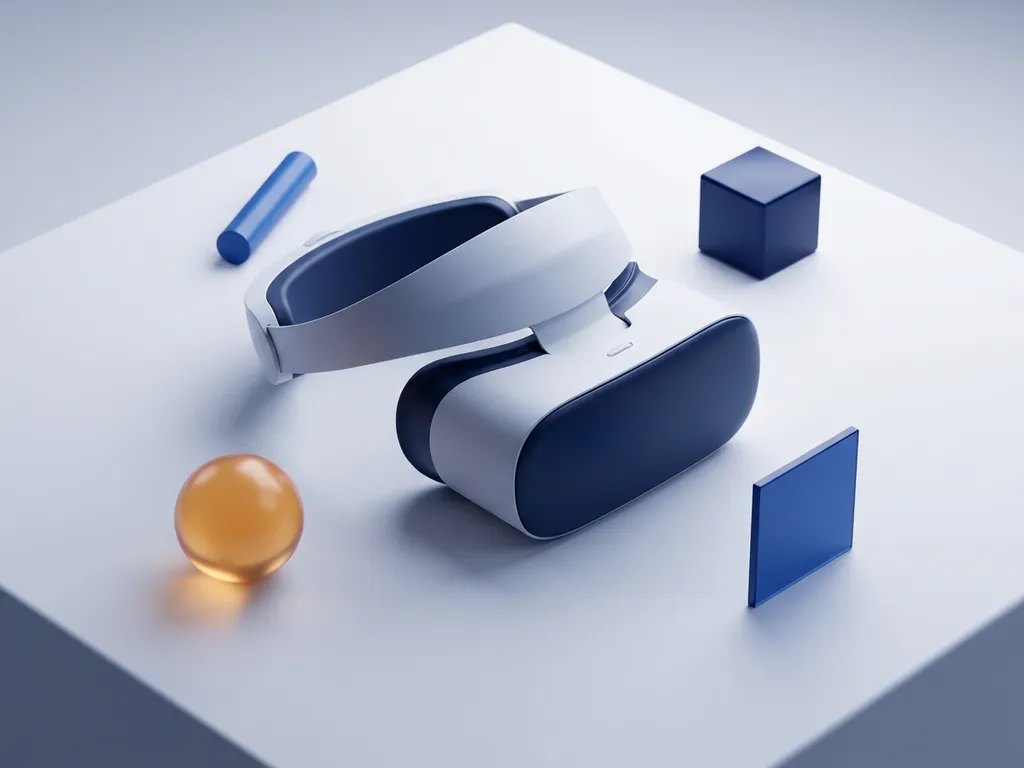
Virtual reality is built on four core elements: immersion, interactivity, presence, and sensory feedback. Together, these elements create the conditions for a convincing, engaging virtual experience, each one contributing something the others cannot provide alone. Understanding how they function individually and in combination reveals why some VR experiences feel genuinely transformative while others fall flat.
These four elements are not independent features you simply switch on. They are interdependent forces that amplify one another. A highly immersive visual environment becomes far more convincing when the user can interact with it. That interaction deepens the sense of presence. And sensory feedback, sound, haptics, spatial audio, reinforces every layer beneath it. The sections below unpack each element in depth and address the questions practitioners and decision-makers most often ask about how VR actually works.
How do the 4 elements of virtual reality work together?
The four elements of virtual reality work together as a reinforcing system: immersion provides the visual and spatial envelope, interactivity gives the user agency within it, presence is the psychological result of both, and sensory feedback strengthens the brain’s acceptance of the virtual environment as real. Remove or weaken one element, and the entire experience loses coherence.
Think of it as a feedback loop rather than a checklist. A 360-degree visual environment creates immersion, but without interactivity it remains passive, closer to a film than an experience. When users can reach out, move, and affect what they see, the brain begins to treat the environment as genuine. That cognitive shift is presence. Sensory feedback, spatial audio, haptic vibration, even temperature or scent in advanced installations, then seals the loop by giving the body physical confirmation of what the eyes and mind are already accepting.
In practice, this means that every design decision in a VR project is a decision about balance. A medical training simulation might weight interactivity and presence heavily, because the learning outcome depends on the user genuinely believing they are performing a procedure. A brand activation experience might prioritize immersion and sensory feedback to create emotional memory. The four elements are always present, but their relative emphasis shifts depending on the goal.
What is immersion in virtual reality?
Immersion in virtual reality is the degree to which a virtual environment replaces the user’s perception of the physical world. It is primarily a technical quality, determined by display resolution, field of view, frame rate, spatial audio, and the physical design of the headset or installation. Higher immersion means fewer perceptual gaps between the virtual and the real.
Immersion is often confused with presence, but they are distinct. Immersion is objective and measurable: a headset either covers your full field of view or it does not. Presence, by contrast, is the subjective feeling that follows from immersion, the sense of actually being somewhere. You can have high immersion without strong presence if the content is unconvincing, and in rare cases a deeply compelling narrative can create a sense of presence even with modest technical immersion.
The practical levers for immersion include visual fidelity (polygon count, texture resolution, lighting quality), audio design (binaural sound, spatial positioning), physical tracking (how accurately the system maps your head and body movements to the virtual world), and latency (the delay between movement and visual response). Latency is particularly critical, even small delays break the brain’s acceptance of the virtual environment and can cause disorientation.
For designers and commissioners of VR experiences, immersion sets the ceiling on what presence and interactivity can achieve. Investing in high-fidelity environments, responsive tracking, and spatial audio is not aesthetic indulgence, it is the structural foundation everything else rests on.
What role does interactivity play in a VR experience?
Interactivity is what separates virtual reality from 360-degree video. It gives users agency, the ability to make choices, manipulate objects, navigate freely, and affect outcomes within the virtual environment. Without interactivity, VR is a passive viewing experience. With it, the user becomes a participant, and that shift is what drives learning, emotional engagement, and behavioral change.
The importance of interactivity goes beyond entertainment. Research in cognitive science consistently shows that active participation deepens memory encoding compared to passive observation. When a learner physically performs a task in a virtual environment, operating equipment, making a decision under simulated pressure, navigating a social scenario, the neural pathways engaged are closer to those activated by real experience. This is why immersive education and VR training consistently outperform traditional instruction for complex, high-stakes skills.
Interactivity also determines the emotional arc of an experience. A user who can choose where to look, who to speak to, or which path to take develops a sense of ownership over the narrative. That ownership generates investment. In brand experiences, it translates to stronger recall and emotional association. In educational contexts, it drives motivation and reduces the disengagement that plagues passive formats.
The design of interactivity requires careful calibration. Too little and the experience feels like a museum display, interesting but distant. Too much, without clear guidance, and users feel lost or overwhelmed. The most effective VR experiences scaffold interactivity: they introduce agency gradually, reward exploration, and ensure that every interactive moment serves the experience’s core purpose.
What is presence and why does it matter in VR?
Presence in virtual reality is the subjective feeling of actually being in the virtual environment, the sense that the digital world is real and that you are genuinely located within it. It is the psychological outcome that immersion and interactivity are designed to produce. Presence matters because it is the mechanism through which VR creates real-world impact: behavioral change, emotional memory, empathy, and learning.
Presence is sometimes described as the “being there” feeling, and that description, while simple, captures something important. When presence is achieved, the brain responds to virtual stimuli with genuine physiological reactions. Users flinch at virtual threats. They feel vertigo at virtual heights. They experience empathy when placed in another person’s perspective. These are not intellectual responses to content, they are embodied reactions to a perceived reality. That is the power that makes VR uniquely effective for empathy-building campaigns, trauma-informed training, and social impact work.
Presence is fragile. It can be broken by a lag in tracking, an unconvincing texture, an interaction that does not behave as expected, or audio that does not match the visual environment. This is why professional VR production treats every element of an experience as a potential threat to presence, not just the obvious technical parameters, but narrative consistency, character behavior, and the logic of cause and effect within the virtual world.
For organizations commissioning VR experiences, presence is the metric that matters most. It is the difference between an experience that users describe as “impressive” and one they describe as genuinely moving or life-changing. Designing for presence requires expertise across technology, narrative design, spatial audio, and user psychology, which is why the best immersive experiences are built by teams that hold all of those disciplines together.
How does sensory feedback enhance virtual reality?
Sensory feedback enhances virtual reality by giving the body physical evidence that corroborates what the eyes and ears are already perceiving. When sensory signals align across multiple channels, visual, auditory, haptic, olfactory, thermal, the brain’s threshold for accepting the virtual environment as real drops significantly. Each additional sensory layer reduces cognitive dissonance and deepens presence.
The most common form of sensory feedback in VR is spatial audio. When sound behaves the way the brain expects, a voice coming from the direction of a virtual character, footsteps that shift in volume as the user moves, ambient sound that changes with location, the sense of being in a real space strengthens dramatically. Spatial audio is often underinvested in VR production, yet its contribution to presence is disproportionately large.
Haptic feedback adds another layer. Controllers that vibrate when a virtual object is touched, vests that simulate impact, or floors that transmit subtle vibrations all give the body physical confirmation of virtual events. In training simulations, haptic feedback improves procedural learning because the muscle memory engaged is closer to what real-world performance requires.
At the advanced end of sensory design, scent and temperature begin to play a role. In immersive installations designed for maximum emotional impact, memorial experiences, environmental awareness campaigns, therapeutic applications, the addition of smell or warmth can produce responses that no screen-based medium can match. We design experiences that engage all available senses precisely because multisensory encoding produces stronger, more durable emotional memory than any single channel can achieve alone.
Which VR element has the biggest impact on user experience?
Presence has the biggest impact on overall user experience in virtual reality, because it is the element that determines whether an experience feels real or merely impressive. Immersion, interactivity, and sensory feedback are all inputs that contribute to presence, but presence is the output that drives emotional response, memory formation, and behavioral change. Without it, even technically sophisticated VR remains a novelty.
This does not mean the other elements are secondary in importance, they are the conditions that make presence possible. But when evaluating the impact of a VR experience on its audience, presence is the variable that most reliably predicts whether the experience achieves its purpose. An experience that generates strong presence will be remembered, discussed, and acted upon. One that achieves high immersion without presence will be admired and forgotten.
The practical implication for anyone commissioning or designing a VR experience is that presence should be the design objective, not a byproduct. Every decision about visual fidelity, interaction design, audio engineering, and sensory feedback should be evaluated against a single question: does this strengthen or weaken the user’s sense of being genuinely present in this environment? When that question drives the process, the other three elements naturally align to serve it.
Do all VR applications need all 4 elements equally?
No, VR applications do not need all four elements equally. The appropriate balance depends entirely on the purpose of the experience, the audience, and the context of use. A surgical training simulation demands different proportions than a brand activation at a trade fair. Understanding which elements to prioritize, and which to simplify, is one of the core design decisions in any VR project.
Consider a few contrasting examples. A VR experience designed to build empathy for displaced communities, the kind of work used by NGOs and humanitarian organizations, prioritizes presence above all else. The goal is to make the user feel genuinely transported into another person’s reality. Interactivity may be deliberately limited so that the user is a witness rather than an agent, preventing the experience from becoming a game. Sensory feedback, particularly spatial audio and environmental sound, is used to deepen that sense of being present in another world.
A retail or brand experience, by contrast, might weight interactivity and immersion more heavily. The goal is engagement and memorability, users should feel excited, curious, and active. Presence matters, but the threshold is lower: the experience does not need to feel indistinguishable from reality, it needs to feel extraordinary.
Educational applications typically require high interactivity and meaningful presence, because learning outcomes depend on active participation and genuine engagement with the material. Sensory feedback supports retention. Immersion sets the context. But the interaction design, the quality of the choices users can make and the feedback they receive, is often the decisive factor in whether learning actually occurs.
The most effective VR experiences are those where the four elements have been deliberately calibrated to serve a specific human outcome. That calibration is a craft, and it is one of the most important contributions a skilled immersive studio brings to a project. If you are exploring what a purposefully designed VR experience could achieve for your organization, we would welcome the conversation, contact us to discuss what the right balance of elements looks like for your goals.
Gerelateerde artikelen
- What is a full dome planetarium?
- What does immersive event mean?
- How do interactive museums engage visitors?
- How much does a virtual tour cost?
- How can I use augmented reality?
- What is an immersive experience?
- What equipment is needed for 360-degree content creation?
- How do 360-degree experiences work in marketing?
- What is the ROI of immersive brand activations?