
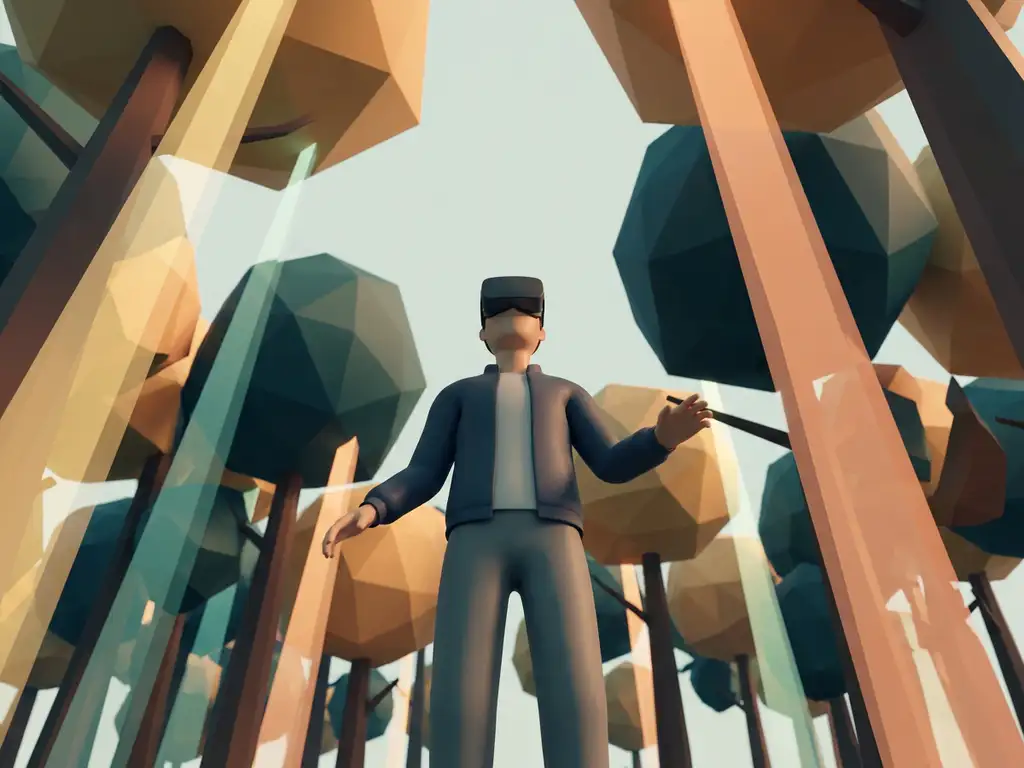
Immersive virtual reality field trips offer students a genuinely transformative learning experience by placing them inside environments that would otherwise be impossible, impractical, or unsafe to visit in person. Unlike passive video content, VR field trips engage learners spatially and emotionally, activating memory and curiosity in ways that flat-screen media cannot replicate. The questions below unpack exactly how this works, who benefits most, and what separates a meaningful immersive experience from a simple 360° video.
How do immersive VR field trips differ from traditional classroom videos?
Immersive VR field trips differ from traditional classroom videos by placing the student inside the environment rather than showing it to them from the outside. Instead of watching a screen, learners look around a fully rendered space, move through it, and interact with elements within it. This spatial presence activates a fundamentally different cognitive and emotional response than passive viewing.
When a student watches a documentary about the Amazon rainforest, their brain processes it as information. When they stand inside a photorealistic VR rendering of that same forest, hearing birds overhead and seeing the canopy stretch in every direction, their brain processes it as an experience. That distinction matters enormously for learning. Research in cognitive science consistently supports the idea that experiential memory, memory formed through perceived physical presence, is more durable and emotionally anchored than memory formed through passive observation.
Traditional classroom videos also suffer from attention fragmentation. A screen at the front of a room competes with every other stimulus in that room. A VR headset removes those competing stimuli entirely, creating what learning designers call a closed-loop attention environment. The student’s focus is directed not by instruction but by genuine curiosity about the space they are inhabiting.
What learning outcomes can virtual field trips realistically improve?
Virtual field trips can realistically improve knowledge retention, spatial understanding, empathy, and motivation to engage with a subject. The immersive format strengthens recall by linking information to a vivid sensory context, and it builds emotional connection to topics that would otherwise feel abstract or distant. These are not marginal gains; they represent a qualitative shift in how deeply students engage with content.
Retention improves because immersive experiences create what memory researchers call context-dependent encoding. When information is learned inside a rich, multisensory environment, it becomes associated with that environment. Recalling the environment later helps surface the information attached to it. This is why someone who learns about the water cycle while standing inside a virtual cloud formation is more likely to remember it than someone who reads the same explanation in a textbook.
Empathy is another outcome that virtual field trips address with particular power. When students experience a refugee camp, a historical event, or a distant community from the inside, they are not just learning facts about those realities. They are developing a felt sense of what it means to be present in them. That shift from intellectual understanding to emotional recognition is one of the most valuable outcomes immersive education can deliver, and it is one that traditional media struggles to achieve at scale.
Motivation also increases when students feel active rather than passive. The sense of agency that comes from navigating a virtual environment, even in a guided experience, signals to the learner that they are a participant rather than an audience. That shift sustains engagement across longer sessions and increases willingness to revisit and explore the material.
Which subjects benefit most from VR field trip experiences?
The subjects that benefit most from VR field trip experiences are those where physical context, spatial understanding, or emotional resonance is central to comprehension. History, geography, science, and social studies lead this list, but the immersive format adds value to any subject where abstract concepts become clearer when given a physical or environmental frame.
- History and social studies: Students can walk through ancient Rome, witness historical events from the inside, or experience the lived conditions of people in different eras and cultures. This transforms history from a sequence of dates into a felt narrative.
- Geography and earth sciences: Volcanic landscapes, ocean floors, polar ice fields, and rainforest ecosystems become accessible environments rather than photographs in a textbook. Spatial relationships between landforms, climates, and ecosystems are far easier to grasp when experienced in three dimensions.
- Biology and medicine: Traveling through the human circulatory system or observing cellular processes at scale gives students an intuitive understanding of biological mechanisms that diagrams cannot replicate.
- Environmental education: The emotional weight of seeing coral bleaching, deforestation, or ocean plastic from within the environment creates a connection to environmental issues that statistics alone rarely achieve.
- Languages and cultural education: Immersive environments set in the country or region associated with a language provide cultural context that enriches linguistic learning and builds genuine motivation to communicate.
The common thread across all these subjects is that understanding deepens when the learner can perceive relationships, scale, and context spatially rather than symbolically.
How do virtual field trips increase access for underserved students?
Virtual field trips increase access for underserved students by removing the financial, geographic, and logistical barriers that make in-person visits impossible for many schools. A student in a rural community, a low-income urban school, or a region with limited transport infrastructure can experience the Louvre, the Great Barrier Reef, or the surface of Mars without the cost of travel, permission slips, or substitute teachers.
The equity dimension of immersive education is one of its most compelling and underappreciated advantages. Educational experiences have historically been distributed unevenly, with students from well-resourced schools enjoying field trips, museum visits, and cultural excursions that their peers in underfunded institutions rarely access. VR field trips do not eliminate this inequality entirely, but they substantially reduce it by making high-quality experiential learning deployable at the cost of a headset and a content license rather than a coach, an entry fee, and a day out of school.
Accessibility for students with physical disabilities is another dimension of this benefit. A student who uses a wheelchair, has a chronic illness, or experiences anxiety in crowded public spaces can participate fully in a virtual field trip that might be genuinely inaccessible to them in person. The immersive format can also be adapted for different sensory profiles, learning paces, and language needs, making it a more inclusive format than the standardized in-person visit.
What makes a virtual field trip truly immersive versus just a 360° video?
A truly immersive virtual field trip goes beyond 360° video by incorporating interactivity, spatial audio, narrative agency, and responsive environments. A 360° video allows a viewer to look around a fixed point, but it offers no ability to move, interact, or influence what happens. True immersion requires the learner to feel present and active within the environment, not simply positioned inside a panoramic recording.
The distinction comes down to several design principles:
- Interactivity: Learners can pick up objects, trigger events, answer questions within the environment, or choose which area to explore next. This agency is what converts a viewer into a participant.
- Spatial audio: Sound that responds to the learner’s position and orientation within the space reinforces the sense of physical presence. A 360° video typically delivers a fixed audio mix; a truly immersive experience delivers audio that shifts as the learner moves.
- Narrative responsiveness: The environment reacts to the learner’s choices or actions. This might be as simple as a guide character responding to where the student looks, or as complex as a branching scenario that changes based on decisions made.
- Multisensory design: Where the delivery context allows, truly immersive experiences incorporate elements beyond sight and sound, including haptic feedback, temperature cues, or scent. These additional sensory layers dramatically deepen the feeling of presence.
- Pedagogical scaffolding: Immersive education is not just about the environment. It includes learning objectives embedded in the experience, moments of reflection, and connections to curriculum content that give the exploration educational structure.
We design our immersive education experiences with all of these layers in mind, because presence without purpose is entertainment, not learning.
How should educators prepare students for a VR field trip session?
Educators should prepare students for a VR field trip by establishing learning objectives beforehand, briefing them on the environment they will enter, and creating a structured reflection activity for after the session. The immersive format is powerful precisely because it is different from ordinary classroom experience, and that difference works best when students arrive with context rather than confusion.
Before the session
Introduce the topic using conventional materials so that students have a conceptual framework before entering the virtual environment. This primes them to notice relevant details and connect what they see to what they already know. Set clear learning goals so that the experience has direction rather than feeling like open-ended play. Brief students on the physical mechanics of the headset or device to reduce distraction from the technology itself.
During the session
Allow students time to orient themselves within the environment before directing their attention to specific content. Curiosity-led exploration in the first minute or two builds the sense of presence that makes the rest of the experience more effective. Where the experience includes guided elements, encourage students to engage with them actively rather than simply watching. If the format allows, pair students so that they can discuss what they are observing in real time.
After the session
Structured reflection is where much of the learning consolidates. Ask students to describe what they experienced, what surprised them, and what questions it raised. Connect those responses back to curriculum content. The emotional residue of an immersive experience is a powerful anchor for deeper discussion, and a well-facilitated debrief turns that residue into lasting understanding.
When is a virtual field trip better than an in-person visit?
A virtual field trip is better than an in-person visit when the destination is inaccessible, dangerous, prohibitively expensive, or no longer physically exists. It is also superior when the learning objective requires a level of control, repetition, or perspective that a real-world visit cannot provide. In these scenarios, the virtual format is not a compromise but a genuine upgrade.
Consider a class studying the conditions inside a historical event. No in-person visit can recreate that environment. A well-designed VR experience can. Consider a biology class exploring the deep ocean. No school trip reaches those depths. A virtual field trip does. Consider a school with a budget that makes any travel impossible. A virtual experience delivered on shared headsets provides an encounter with the wider world that would otherwise simply not happen.
There are also pedagogical scenarios where the virtual format outperforms the real one even when the real destination is accessible. A museum visit, for example, requires students to navigate crowds, manage physical fatigue, and absorb content at the pace of the group. A virtual version of the same museum can be paused, repeated, zoomed in on, and explored at each student’s own pace. Specific objects can be examined from angles that a glass case would never permit. The experience can be returned to in the classroom the following week.
In-person visits retain irreplaceable value when the goal is social, sensory in ways that VR cannot replicate, or dependent on genuine human encounter. But for learning objectives that require access, depth, repetition, or emotional scale, the immersive virtual format is frequently the stronger choice, and often the only realistic one.
If you are exploring how immersive virtual experiences could transform learning or engagement within your organisation, we would welcome the conversation. Reach out and contact us to explore what is possible.
Gerelateerde artikelen
- What is XR vs VR vs AR?
- What part of the brain is responsible for sensory memory?
- How can I use augmented reality?
- Can AI make AR?
- What's the difference between VR and immersion?
- What are the 4 elements of virtual reality?
- How do I measure the success of an AR marketing campaign?
- What is spatial design in immersive experiences?
- How can I create shareable brand moments without requiring app downloads?