
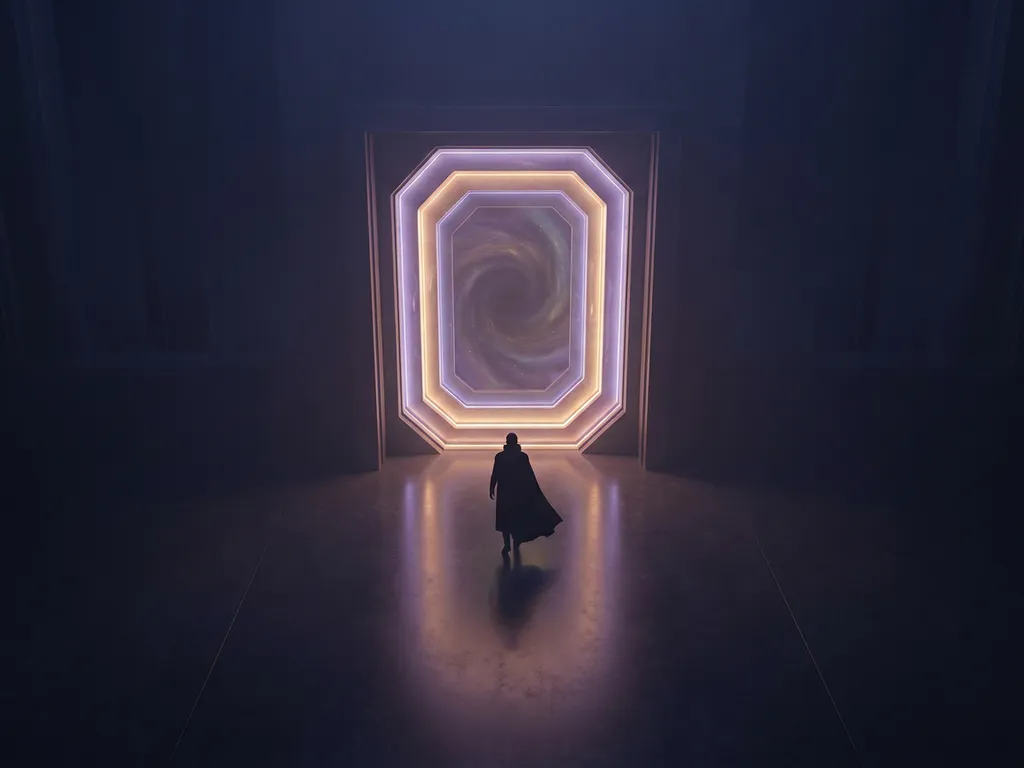
Immersive experiences are designed environments or encounters that engage multiple senses simultaneously, drawing participants into a story, space, or scenario so completely that the boundary between observer and experience dissolves. Unlike passive media, they invite active participation: you do not watch an immersive experience, you inhabit it. The questions below unpack how they work, what builds them, and why they leave such a lasting impression.
What makes an experience truly immersive?
An experience becomes truly immersive when it surrounds a participant on multiple sensory levels: sight, sound, touch, smell, and spatial awareness, to the point where attention is fully captured and the outside world recedes. The defining quality is presence: the psychological sensation of actually being somewhere, not merely viewing it from a distance.
Most everyday media engages only two senses: eyes and ears. A truly immersive experience goes further by activating the body and the space around it. When a visitor can smell rain in a rainforest installation, feel vibrations through the floor, or physically walk through a narrative environment, the brain processes the encounter as real rather than representational. That shift from representation to presence is what separates immersive design from conventional storytelling.
Several factors determine the depth of immersion:
- Multisensory engagement — the more senses involved, the harder it is for the mind to maintain critical distance
- Agency and interactivity — when participants can make choices or influence outcomes, emotional investment rises sharply
- Spatial coherence — a physically designed environment that matches the narrative reinforces belief in the world being created
- Narrative continuity — a clear story arc gives meaning to sensory input, turning stimulation into understanding
- Reduced distraction — removing phones, external noise, and competing stimuli allows deeper focus
The difference between an immersive experience and an interactive one is worth clarifying here. Interactive means the participant can respond or trigger changes. Immersive means the environment envelops the participant. The most powerful experiences are both: they surround and they respond.
What technologies power immersive experiences?
Immersive experiences are powered by a combination of extended reality (XR) technologies, spatial audio, projection systems, haptic feedback, scent delivery, and artificial intelligence. No single technology creates immersion on its own: it is the layering of these tools within a coherent design that produces the effect.
The core technology categories include:
- Virtual Reality (VR) — headsets that replace the visual field entirely, placing users inside computer-generated or filmed 360-degree environments
- Augmented Reality (AR) — digital content overlaid onto the physical world through smartphones, tablets, or AR glasses
- Mixed Reality (MR) — real-time blending of physical and virtual objects, allowing digital elements to interact with the actual environment, as seen on platforms like Apple Vision Pro
- Spatial computing — the broader field that enables digital information to exist and behave within three-dimensional physical space
- 360-degree projection and domes — large-scale environments where imagery wraps entirely around an audience, creating a sense of being inside the content
- Spatial audio — sound designed to move directionally through a space, reinforcing the sense of physical presence
- Haptics and environmental effects — vibration, temperature, wind, and scent delivery systems that engage the body beyond vision and hearing
- AI and real-time rendering — systems that adapt content dynamically based on participant behaviour, language, or input
Extended reality (XR) is the umbrella term for all of these technologies combined. In 2026, XR has moved well beyond novelty, becoming a mature production discipline used in education, brand campaigns, museums, and public installations worldwide.
How do AR and VR differ in immersive experience design?
The key difference between AR and VR in immersive experience design is the relationship to physical reality. VR replaces the physical world entirely with a virtual one, while AR adds digital layers on top of the real world. This distinction shapes every creative and technical decision in a project.
Virtual Reality: full replacement
In a VR experience, participants wear a headset that blocks out the physical environment and replaces it with a computer-generated or filmed world. This creates the highest possible level of presence because there are no competing real-world visual inputs. VR is particularly effective for training simulations, empathy-building scenarios, and cinematic storytelling where full attention and emotional immersion are the goal. Group VR experiences can synchronise multiple headsets so participants share the same virtual environment simultaneously, making it viable for audiences of hundreds.
Augmented Reality: layered reality
AR keeps the physical world visible and places digital content within it: a 3D model hovering above a product, a historical figure appearing in a museum gallery, or a portal opening in a park. Because participants remain grounded in their real surroundings, AR tends to feel more accessible and requires no headset for many applications. It works through smartphones, tablets, or AR glasses, and can be triggered by image recognition, GPS coordinates, or QR codes. AR is especially powerful for location-based storytelling, brand activations, and educational overlays on physical objects.
Mixed reality sits between the two: digital objects not only appear in the physical world but interact with it in real time, responding to surfaces, light, and movement. Choosing between AR, VR, and MR depends on the audience, the context, the narrative goals, and the physical environment where the experience will live.
What role does storytelling play in immersive experiences?
Storytelling is the structural foundation of any effective immersive experience. Technology creates the environment; story gives participants a reason to care about it. Without narrative, even the most sophisticated sensory setup becomes a demonstration rather than an experience that resonates.
The reason storytelling matters so deeply in immersive design connects to how memory works. People remember experiences not as sequences of sensory data but as stories: with characters, tension, turning points, and meaning. When an immersive environment is built around a coherent narrative arc, the brain encodes it more deeply and retains it longer. This is why immersive experiences consistently outperform traditional media in knowledge retention and emotional impact.
Effective immersive storytelling differs from linear storytelling in one critical way: the participant is inside the story rather than watching it unfold. This demands a different structure. Rather than a single fixed narrative path, immersive stories often use spatial design to guide attention, environmental cues to advance the plot, and interactive moments to give participants genuine agency. The story must work whether a visitor turns left or right, lingers or moves quickly, engages deeply or observes from a distance.
For organisations communicating complex or sensitive subjects — climate change, social inequality, historical trauma, public health — immersive storytelling offers something traditional media cannot: the direct experience of another perspective. That shift from information delivery to felt understanding is what drives behaviour change and lasting empathy.
How does AI personalise immersive experiences?
AI personalises immersive experiences by adapting content in real time based on a participant’s language, pace, choices, prior knowledge, or emotional responses. Rather than delivering a fixed sequence to every visitor, an AI-driven experience becomes responsive, adjusting its depth, tone, difficulty, or narrative direction to suit the individual in front of it.
In practice, AI personalisation in immersive design takes several forms:
- Language adaptation — content automatically switches language based on participant input, making experiences accessible across diverse audiences without separate versions
- Pace adjustment — the experience detects how long a participant spends in each section and adjusts the flow accordingly, avoiding information overload or boredom
- Learning style matching — in educational contexts, AI can shift between visual, narrative, and interactive modes depending on how a learner responds
- AI avatars and NPCs — virtual characters powered by conversational AI can hold real-time dialogue with participants, answering questions, guiding exploration, or deepening the narrative without scripted limitations
- Behavioural branching — choices made early in an experience influence what content appears later, creating a personalised journey through the same physical or virtual space
The result is an experience that feels designed for the individual rather than the crowd. At scale, this is transformative for education and public engagement: a single installation can serve a primary school class, a university cohort, and a general public audience with equal relevance and impact.
Where are immersive experiences most commonly used?
Immersive experiences are most commonly used in education, museums and cultural institutions, brand marketing, corporate training, public awareness campaigns, and live events. Each sector uses the technology differently, but the underlying goal is consistent: to move an audience from passive reception to active, memorable engagement.
In education and training, immersive experiences make abstract or dangerous scenarios accessible. Medical students can practise procedures in VR. History students can walk through reconstructed environments. Safety training can simulate high-risk situations without real-world consequences. The learning retention gains compared to traditional instruction are well established in educational research.
In museums and cultural institutions, immersive technology adds digital layers to physical collections, allowing artefacts to tell their own stories, transporting visitors to the original context of an artwork, or bringing historical figures to life. This approach attracts younger audiences and deepens engagement for all visitors without replacing the physical collection.
In brand marketing and experiential campaigns, immersive activations create the kind of memorable, shareable encounters that passive advertising cannot achieve. A product launch inside a fully designed sensory environment, an AR activation at a live event, or a VR journey into a brand’s origin story generates genuine emotional connection and measurable audience engagement.
In NGO and government communication, immersive experiences translate complex social issues into felt realities. Placing a participant inside the experience of displacement, environmental destruction, or poverty creates empathy that statistics and reports rarely achieve, and that empathy is a proven driver of behaviour change and public support.
How is an immersive experience built from concept to completion?
Building an immersive experience from concept to completion follows a structured creative and technical process that typically moves through discovery, concept development, production, integration, and delivery. The timeline and complexity vary significantly depending on scale, technology, and audience, but the process always begins with a clear understanding of the desired impact.
The key stages are:
- Discovery and brief — defining the audience, the core message, the emotional outcome, and the physical or digital context in which the experience will live
- Concept development — translating the brief into a narrative structure, sensory design, and technology selection; this is where storytelling and technology choices are made together rather than separately
- Prototyping — building early versions of key interactions or environments to test whether the concept delivers the intended experience before full production begins
- Full production — creating all 3D assets, filmed content, spatial audio, environmental design, and interactive logic; this phase often runs in parallel streams managed under one roof
- Integration and testing — assembling all elements in the actual environment, testing across hardware platforms, and refining based on real-world conditions
- Delivery and support — launching the experience with trained facilitation where needed, and providing ongoing technical support for the duration of the installation or campaign
The factors that most significantly affect the production timeline and investment include the scale of the physical environment, the number of simultaneous participants, the level of interactivity required, whether custom hardware is needed, and the complexity of the narrative. A location-based VR experience for a museum exhibition involves different considerations than a large-scale AR activation for a brand launch or a multi-site educational programme.
We work across this entire process from first conversation to final delivery, combining creative direction, technical production, and strategic thinking under one roof. If you are exploring what an immersive experience could look like for your organisation, we would welcome the conversation: contact us to start.
Gerelateerde artikelen
- What is immersive dome projection?
- What kind of technology is used in museums?
- What are 10 real-world examples of augmented reality?
- What is an example of a non immersive virtual reality?
- What is immersive learning?
- How do you distribute 360-degree content?
- How much do immersive installations cost?
- What are the technical requirements for immersive installations?
- What are the benefits of immersive museum experiences?