
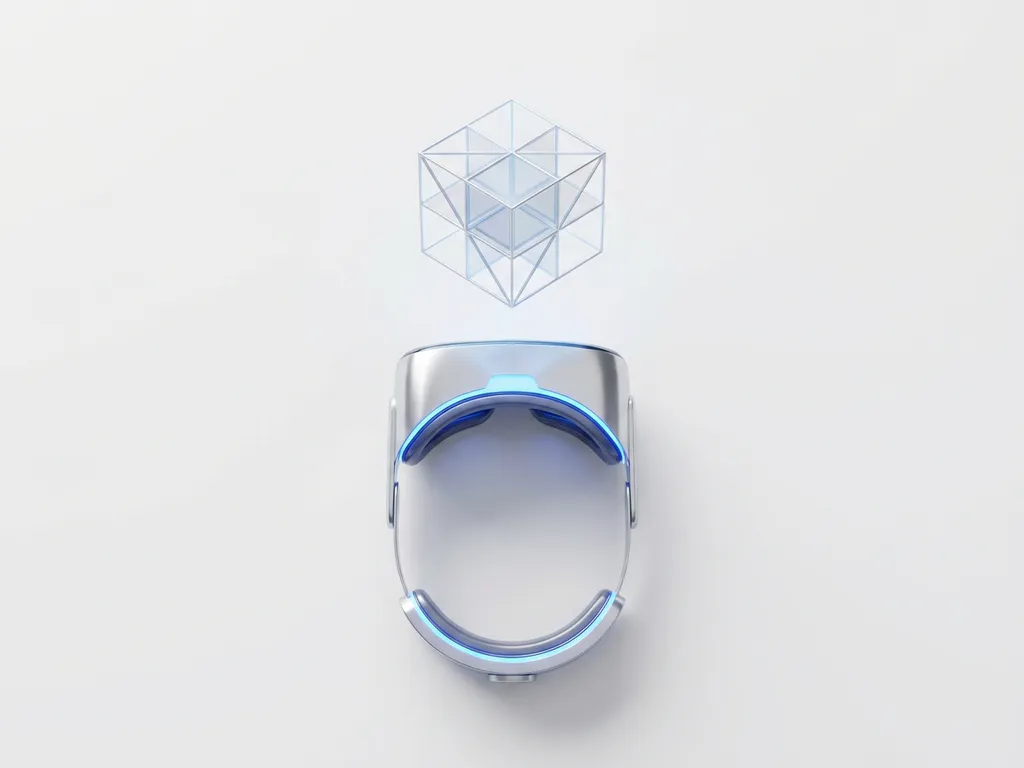
Yes, AI can make AR. Artificial intelligence can generate 3D assets, animate characters, personalize content in real time, and even build entire AR environments from text prompts or image inputs. The question is not whether AI can contribute to AR creation, but how much of the experience it can own, and where human creative direction still matters most.
In 2026, the combination of generative AI and augmented reality has moved well beyond novelty. Studios and brands are actively using AI tools to accelerate production, reduce costs, and create experiences that adapt dynamically to individual users. But the full picture is more nuanced than the hype suggests, and understanding what AI can and cannot do in AR is essential for anyone commissioning or building these experiences.
What can AI actually generate in an AR experience?
AI can generate a wide range of components within an AR experience, including 3D models, textures, animations, spatial audio, dialogue, and real-time behavioral logic for virtual characters. It can also generate the underlying content layer, such as narration scripts, translated text, or contextually relevant information that surfaces when a user interacts with an AR trigger.
The scope of what AI generates depends on the type of AR experience being built. For a product visualization, AI might generate photorealistic 3D renders from a product description alone. For an educational AR experience, AI can generate branching dialogue for virtual guides, adapt quiz content to a learner’s pace, or surface different narrative layers depending on where the user looks or what they interact with.
In spatial computing environments, AI is also being used to understand the physical world in real time, mapping surfaces, detecting objects, and adjusting virtual content placement accordingly. This means the AR experience does not just overlay digital content on the world; it reads the world and responds to it intelligently.
How does AI generate 3D assets for AR?
AI generates 3D assets for AR primarily through two methods: text-to-3D generation, where a written prompt produces a three-dimensional model, and image-to-3D generation, where a photograph or illustration is reconstructed as a volumetric object. Both methods use neural networks trained on large datasets of existing 3D content to predict geometry, surface detail, and material properties.
Tools like Luma AI, Meshy, and Point-E can produce usable 3D meshes in minutes from a simple description or a set of reference images. The output quality has improved dramatically, with models now generating assets that are increasingly game-ready, meaning they can be imported directly into AR development environments like Unity or Unreal Engine without extensive manual cleanup.
Photogrammetry, which involves scanning real objects with a camera and reconstructing them digitally, has also been accelerated by AI. What once required hours of manual point cloud editing can now be processed and refined automatically, making it practical to digitize physical artifacts, products, or environments at scale. This is particularly relevant for museums and cultural institutions looking to bring collections into AR without rebuilding every object by hand.
What’s the difference between AI-assisted and fully AI-generated AR?
AI-assisted AR uses artificial intelligence to accelerate, enhance, or personalize parts of an experience that is otherwise designed and directed by human creatives. Fully AI-generated AR attempts to produce the entire experience, from asset creation to interaction logic, with minimal human input. In practice, most high-quality AR experiences in 2026 are AI-assisted rather than fully AI-generated.
The distinction matters because it affects quality, consistency, and creative intent. AI-assisted production allows a studio to move faster, generate more variations, and adapt content dynamically while still maintaining a coherent artistic vision and narrative structure. A creative director shapes the experience; AI executes and scales it.
Fully AI-generated AR, by contrast, tends to produce results that are technically functional but creatively generic. The models lack the contextual judgment to understand what an experience should feel like, what emotional arc it should follow, or how it should reflect a brand’s identity or an institution’s values. For activations where emotional resonance and authenticity matter, human creative direction remains essential.
Can AI personalize an AR experience in real time?
Yes, AI can personalize an AR experience in real time by adapting content based on a user’s behavior, preferences, language, location, or interaction history. This includes changing the narrative path, adjusting the complexity of information, switching the language of on-screen text, or modifying the appearance and behavior of virtual characters to suit the individual user.
Real-time personalization in AR typically relies on a combination of computer vision, which reads what the user is looking at or doing, and a language or recommendation model, which decides what content to surface next. For educational applications, this means the experience can function like an adaptive tutor, moving faster with confident learners and offering more support to those who need it.
For brand experiences, real-time AI personalization can tailor product recommendations, adjust storytelling based on demographic signals, or respond to voice input with contextually relevant information. AI avatars and non-player characters (NPCs) powered by large language models can now hold genuine conversations, answer questions, and guide users through an experience without following a rigid script.
What are the current limits of AI in AR creation?
The current limits of AI in AR creation fall into three main areas: creative coherence, technical precision, and ethical control. AI can generate impressive individual assets but struggles to maintain consistent visual style, narrative logic, and emotional tone across a complete experience without significant human oversight.
On the technical side, AI-generated 3D models often require manual optimization before they perform well on mobile AR hardware. Polygon counts, texture compression, and anchor point accuracy are areas where automated outputs frequently need correction. For location-based AR that must align precisely with physical environments, AI spatial mapping still has error margins that matter in professional deployments.
Ethically, AI-generated content in AR raises questions about accuracy, representation, and consent, particularly in educational or cultural contexts. An AI model trained on biased data can produce representations that are historically inaccurate or culturally insensitive. In experiences designed to build empathy or convey factual information, this is not a minor risk. Human review and editorial control remain non-negotiable for responsible immersive experience design.
Which AI tools are used to build AR experiences today?
The AI tools used to build AR experiences in 2026 span asset generation, interaction design, spatial understanding, and real-time personalization. No single tool handles everything; professional studios combine several tools depending on the experience type and platform.
- Luma AI and Meshy for text-to-3D and image-to-3D asset generation
- Runway and Pika for generating and editing video content used in AR overlays
- ElevenLabs for generating realistic voice-over and dialogue for AI-driven AR characters
- OpenAI and Anthropic APIs for powering conversational AI avatars and NPCs within AR environments
- Niantic Lightship and Google ARCore for spatial mapping and real-world understanding in location-based AR
- Unity Sentis and Unreal Engine’s AI tools for integrating machine learning models directly into AR runtimes
- Adobe Firefly and Stable Diffusion for generating textures, concept art, and visual assets used in AR scene design
The most effective workflows combine these tools with a strong creative framework. AI accelerates production and enables personalization, but the experience architecture, the emotional journey, and the storytelling decisions still require human expertise to execute with intention and impact.
Should AR studios use AI to create immersive experiences?
Yes, AR studios should use AI to create immersive experiences, but strategically rather than wholesale. AI offers genuine advantages in speed, scale, and personalization that would be impossible to match through purely manual production. Refusing to integrate AI tools in 2026 means accepting slower timelines, higher costs, and less adaptive experiences. However, AI should serve the creative vision, not replace it.
The studios producing the most compelling AR experiences today use AI to handle the generative and adaptive layers while keeping human creative directors, narrative designers, and experience architects in control of the overall vision. This balance is what separates work that feels innovative and emotionally resonant from work that feels technically impressive but hollow.
For clients commissioning AR experiences, whether for brand activations, educational programs, or cultural exhibitions, the right question to ask a studio is not whether they use AI, but how they use it. Are they using AI to scale quality and deepen personalization, or are they using it to cut corners on craft? The answer reveals a great deal about the kind of experience they will deliver.
At Rooftop Immersive, we integrate AI across our AR and immersive experience workflows precisely because it allows us to build richer, more adaptive, and more impactful experiences without sacrificing the storytelling depth and sensory design that make those experiences genuinely memorable. If you are exploring what AI-powered AR could do for your brand, institution, or program, we would love to think through it with you. Contact us to start the conversation.
Gerelateerde artikelen
- What is an immersive museum?
- What are the three types of VR?
- What is immersive branding and how does it work?
- How to create a brand activation?
- What are 10 real-world examples of augmented reality?
- What is a digital exhibit?
- What is XR (extended reality)?
- What is the relationship between sensory experience learning and retention?
- What are the types of immersive experience?