
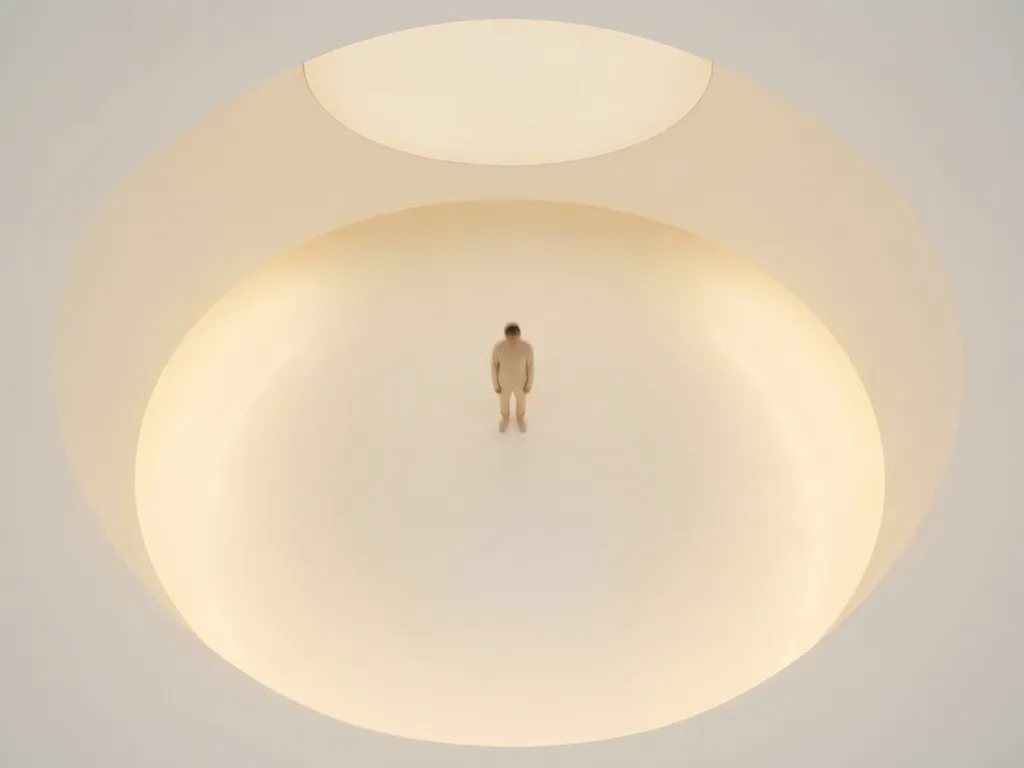
A 360-degree experience is a form of immersive media that surrounds the viewer with a fully spherical field of view, allowing them to look in any direction, up, down, left, right, and behind, as if they were physically present inside the content. Unlike traditional video, which frames a fixed window onto the world, a 360-degree experience places the viewer at the center of the scene. The sections below unpack exactly how these experiences work, what distinguishes them from virtual reality, and what makes them genuinely effective.
How do 360-degree experiences actually work?
A 360-degree experience works by capturing or rendering an entire spherical environment and then projecting that environment around the viewer so that every direction contains visual information. When the viewer moves their head or rotates their device, the perspective shifts in real time, creating the sensation of being inside the scene rather than watching it from the outside.
At the capture stage, a ring of wide-angle cameras records footage simultaneously in all directions. The individual feeds are then stitched together in post-production to form a seamless spherical image, known as an equirectangular projection. When played back, a media player or headset maps this sphere around the viewer’s vantage point, so wherever they look, the corresponding portion of the image fills their field of view.
For computer-generated 360-degree content, the process is different but the outcome is the same. A 3D environment is rendered from a single central point in all directions at once, using engines such as Unreal Engine or Unity. This approach allows for fully animated, photorealistic worlds that could never be filmed with physical cameras.
The experience of presence, the feeling of actually being somewhere, emerges from the combination of spatial audio, which responds to the direction the viewer is facing, and the visual continuity of the surrounding image. When sound and image move together in response to head movement, the brain interprets the result as a real environment rather than a recording.
What’s the difference between 360-degree experiences and virtual reality?
The key distinction is interactivity and immersion depth. A 360-degree experience allows you to look around freely within a pre-recorded or pre-rendered scene, but you cannot move through the space or interact with objects inside it. Virtual reality, by contrast, places you inside a fully interactive digital environment where your physical movements translate directly into the virtual world and you can manipulate elements within it.
Think of a 360-degree experience as an advanced panoramic photograph or film: you are an observer with rotational freedom, but the scene unfolds independently of your choices. VR is closer to a simulation: the world responds to your presence, your movement, and your actions.
This distinction has practical implications for how each format is used. 360-degree content is well suited to storytelling, documentary, and presence-based experiences where the goal is to transport someone to a place or moment. Interactive VR is better suited to training simulations, games, and scenarios where the learner or participant needs to make decisions and experience consequences.
The two formats are not mutually exclusive. Many immersive productions combine a 360-degree visual base with interactive elements layered on top, effectively blurring the line between passive panoramic video and active virtual reality. What matters is matching the format to the experience goal rather than choosing a technology for its own sake.
What types of 360-degree experiences exist?
360-degree experiences span a wide range of formats, from filmed documentary content to fully rendered animated environments, and from single-viewer headset experiences to large-scale shared installations. The format varies depending on the storytelling goal, the audience, and the physical context in which the experience is delivered.
- 360-degree video: Live-action footage captured with multi-camera rigs, used for documentary storytelling, journalism, brand films, and virtual tourism.
- Computer-generated 360 environments: Fully rendered virtual spaces built in game engines, offering higher visual control and the ability to animate elements within the scene.
- Interactive 360 experiences: Panoramic environments with embedded interactive elements, such as clickable hotspots, branching narratives, or triggered animations.
- 360 dome projections: Large-format spherical or hemispherical projections inside physical domes, capable of hosting audiences of hundreds or thousands simultaneously.
- 4D cinematic experiences: 360-degree content combined with physical sensory triggers, including scent, airflow, temperature, and haptic feedback, to deepen the sense of presence.
- VR cinema and location-based experiences: Synchronized 360-degree headset experiences designed for groups, where multiple viewers share the same narrative in real time.
Each format serves a different purpose. A 360-degree dome installation in a museum creates a collective, awe-inspiring moment for a large audience. A headset-based 360-degree film creates a deeply personal, intimate experience. The choice of format shapes not just how the content looks, but how it feels and what it achieves.
Where are 360-degree experiences most commonly used?
360-degree experiences are most commonly used in education, cultural institutions, marketing activations, healthcare training, and public awareness campaigns. Their ability to transport viewers to places and perspectives that are otherwise inaccessible makes them valuable wherever empathy, presence, or experiential learning is the goal.
Education and training
Schools, universities, and professional training programs use 360-degree experiences to place learners inside scenarios that would be impossible, dangerous, or prohibitively expensive to recreate in person. Medical students can observe surgical procedures from within the operating theatre. History students can stand inside reconstructed historical environments. Safety training programs can simulate hazardous conditions without physical risk.
Museums and cultural institutions
Museums and heritage sites use 360-degree content to extend their collections beyond physical walls, allowing visitors to enter environments that cannot be preserved in a gallery, the interior of an ancient ruin, the surface of a distant landscape, or the perspective of a historical figure. This format is particularly effective for reaching younger audiences who expect digital engagement as part of a cultural visit.
Brand experiences and marketing
Brands use 360-degree experiences at events, exhibitions, and retail environments to create memorable activations that go far beyond a flat-screen advertisement. A product launch delivered inside a 360-degree environment creates a story that attendees carry with them, rather than a message they scroll past.
NGOs and social impact campaigns
Non-governmental organizations and public sector bodies use 360-degree storytelling to build empathy around complex social issues. Placing a viewer inside the lived reality of someone affected by poverty, displacement, or environmental change creates an emotional connection that statistics and written reports rarely achieve.
What equipment do you need to view a 360-degree experience?
The equipment needed to view a 360-degree experience depends on the format and the level of immersion intended. At the most accessible end, a standard smartphone with a compatible app is sufficient to view 360-degree video by tilting and rotating the device. At the most immersive end, a dedicated VR headset delivers the full effect of spatial presence.
- Smartphone or tablet: The most accessible option. The device’s gyroscope tracks movement and adjusts the view accordingly. No additional hardware is required.
- Cardboard or entry-level VR viewers: Inexpensive holders that position a smartphone in front of the eyes, providing a basic stereoscopic view that enhances the sense of depth.
- Standalone VR headsets: Devices such as the Meta Quest series deliver high-quality 360-degree and VR content without requiring a connected computer, making them practical for group deployments in educational or event settings.
- Tethered VR headsets: High-performance headsets connected to a powerful PC or workstation, used when maximum visual fidelity is required.
- Dome projection systems: Large-scale physical installations that project 360-degree content across a curved or spherical screen surface, requiring no personal device at all.
For large-scale deployments, such as a school program, a museum installation, or a brand activation, the choice of viewing hardware is a production decision as much as a technical one. The hardware shapes the experience, the logistics, and the audience size. We work with clients to identify the right viewing format for their specific context and scale.
How do 360-degree experiences compare to traditional video or flat media?
360-degree experiences differ from traditional video primarily in the dimension of agency. Flat media presents a fixed frame chosen by the director; the viewer has no control over where to look. In a 360-degree experience, the viewer chooses their own focus within the scene, which creates a fundamentally different relationship with the content, one that is more active, more personal, and more memorable.
This shift from passive watching to active exploration has measurable consequences for engagement and retention. When a viewer makes choices, even the simple choice of where to direct their gaze, they become more cognitively involved in the content. That involvement deepens the sense of presence and increases the likelihood that the experience will leave a lasting impression.
Traditional video remains the more efficient format for delivering a precisely controlled narrative. When every frame matters and the director needs to guide attention precisely, a flat screen with a defined frame is the right tool. But when the goal is to create the feeling of being somewhere, to build empathy, or to allow exploration, 360-degree media offers something that a conventional screen simply cannot replicate.
The two formats also differ in how they are distributed. Traditional video travels easily across any screen and platform. 360-degree content requires compatible players and, for the full effect, appropriate viewing hardware. This is a practical consideration that shapes how and where each format is deployed most effectively.
What makes a 360-degree experience effective?
A 360-degree experience is effective when it creates genuine presence, the feeling of being inside the scene rather than watching it, and when that presence serves a clear emotional or informational purpose. Technical quality matters, but the most important factor is whether the experience gives the viewer a compelling reason to look around and a meaningful story to discover when they do.
Several elements contribute to that effectiveness:
- Spatial audio: Sound that responds to the viewer’s head orientation reinforces the illusion of presence more powerfully than any visual element alone. Without spatial audio, even the highest-quality 360-degree image feels flat.
- Clear directional storytelling: Since the viewer can look anywhere, effective 360-degree content uses sound, movement, and light to guide attention without forcing it. The best experiences reward curiosity without punishing inattention.
- Appropriate viewing hardware: Delivering a headset-quality experience on a smartphone, or a dome experience through a handheld device, undermines the impact. Matching the hardware to the experience is a foundational production decision.
- Purposeful content design: The 360-degree format amplifies content that benefits from presence, a sense of place, a human story, an environment that would be otherwise inaccessible. It adds less value to content that is purely informational or that works equally well on a flat screen.
- Multisensory layering: Where the format allows, adding physical sensory elements, scent, temperature, haptic feedback, deepens the sense of immersion significantly. The more senses engaged, the stronger the memory formed.
Ultimately, a 360-degree experience works because it shifts the viewer from audience member to participant. That shift is not automatic, it requires deliberate design, strong storytelling, and a clear understanding of what you want the viewer to feel, understand, or remember when the experience ends. If you are considering a 360-degree experience for your organization and want to explore what that could look like in practice, we would be glad to help, feel free to contact us to start the conversation.
Gerelateerde artikelen
- What are examples of immersive art?
- What makes immersive experiences memorable?
- Which companies use augmented reality?
- What are the 5 dimensions of experiential marketing?
- What is a 360 degree video?
- What are the four key concepts in immersive media?
- Is VR bad for kids with ADHD?
- How do I measure the success of an AR marketing campaign?
- How do 360-degree experiences work in marketing?