
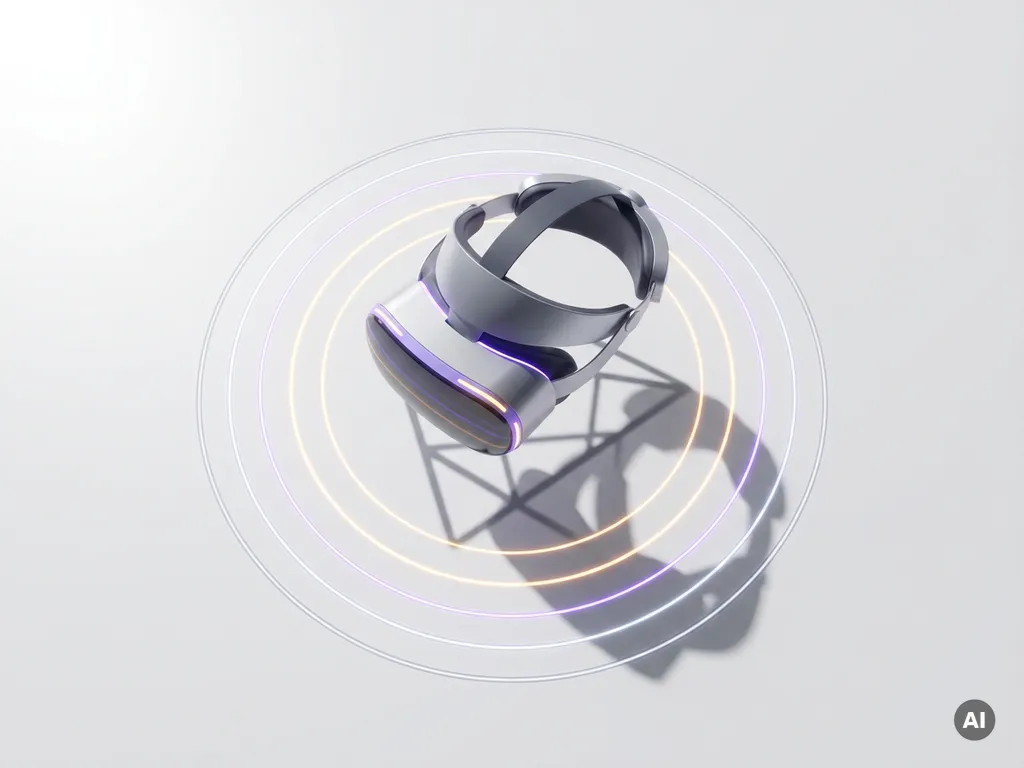
XR technology, or extended reality, is an umbrella term that covers augmented reality (AR), virtual reality (VR), and mixed reality (MR), technologies that blend the physical and digital worlds to create immersive, interactive experiences. Extended reality spans the full spectrum from a completely real environment enriched with digital overlays, all the way to a fully synthetic virtual world. It applies to anyone seeking to move beyond flat screens and passive content, from educators and cultural institutions to brands and entertainment producers. The sections below unpack each layer of XR, how it works, and when it makes sense to invest in it.
What are AR, VR, and MR, and how do they differ?
AR, VR, and MR are the three core technologies that make up extended reality, and each occupies a different position on the reality spectrum. Augmented reality adds digital elements to the real world. Virtual reality replaces the real world entirely with a simulated environment. Mixed reality anchors digital objects to the physical world so they interact with real surfaces and people in real time.
Understanding the distinction matters because each technology serves a different purpose and requires a different approach to design.
Augmented Reality (AR)
AR overlays digital content, 3D models, animations, information, or characters, onto a live view of the real world, typically through a smartphone, tablet, or AR glasses. A museum visitor pointing a phone at a painting to reveal hidden layers of context is experiencing AR. So is a shopper previewing a sofa in their living room before buying it. AR keeps users grounded in their physical environment while enriching it with additional meaning.
Virtual Reality (VR)
VR immerses the user in a fully computer-generated environment, experienced through a headset that blocks out the physical world entirely. This makes VR uniquely powerful for simulations, training scenarios, and storytelling that demands complete emotional immersion. A medical student practicing surgery, a refugee sharing their journey with a global audience, or a brand taking customers inside a product story, all of these benefit from VR’s ability to transport people completely.
Mixed Reality (MR)
MR goes a step further than AR by allowing digital objects to interact dynamically with the physical environment. A virtual character can walk around a real table, respond to physical obstacles, and be viewed from any angle. Devices like Apple Vision Pro are designed specifically for this level of spatial computing. MR is the most technically demanding of the three, but it enables the richest, most seamless fusion of digital and physical experience.
How does XR technology actually work?
XR technology works by using sensors, cameras, processors, and displays to track the user’s position and environment in real time, then rendering digital content that responds to that context. The core mechanism differs slightly across AR, VR, and MR, but all three depend on real-time spatial awareness, rendering engines, and user-input systems to create the illusion of a coherent, interactive world.
In VR, a headset uses gyroscopes and accelerometers to track head movement, updating the rendered scene at high frame rates to prevent disorientation. In AR, the device’s camera feeds a live image to software that detects surfaces, markers, or geographic coordinates and overlays digital content precisely. In MR, depth sensors build a real-time map of the physical space so virtual objects can interact with actual surfaces and objects.
Underlying all of this are real-time 3D rendering engines, most commonly Unreal Engine or Unity, which generate the visual content. Spatial audio systems add directional sound that shifts as the user moves. AI layers increasingly handle object recognition, natural language interaction, and adaptive content delivery. The result is an experience that feels responsive, present, and alive rather than pre-recorded or passive.
What industries are using XR technology today?
XR technology is actively used across education, healthcare, cultural heritage, retail, defence, architecture, and brand marketing. In 2026, the technology has moved well beyond early-adopter experiments, it is embedded in training programmes, public campaigns, permanent museum installations, and large-scale brand activations across Europe and globally.
- Education: Schools and universities use immersive VR and AR modules to teach subjects that are difficult to convey through text alone, from human anatomy to historical events to climate systems. Experiential learning increases retention and engagement, particularly for students who struggle with conventional instruction.
- Cultural institutions: Museums and galleries use AR and interactive 360-degree installations to bring collections to life, attract younger audiences, and add interpretive depth without altering physical artefacts.
- Healthcare: Surgeons train in VR simulations, therapists use immersive environments for phobia treatment, and medical teams rehearse complex procedures before entering the operating room.
- Brand and marketing: Experiential marketing teams use AR activations, VR cinemas, and holographic displays to create memorable brand encounters that go far beyond a digital ad.
- NGOs and public sector: Organisations working on social issues use immersive storytelling to build empathy and drive behaviour change, placing audiences inside experiences that would otherwise be impossible to convey.
- Architecture and real estate: Digital twins and AR miniatures allow clients to walk through a building before a single brick is laid.
Explore how these applications come to life in our immersive projects across sectors.
What’s the difference between XR and the metaverse?
XR technology and the metaverse are related but distinct concepts. XR is a set of technologies, the hardware and software that enable immersive experiences. The metaverse is a vision of a persistent, shared virtual world where people interact as avatars, often using XR as the access layer. Think of XR as the vehicle and the metaverse as one possible destination.
The metaverse concept describes an interconnected digital universe, social, economic, and creative, that exists continuously, independent of any single session or device. XR, by contrast, refers to specific immersive technologies that can be used for a single training session, a museum exhibition, a brand activation, or a live event. XR experiences do not require a persistent shared world; they can be standalone, location-based, or single-use.
In practice, most organisations investing in immersive technology today are investing in XR applications, real, deployable experiences with clear objectives, rather than in metaverse infrastructure, which remains largely speculative at scale. The distinction matters when making investment decisions: XR delivers measurable outcomes now, while metaverse ambitions remain longer-term and less defined.
What hardware do you need to experience XR?
The hardware required for XR depends on which technology you are using and the depth of immersion you need. AR can run on a standard smartphone. VR requires a dedicated headset. MR typically demands more advanced spatial computing devices. The entry point is lower than many organisations assume, and the right hardware choice depends on the experience’s goals, audience, and deployment context.
AR hardware
For most AR applications, a smartphone or tablet is sufficient. More advanced AR, particularly for enterprise or location-based use, may involve AR glasses or headsets. Geospatial AR, image tracking, and AR portals all run on consumer devices, making them highly accessible for public-facing campaigns, museum activations, and educational programmes without requiring specialised equipment from the audience.
VR hardware
VR headsets range from standalone devices like the Meta Quest series to tethered, high-performance systems connected to a powerful computer. For group experiences, such as synchronised VR cinema for events of up to 200 people, a fleet of headsets is managed centrally. The choice of headset affects visual fidelity, freedom of movement, and the complexity of the content that can be delivered.
MR hardware
Mixed reality at its most advanced currently runs on devices like Apple Vision Pro, which uses a dense array of cameras and sensors to map the physical environment in real time. This category of hardware is positioned for enterprise, creative, and high-end cultural applications where the seamless blending of digital and physical is central to the experience.
How is AI changing XR experiences?
AI is transforming XR from a fixed, pre-authored experience into a dynamic, responsive one. Where traditional immersive content plays out the same way for every user, AI enables XR environments to adapt in real time, responding to what a user says, how they move, what they choose, and even what language they speak. This shift from passive immersion to genuine interaction is one of the most significant developments in extended reality.
Practically, AI integration in XR takes several forms. AI avatars and non-player characters (NPCs) can hold real conversations with users, answer questions, guide learning journeys, or represent a brand with consistency and nuance. Personalisation engines can adjust the pace, language, and complexity of an experience based on a learner’s profile or behaviour. Object recognition allows AR systems to identify real-world items and respond with relevant digital content without requiring QR codes or manual triggers.
For organisations in education, cultural heritage, and social impact, AI-driven personalisation means that a single immersive installation can serve a primary school student and a university researcher with equal relevance. For brands, it means a product activation can respond intelligently to each visitor rather than delivering a scripted loop. We build AI personalisation directly into immersive learning and brand experiences, ensuring that technology serves the human in front of it rather than the other way around.
When should organisations invest in XR over traditional media?
Organisations should invest in XR over traditional media when the goal requires emotional depth, active participation, or the communication of something that cannot be adequately conveyed through flat content. If the objective is to inform passively, traditional media may suffice. If the objective is to change behaviour, build empathy, create lasting memory, or engage an audience that has tuned out conventional formats, XR delivers outcomes that static or linear media cannot match.
Several factors signal that XR is the right investment:
- The subject matter is abstract or emotionally distant, XR places audiences inside an experience rather than describing it from the outside, making complex or sensitive topics tangible.
- Engagement is low with existing formats, if learners, visitors, or customers are disengaged, immersive technology reactivates attention through novelty, interaction, and sensory richness.
- The audience is diverse in learning style or background, AI-driven XR adapts to individual users in ways that a printed brochure or video cannot.
- The experience needs to be scalable, a well-designed VR or AR module can be deployed across multiple locations, languages, and contexts without rebuilding from scratch.
- Memorability and shareability matter, immersive experiences are recalled more vividly and shared more readily than passive content, extending the reach of a campaign or programme.
The investment in XR is shaped by factors such as the complexity of the content, the level of interactivity required, the hardware deployment model, and the degree of customisation needed. What remains consistent is the return: experiences that genuinely move people generate measurably stronger outcomes than those that merely inform them. If you are weighing whether immersive technology is the right fit for your next project, we would welcome the conversation, contact us to explore what is possible.
Gerelateerde artikelen
- How do you design an immersive installation for public spaces?
- Can you give me some examples of digital museums?
- What are planetarium domes made of?
- How much does it cost to build an interactive museum?
- How do I create an immersive experience?
- How to create a virtual reality experience?
- Is VR bad for kids with ADHD?
- Why is my brand campaign not creating buzz?
- What technology is used in immersive installations?