
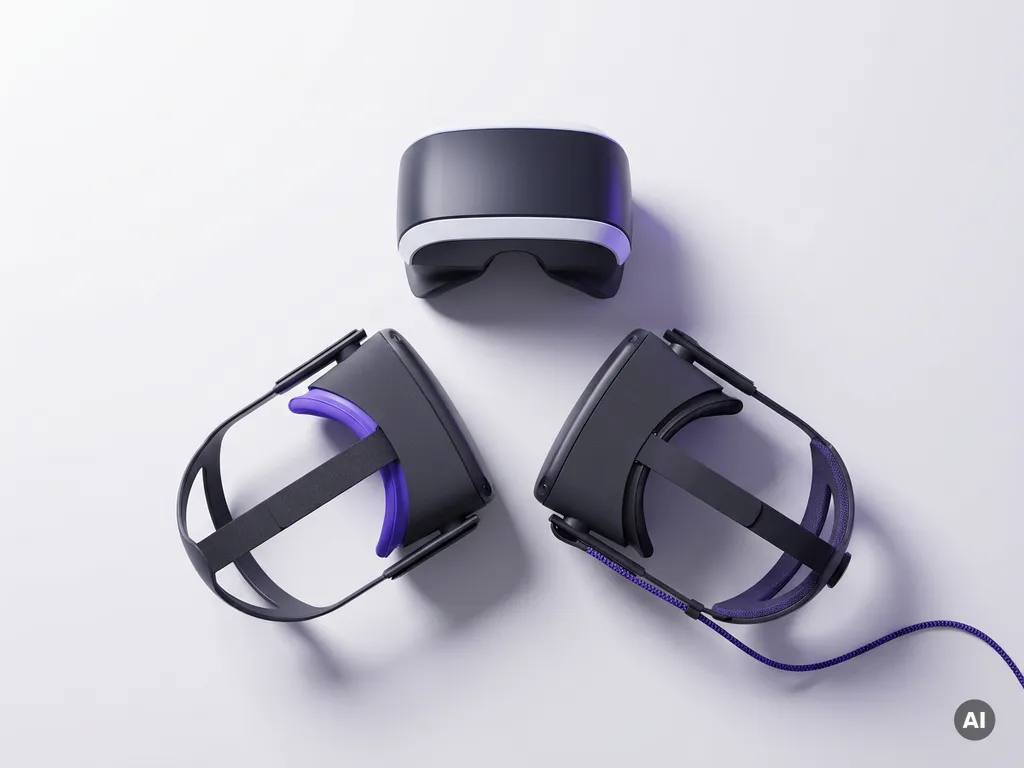
The three types of VR are non-immersive, semi-immersive, and fully immersive virtual reality. Each type differs in the degree to which it replaces or augments the user’s physical environment, the hardware it requires, and the depth of presence it creates. Understanding these distinctions matters because the right type of VR determines whether an experience truly resonates or simply informs.
From a simple desktop simulation to a full-body, multisensory environment, the spectrum of virtual reality types covers a wide range of applications across education, training, marketing, and cultural experiences. The sections below unpack each type in detail and answer the questions that matter most when choosing the right approach.
How do the three types of VR differ from each other?
The three types of VR differ primarily in the level of sensory immersion they deliver and the degree to which they replace the user’s real-world environment. Non-immersive VR keeps the user anchored in physical reality while interacting with a virtual world on a screen. Semi-immersive VR deepens engagement through large displays or projection systems. Fully immersive VR replaces the physical environment almost entirely using headsets and motion tracking.
The key variables that separate these virtual reality types are:
- Presence: How convincingly the experience transports the user into a virtual space
- Hardware requirements: From a standard monitor to a dedicated VR headset with controllers and haptic feedback
- Interactivity: The degree to which the user’s movements and choices shape the virtual environment in real time
- Sensory engagement: Whether the experience involves only sight and sound, or extends to touch, movement, and spatial awareness
These differences are not simply technical; they translate directly into the emotional impact an experience can achieve. A screen-based simulation and a fully embodied VR environment can convey the same information, but they create fundamentally different levels of empathy, retention, and engagement.
What is non-immersive VR and where is it used?
Non-immersive VR is a form of virtual reality experienced through a standard screen, a desktop monitor, laptop, or television, where the user remains fully aware of and present in their physical surroundings. The virtual environment is viewed as a window rather than a world the user inhabits. Interaction typically happens through a keyboard, mouse, or game controller.
Despite being the least immersive of the three virtual reality types, non-immersive VR is the most widely used. Its accessibility makes it the default choice in many contexts because it requires no specialist hardware and can reach virtually any audience with a standard device.
Common applications include:
- Video games and simulations: Open-world games and flight simulators are classic examples of non-immersive VR environments
- Architectural visualisation: Clients can explore a building design on screen before construction begins
- Online training modules: Corporate learning platforms frequently use virtual scenarios delivered via browser or desktop application
- Virtual tours: Museums, real estate platforms, and tourism websites offer 360-degree walkthroughs navigated with a mouse or touchscreen
The trade-off is clear: non-immersive VR sacrifices depth of presence for breadth of reach. It is an effective starting point, but it rarely produces the emotional resonance or behavioural change that more immersive formats can achieve.
What is semi-immersive VR and how does it work?
Semi-immersive VR is a type of virtual reality that surrounds the user with a larger, more enveloping visual environment, typically through curved screens, projection walls, or multi-monitor setups, without fully replacing the physical world. The user remains physically grounded but experiences a stronger sense of presence than a standard screen provides. Interaction often involves specialised controllers, steering wheels, or motion platforms.
The most recognisable form of semi-immersive VR is the CAVE (Cave Automatic Virtual Environment), a room-sized system where projections cover multiple walls, the floor, and sometimes the ceiling. Flight simulators used in pilot training are another well-established example: the physical cockpit is real, but the environment outside the window is entirely virtual.
Semi-immersive VR works by combining physical context with virtual imagery. Because the user can still see their own hands, body, and immediate physical environment, it is particularly effective in situations where real-world motor skills need to be practised. Surgeons, engineers, and military personnel have long used semi-immersive systems for exactly this reason.
In commercial and cultural settings, semi-immersive formats appear as large-format projection experiences, interactive installation walls, and immersive cinema environments. They offer a compelling middle ground: more impactful than a desktop screen, more accessible than a headset-based system, and well suited to group experiences where multiple people engage simultaneously.
What is fully immersive VR and what hardware does it require?
Fully immersive VR is the most complete form of virtual reality, designed to replace the user’s physical environment with a convincing digital world that responds to their movements in real time. When done well, it creates a genuine sense of presence, the feeling of actually being somewhere else. It is the most powerful of all virtual reality types for generating emotional impact, empathy, and lasting memory.
Delivering full immersion requires a specific combination of hardware:
- VR headsets (HMDs): Devices such as the Meta Quest series, PlayStation VR2, or Apple Vision Pro that cover the eyes and ears, replacing visual and auditory input with virtual content
- Motion tracking: Systems that monitor the user’s head, hand, and body movements so the virtual environment responds accurately to physical actions
- Hand controllers or haptic gloves: Input devices that allow the user to interact with virtual objects and, in advanced setups, feel simulated textures or resistance
- Room-scale setup: Physical space calibrated so the user can walk, reach, and move freely within the virtual world
- High-performance computing: Rendering a convincing, lag-free virtual environment in real time demands significant processing power
At the most advanced end of the spectrum, fully immersive experiences extend beyond sight and sound to include scent, temperature, and physical sensation, creating what is sometimes called multisensory immersion. This is the territory where we at Rooftop Immersive operate, designing experiences that engage all the senses to move people in ways that screens simply cannot replicate.
Which type of VR is best for education and training?
Fully immersive VR is generally the most effective type of VR for education and training when the goal is deep understanding, empathy, or the development of real-world skills. The stronger the sense of presence, the more the brain processes a virtual experience as if it were real, which significantly improves retention, emotional engagement, and the transfer of learning to real-world situations.
That said, the best choice depends on what is being taught and to whom:
- Non-immersive VR suits knowledge-based learning where accessibility and scale matter most: online courses, scenario-based e-learning, and introductory modules that need to reach large audiences on standard devices
- Semi-immersive VR excels in skills training where physical interaction is essential: surgical practice, vehicle operation, engineering procedures, and safety drills where the learner’s real hands and body need to be part of the experience
- Fully immersive VR is most powerful for perspective-taking, complex simulations, and emotionally resonant learning: training healthcare workers to recognise patient distress, helping students understand historical events from the inside, or building empathy around social issues that are difficult to convey through text or video
Research in educational technology consistently shows that experiential, embodied learning produces stronger outcomes than passive consumption. When learners feel they are truly inside a situation rather than observing it, they engage more deeply and remember more. For organisations focused on behaviour change, social impact, or mastery of complex skills, fully immersive VR is rarely matched by any other format. You can explore how this comes to life in our projects across education, NGOs, and cultural institutions.
Can different types of VR be combined in one experience?
Yes, different types of VR can absolutely be combined within a single experience, and doing so often produces the most compelling and effective results. A well-designed immersive journey might begin with a non-immersive introduction on a screen, transition into a semi-immersive projection environment, and culminate in a fully immersive headset experience, each layer deepening engagement and preparing the audience for the next level of presence.
Combining virtual reality types serves several practical purposes:
- Accessibility: Not every participant may be comfortable with or physically suited to a full VR headset. Offering multiple entry points ensures no one is excluded from the experience
- Group dynamics: Shared semi-immersive environments allow audiences to experience content together before individuals step into fully immersive personal journeys
- Narrative pacing: Moving between levels of immersion mirrors the rhythm of great storytelling, building tension, deepening stakes, and delivering emotional peaks at precisely the right moment
- Logistical efficiency: Combining formats allows larger groups to be served simultaneously, with some participants in non-immersive or semi-immersive stations while others use headsets
The most innovative immersive experiences today treat VR not as a single technology but as a spectrum of tools, each with its own strengths, that can be orchestrated together. When technology, space, and storytelling are aligned, the result is something far greater than any single format could achieve alone. If you are ready to explore what the right combination could look like for your project, we would love to hear from you: contact us to start the conversation.
Gerelateerde artikelen
- What is 360-degree dome projection?
- What does XR stand for?
- What are five applications of virtual reality?
- What are the benefits of integrating immersive technologies with STEM education?
- What are the benefits of multisensory learning?
- How does experiential marketing differ from traditional marketing?
- What is a 360 degree video?
- What makes something an immersive experience?
- What are some examples of virtual reality?