
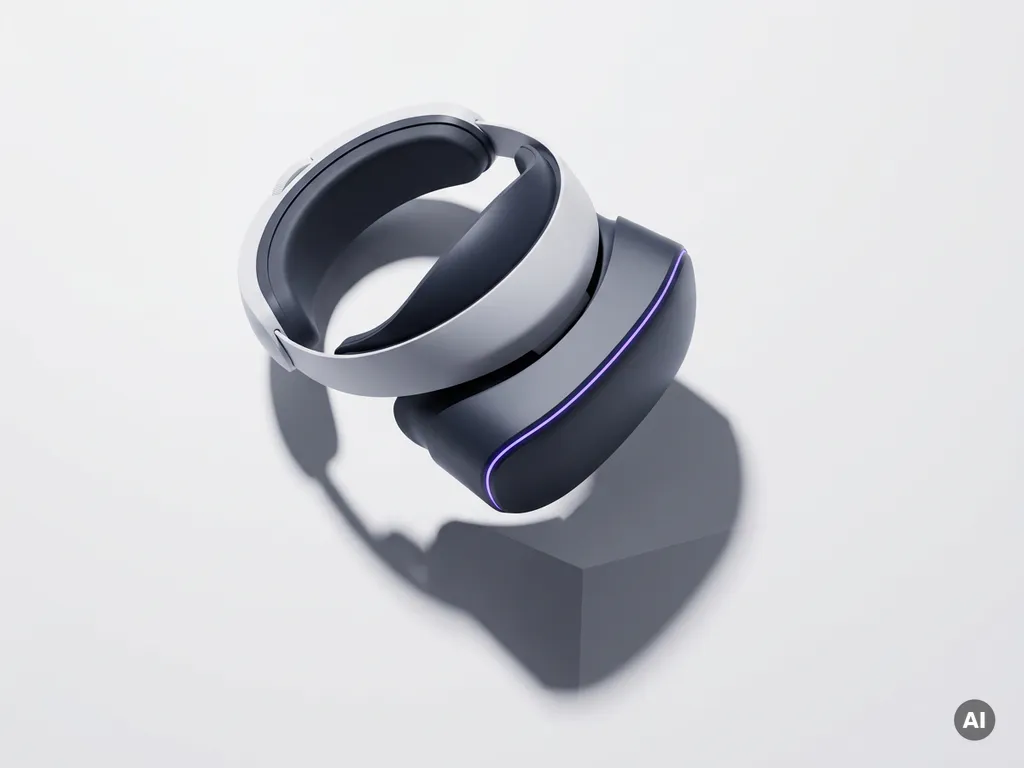
XR stands for Extended Reality, an umbrella term that encompasses augmented reality (AR), virtual reality (VR), and mixed reality (MR). It describes any technology that extends or replaces the human perception of the physical world by blending real and virtual environments. XR is the collective shorthand the industry uses when referring to the full spectrum of immersive technologies at once. The sections below unpack each dimension of XR: what it includes, how its components differ, and why it matters across education, culture, brand experience, and beyond.
What technologies does XR actually include?
XR, or extended reality, includes three core technologies: augmented reality (AR), virtual reality (VR), and mixed reality (MR). Together, these form a spectrum that ranges from fully digital environments to subtle digital overlays on the physical world. Each technology represents a different degree of immersion and interaction between the real and the virtual.
Augmented reality adds digital elements, visuals, sound, or information, on top of the real world, typically viewed through a smartphone or AR headset. Virtual reality replaces the real world entirely with a computer-generated environment, experienced through a headset that blocks out physical surroundings. Mixed reality sits between the two, anchoring digital objects to real-world surfaces so that virtual and physical elements interact with each other in real time.
Beyond these three pillars, XR increasingly incorporates artificial intelligence, spatial audio, haptic feedback, and even scent technology. These additions deepen the sensory experience and make XR environments feel genuinely immersive rather than simply visual. When we design immersive XR projects, the goal is always to engage the full range of human senses, not just sight and sound, to create experiences that truly resonate.
What’s the difference between AR, VR, and MR?
The key distinction between AR, VR, and MR lies in how each technology relates to the physical world. AR overlays digital content onto reality. VR replaces reality entirely. MR merges digital and physical elements so they interact with one another in real space and real time.
Augmented Reality (AR)
AR keeps you grounded in the real world while adding a digital layer on top of it. Think of a museum visitor pointing a smartphone at a sculpture and seeing the artist’s original sketches appear beside it, or a brand activation where a product appears life-size in a customer’s living room before purchase. AR is accessible, requiring nothing more than a smartphone in many cases, which makes it one of the most widely deployed forms of XR technology today.
Virtual Reality (VR)
VR immerses users in a fully digital environment, cutting off the physical world through a headset. This total immersion makes VR particularly powerful for training simulations, empathy-building experiences, and entertainment. A learner can step inside a historical event. A medical student can practice a procedure. An audience can witness a humanitarian crisis from the inside. The depth of presence VR creates is unmatched by any screen-based medium.
Mixed Reality (MR)
MR is the most technically sophisticated of the three. Rather than simply overlaying digital content or replacing the environment, MR anchors virtual objects to the physical world so they respond to real surfaces, lighting, and movement. A virtual architect’s model sits on an actual table and can be walked around. A training scenario unfolds in your real workspace, not a simulated one. Devices like the Apple Vision Pro are pushing MR into new creative and professional territory in 2026.
Why is XR used instead of AR or VR?
XR is used as a collective term because the boundaries between AR, VR, and MR are increasingly blurred in practice. A single project might combine AR for public engagement, VR for deep immersion, and MR for interactive installations, making “XR” the most accurate and efficient label for the full experience.
From a strategic and commercial perspective, XR also signals a broader capability. When a creative studio, a brand, or an institution refers to XR, it communicates fluency across the entire spectrum of immersive technology rather than expertise in one narrow format. This matters because the most impactful experiences rarely rely on a single technology in isolation.
There is also a practical reason: the hardware landscape is converging. Many modern headsets support both VR and MR modes. Smartphones can deliver AR experiences that feel increasingly close to mixed reality. As the tools evolve, the distinctions between AR, VR, and MR become less meaningful to end users, what matters is the quality of the experience, not the precise technical category it belongs to. XR captures that intent cleanly.
What are XR experiences used for?
XR experiences are used across education, cultural heritage, brand marketing, healthcare, training, and social impact campaigns. The technology is applied wherever traditional media struggles to create genuine engagement, emotional connection, or behavior change, which turns out to be a wide range of contexts.
In education, XR transforms abstract or difficult-to-teach subjects into lived experiences. Students can explore the inside of a cell, walk through a historical event, or practice high-stakes decisions in a safe simulated environment. Research consistently shows that experiential learning improves retention and motivation in ways that passive instruction cannot replicate.
For museums and cultural institutions, XR adds digital layers to physical collections, bringing artifacts to life, offering alternative perspectives, and attracting younger audiences who expect interactive engagement. Rather than replacing the physical object, XR deepens its meaning.
In marketing and brand experience, XR creates activations that audiences remember and share. A product launch becomes an event. A campaign becomes a world people can step inside. The measurable engagement and emotional resonance of well-executed XR experiences consistently outperform traditional advertising formats.
NGOs and public sector organizations use XR for awareness campaigns that demand empathy. Placing a viewer inside a refugee camp, a climate-affected coastline, or a moment of social injustice creates a quality of understanding that statistics and reports simply cannot achieve. XR is increasingly recognized as a tool for meaningful behavior change.
How does XR differ from the metaverse?
XR and the metaverse are related but distinct concepts. XR is a technology category describing immersive tools, AR, VR, and MR. The metaverse is a conceptual vision of persistent, interconnected virtual spaces where people live, work, and socialize. XR technologies are often the means by which people access metaverse environments, but XR itself exists independently of any metaverse platform.
The metaverse, as a concept, depends on shared virtual worlds, digital identities, and persistent online economies. XR, by contrast, is defined by the quality of sensory immersion it delivers, whether that is a standalone VR film, an AR activation at a live event, or an MR training simulation. None of these require a persistent virtual world to be meaningful or effective.
In practical terms, most XR experiences in 2026 are not metaverse experiences. They are purpose-built, context-specific, and designed to serve a clear human goal, learning, empathy, engagement, or discovery. The metaverse remains a longer-term architectural vision. XR is the technology delivering impact right now.
What devices are used to access XR?
XR experiences are accessed through a range of devices depending on the type of extended reality and the level of immersion required. Smartphones are the most accessible entry point for AR. Dedicated headsets are used for VR and MR. Emerging spatial computing devices like the Apple Vision Pro represent the leading edge of mixed reality hardware.
For augmented reality, a standard smartphone or tablet is often sufficient, the camera feeds the real world into the screen while the software overlays digital content. This accessibility makes AR the most scalable format for large-audience campaigns, outdoor activations, and consumer-facing applications.
Virtual reality requires a headset that replaces the visual field entirely. These range from standalone devices like the Meta Quest series to tethered, high-performance systems used in professional training and location-based entertainment. For group experiences, such as the synchronized VR events we design for up to 200 participants, multiple headsets are coordinated to deliver a shared immersive journey.
Mixed reality headsets, including the Apple Vision Pro and Microsoft HoloLens, overlay digital content onto the physical environment with spatial awareness, allowing virtual objects to interact with real surfaces. These devices are more specialized and represent a growing frontier for professional, educational, and cultural applications. As hardware becomes lighter, more affordable, and more capable, the barrier to accessing high-quality XR experiences continues to fall.
If you are exploring how XR technology could serve your organization, whether for education, cultural programming, or brand experience, we would love to hear what you have in mind. Contact us to start the conversation about what an immersive experience could look like for you.
Gerelateerde artikelen
- How to create a brand activation?
- What is experiential marketing theory?
- How is augmented reality used in marketing?
- What are the challenges of spatial computing?
- How does experiential marketing differ from traditional marketing?
- What are the challenges of creating immersive experiences?
- What are the 5 sensory memories?
- What are the three levels of immersion?
- What is the difference between WebAR and app-based AR for marketing?