
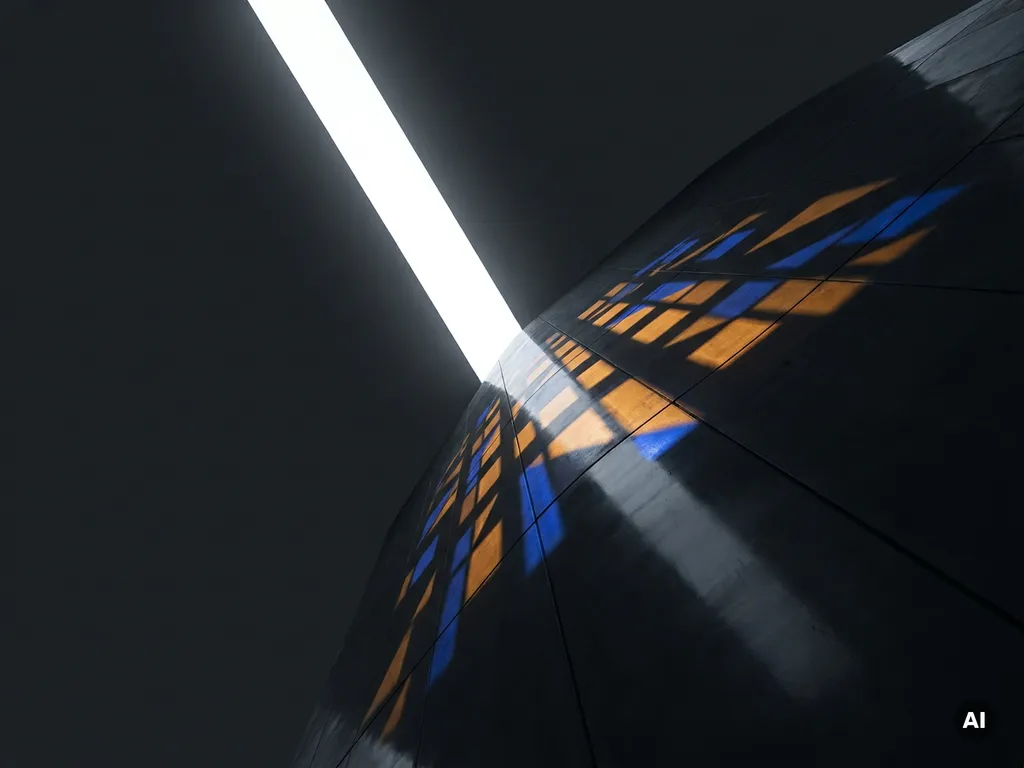
Projection mapping examples include illuminated building facades, immersive museum installations, concert stage visuals, retail brand activations, and large-scale art events. The technique projects digital imagery directly onto three-dimensional surfaces, from cathedrals and cars to museum walls and runway stages, transforming any physical object into a dynamic visual canvas. The sections below explore where projection mapping appears, how it works, and what tools bring it to life.
Where is projection mapping most commonly used?
Projection mapping is most commonly used in live events, architectural installations, museums, brand activations, and entertainment productions. Any physical surface with enough scale and texture to hold a projected image can become a canvas, making the technique versatile across industries and formats, from intimate gallery spaces to outdoor city squares viewed by thousands.
The broadest applications of projection mapping fall into a few consistent categories:
- Architecture and public spaces – Building facades, monuments, and bridges transformed during festivals or commemorative events
- Live entertainment – Concert stages, theatre productions, and immersive performances where visuals respond to music or narrative
- Museums and exhibitions – Gallery walls, artefact displays, and heritage sites brought to life with contextual storytelling
- Brand marketing – Product launches, retail windows, and experiential campaigns that create shareable spectacle
- Education and training – Simulated environments where learners can interact with projected scenarios in physical space
What unites all these contexts is the same underlying principle: projection mapping replaces or augments the static appearance of a surface with moving, reactive imagery. The technology bridges the physical and the digital in a way that screens simply cannot replicate, because the projected content becomes part of the architecture or object itself rather than existing behind a frame.
What are some famous building projection mapping examples?
Some of the most famous building projection mapping examples include the annual light festivals at the Sydney Opera House, the Lyon Festival of Lights in France, and the Vivid Sydney event where iconic structures are transformed into enormous animated canvases. These events attract millions of visitors and demonstrate the power of large-scale projection mapping art at its most ambitious.
A few landmark examples illustrate the range of what building projection mapping can achieve:
- Sydney Opera House, Australia – During Vivid Sydney, the sail-shaped shells of the Opera House become a projection surface for artists and studios from around the world, with narratives ranging from Indigenous storytelling to abstract generative art.
- Buckingham Palace, UK – Royal jubilees and commemorative events have used projection mapping to animate the palace facade with historical imagery and celebratory visuals seen by global television audiences.
- Notre-Dame de Paris, France – Before and after its restoration, the cathedral has served as a projection mapping canvas during festivals, with Gothic stone architecture providing a dramatic natural texture for light-based storytelling.
- Dubai’s Burj Khalifa – New Year’s Eve and national celebrations regularly feature projection mapping synchronized with fireworks across the world’s tallest building, combining scale with precision timing.
- Amsterdam Light Festival – Each winter, bridges and canal-side buildings across Amsterdam’s historic centre become part of a curated outdoor exhibition of projection and light art.
These examples share a common quality: the architecture itself becomes a storytelling collaborator. The irregularities, windows, columns, and textures of each building are not obstacles to work around but features that the projection design actively incorporates, creating depth and dimensionality impossible to achieve on a flat screen.
How is projection mapping used in live events and concerts?
In live events and concerts, projection mapping is used to create immersive stage environments where visuals respond dynamically to music, narrative, or performer movement. Rather than relying on flat backdrop screens, artists and event designers project onto custom-built three-dimensional stage structures, giving the entire performance space a sense of depth, transformation, and spectacle.
The application of projection mapping in live performance has evolved considerably. Early uses involved simple animated backdrops. Contemporary productions use real-time rendering engines that synchronise visuals to a live audio signal, meaning the imagery literally pulses, shifts, and evolves in response to what is happening on stage at that moment.
Notable uses in live events include:
- Stadium concert tours – Major touring artists use projection mapping across complex multi-surface stage rigs, creating environments that change completely between songs or acts
- Theatre and opera – Set designers use projection to replace or supplement physical scenery, allowing rapid scene transitions and impossible visual effects without physical set changes
- Corporate events and product launches – Keynote presentations and unveiling moments use projection mapping to create dramatic reveals, particularly when the product itself becomes the projection surface
- Festivals and outdoor events – Temporary structures, trees, and natural landscape features become projection canvases during multi-day events
The emotional impact of projection mapping in live contexts is particularly powerful because audiences experience it in real time, in a shared physical space. There is no screen mediating the experience, the transformation appears to happen to the world around them, which creates a visceral sense of wonder that recorded media cannot fully replicate.
What are examples of projection mapping in museums and exhibitions?
In museums and exhibitions, projection mapping examples include animated recreations of historical environments, immersive art installations where gallery walls become living paintings, and interactive displays where visitors trigger visual responses by moving through a space. These applications allow cultural institutions to add interpretive depth to collections without physically altering artefacts or architecture.
Cultural institutions have adopted projection mapping for several distinct purposes:
Environmental storytelling
Natural history museums and heritage sites use projection mapping to recreate environments that no longer exist, ancient civilisations, prehistoric landscapes, or historical events projected onto architectural surfaces to surround visitors with context. A Roman mosaic floor, for example, can be brought to life with animated figures that show how the space was once used.
Interactive visitor experiences
Science centres and contemporary art museums increasingly use projection mapping as an interactive medium. Visitors walk through a projected environment that responds to their presence, or touch surfaces that trigger visual and audio sequences. This transforms passive observation into active participation, significantly increasing dwell time and emotional engagement.
For institutions facing the challenge of attracting younger and more digitally native audiences, projection mapping offers a compelling answer. The technology feels native to a generation raised on interactive digital media, while the physical, spatial nature of the experience delivers something that a smartphone screen genuinely cannot. We have worked with cultural institutions to design experiences that use immersive projection to deepen the emotional resonance of collections, layering narrative, sound, and imagery to create moments that visitors remember long after they leave.
How do brands use projection mapping for marketing activations?
Brands use projection mapping for marketing activations by transforming physical spaces, products, or building surfaces into dramatic visual spectacles that generate in-person impact and social media sharing. Common applications include product launch reveals, retail window displays, pop-up brand experiences, and large-scale outdoor campaigns that create a sense of event and exclusivity around a brand moment.
The marketing appeal of projection mapping lies in its ability to generate genuine surprise. In an environment saturated with digital advertising, a physical spectacle that people encounter unexpectedly, a building that suddenly comes alive with animated brand imagery, or a car that appears to transform in front of an audience, creates the kind of authentic emotional reaction that drives organic sharing and word-of-mouth.
Typical brand use cases include:
- Product launches – The product itself becomes the projection surface, with visuals that animate its features, heritage, or design language in a theatrical reveal format
- Retail activations – Shop windows and facades use projection mapping to stop foot traffic and communicate seasonal campaigns in a format that television advertising cannot match for local impact
- Trade shows and exhibitions – Stand environments use projection mapping to create immersive brand worlds within the footprint of a single booth
- Outdoor brand events – Landmark buildings in key cities are used as temporary brand canvases, with projection mapping creating a media moment that generates press coverage and social content at scale
The measurable impact of these activations extends beyond the physical audience. Projection mapping events are inherently photogenic and video-friendly, meaning a well-executed activation generates content that audiences capture and share voluntarily, extending reach far beyond those physically present.
What’s the difference between 2D and 3D projection mapping?
The difference between 2D and 3D projection mapping lies in the surface geometry being used and how the projected content is designed to interact with it. 2D projection mapping projects imagery onto flat or near-flat surfaces, screens, walls, or floors, while 3D projection mapping wraps precisely calibrated imagery around complex three-dimensional objects, using the geometry of the surface as an active part of the visual design.
In 2D projection mapping, the surface is essentially a substitute for a screen. The content is designed for a flat plane, and while the projection itself may be large or dramatic, the relationship between content and surface is straightforward. This approach is common in simple event backdrops or flat wall installations where scale rather than geometry is the primary goal.
3D projection mapping is technically more complex and visually more powerful. The process involves:
- 3D scanning or modelling the surface – The exact geometry of the object or building is captured digitally so the projection system understands every curve, angle, and plane
- Content design aligned to geometry – Visual content is created specifically to interact with the physical features of the surface, using illusions of depth, shadow, and movement that only work because of the three-dimensional form
- Projector calibration and mapping – Multiple projectors are precisely aligned so that content lands exactly where intended, with no visible misalignment between the digital imagery and the physical surface
- Real-time or pre-rendered playback – The final experience is either pre-rendered for consistent playback or rendered in real time for interactive or live-responsive applications
The result of well-executed 3D projection mapping is that the projected imagery appears to be part of the physical object, buildings appear to crack open, cars appear to transform, sculptures appear to breathe. The illusion depends entirely on the precision of the geometry matching between the digital model and the physical surface.
What software and tools are used to create projection mapping?
The most widely used software tools for creating projection mapping include Resolume Arena, MadMapper, TouchDesigner, and Disguise (formerly d3). These platforms handle the core tasks of content playback, projector calibration, and surface mapping. For real-time interactive or generative projection mapping, TouchDesigner is particularly prevalent among creative technologists and studios working at the intersection of art and technology.
The full production pipeline for a projection mapping project typically involves multiple tools working together:
Content creation tools
Visual content for projection mapping is built in the same tools used for film and animation, Unreal Engine, Cinema 4D, Blender, After Effects, and Houdini are all common depending on the visual style required. For photorealistic architectural animations or complex particle simulations, Unreal Engine has become increasingly central because of its real-time rendering capabilities and the quality of output it can achieve without long pre-render times.
Mapping and playback software
Once content is created, dedicated mapping software handles the alignment between the digital content and the physical surface. Resolume Arena is widely used for live event contexts because of its performance-optimised playback. MadMapper is popular for installation work where precise surface warping and masking are the primary requirements. Disguise is the industry standard for large-scale touring productions and complex multi-projector setups that demand reliability at scale.
Hardware choices, projector brightness, lens specifications, and positioning, are equally critical and are determined by the scale of the surface, ambient light conditions, and the required image quality. For outdoor building projection mapping, projectors in the tens of thousands of lumens range are standard, while interior museum installations may use far lower brightness to preserve the subtlety of the visual content.
Projection mapping sits at the intersection of creative vision and technical precision, and the most impactful projects are those where both dimensions are given equal weight. If you are exploring what projection mapping could do for your next exhibition, event, or brand activation, we would welcome the conversation, feel free to contact us to discuss your project and discover what becomes possible when technology and storytelling work as one.
Gerelateerde artikelen
- How do interactive museums engage visitors?
- What are the three types of virtual reality?
- What is XR (extended reality)?
- What is the primary goal of experiential marketing?
- Does immersive mean 3D?
- How can I create shareable brand moments without requiring app downloads?
- How long does AR content production take?
- How do 360-degree experiences work in marketing?
- Do 3D artists get paid well?