
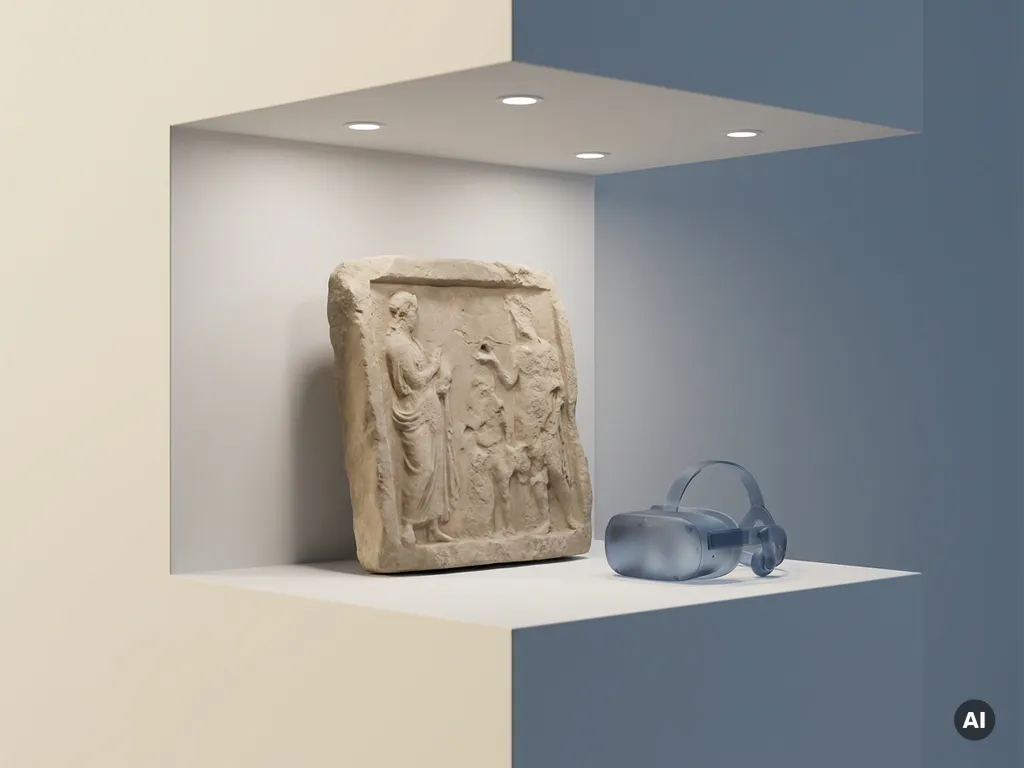
Virtual reality plays a transformative role in cultural heritage by enabling the digital preservation, reconstruction, and immersive exploration of historical sites, artifacts, and traditions that may be physically inaccessible, endangered, or lost entirely. It allows institutions to extend the reach of their collections far beyond physical walls while deepening the emotional and educational impact of cultural storytelling. The questions below unpack exactly how VR is reshaping heritage preservation, museum engagement, and global access to the world’s shared history.
How does virtual reality preserve endangered cultural heritage sites?
Virtual reality preserves endangered cultural heritage sites by creating detailed, navigable digital records of physical spaces before they are damaged, destroyed, or made inaccessible. Using technologies such as photogrammetry, LiDAR scanning, and 360-degree capture, entire sites can be reconstructed in three dimensions with a level of accuracy that traditional photography or documentation cannot match.
Once a site is digitized, it exists independently of its physical condition. Whether a location suffers from conflict, climate change, natural disaster, or simple deterioration over time, its virtual counterpart remains intact and explorable. This is not simply archival storage. The resulting environment can be experienced as a living space, allowing researchers, students, and the general public to walk through ancient ruins, examine architectural details up close, or witness historical contexts that no longer exist in the physical world.
The preservation value extends beyond emergency response. Regular digital scanning of a site over time creates a timeline of change, supporting conservation planning and restoration efforts. For heritage institutions, this means VR functions simultaneously as a safeguard, a research tool, and an engagement platform.
What kinds of cultural heritage experiences can VR recreate?
VR can recreate an exceptionally wide range of cultural heritage experiences, from ancient archaeological sites and historical buildings to intangible heritage such as traditional ceremonies, soundscapes, and living cultural practices. The technology is flexible enough to serve both documentary accuracy and interpretive storytelling.
Some of the most compelling applications include:
- Archaeological reconstruction: Visitors can walk through ancient cities as they appeared centuries ago, with architecture, color, and spatial context restored based on historical research.
- Conflict and memorial sites: Sensitive locations can be experienced respectfully and safely, allowing emotional connection without requiring physical presence.
- Intangible cultural heritage: Traditional performances, rituals, and craftsmanship can be captured volumetrically and re-experienced in VR, preserving practices that exist only in living memory.
- Underwater and inaccessible sites: Shipwrecks, submerged ruins, and remote cave systems become explorable without the physical or logistical barriers that would otherwise prevent access.
- Historical event reenactment: Significant moments in history can be dramatized within accurate spatial environments, combining cinematic storytelling with documentary value.
The quality of these experiences depends heavily on the depth of historical research informing them. The most effective virtual heritage reconstructions are built in close collaboration between technologists, historians, and cultural custodians, ensuring that accuracy and authenticity remain at the center of the experience.
How does VR change the way museums engage visitors?
VR changes museum visitor engagement by transforming passive observation into active participation. Instead of reading a label beside an artifact, a visitor can step inside the world that artifact came from, handle a virtual replica, or witness the historical moment that gave the object meaning. This shift from looking at culture to experiencing it fundamentally changes how information is processed and retained.
For museum and exhibition leaders, this opens several strategic possibilities. VR can extend a physical exhibition with layers of context that cannot fit within gallery walls. It can attract younger audiences who expect interactive, technology-driven experiences. It can also serve visitors with mobility limitations, offering equitable access to exhibits that would otherwise be physically demanding.
Beyond individual engagement, VR enables shared group experiences. Synchronized headset setups allow school groups, tour parties, or event audiences to enter the same virtual environment simultaneously, creating a collective moment that sparks discussion and deepens social connection around cultural content. This is particularly valuable for institutions looking to build community engagement programs or educational partnerships.
Importantly, the most effective museum VR does not compete with physical collections. It complements them. A well-designed immersive heritage project uses technology to direct attention back to the original artifact, enriching rather than replacing the human encounter with the real thing.
What’s the difference between VR, AR, and mixed reality in heritage contexts?
In heritage contexts, VR, AR, and mixed reality each serve distinct purposes. VR replaces the physical environment entirely with a virtual one, AR overlays digital content onto the real world, and mixed reality allows virtual and physical elements to interact with each other in real time. The right technology depends on what the heritage experience is trying to achieve.
Virtual Reality in heritage settings
VR is best suited to experiences where full immersion adds value, such as reconstructed historical environments, memorial experiences, or sites that no longer physically exist. The visitor is completely transported, which creates strong emotional impact but requires dedicated hardware and a controlled space. It works particularly well for storytelling experiences where the goal is empathy, perspective-taking, or deep contextual understanding.
Augmented Reality in heritage settings
AR is ideal when the goal is to enrich a physical location or object without removing the visitor from it. A museum visitor can point a device at a painting and see it animated, or stand in an archaeological site and see the original structures appear around them. AR preserves the connection to the real environment while adding interpretive depth. It is highly accessible, often requiring only a smartphone, which lowers the barrier to engagement significantly.
Mixed Reality in heritage settings
Mixed reality, delivered through devices such as Apple Vision Pro, enables the most sophisticated integration of digital and physical content. Virtual objects respond to real-world surfaces and spatial conditions, creating experiences where a historical artifact might appear to rest on an actual table, or where a virtual guide moves through a real gallery space. For institutions willing to invest in next-generation hardware, mixed reality offers the richest blend of presence and interactivity.
Can VR make cultural heritage more accessible to global audiences?
Yes, VR can make cultural heritage significantly more accessible to global audiences by removing the physical, financial, and logistical barriers that prevent most people from visiting significant heritage sites in person. A person in Lagos, São Paulo, or rural Finland can experience the interior of a heritage site in Rome or Angkor Wat with a level of presence that no photograph or documentary can replicate.
This democratization of access has meaningful implications for cultural equity. Heritage has historically been concentrated in specific geographic regions, and the ability to travel to those regions has always been unevenly distributed. VR shifts that dynamic by allowing institutions to distribute experiences rather than requiring audiences to come to them.
Accessibility extends beyond geography. VR experiences can be designed with multilingual narration, adjustable pacing, and sensory adaptations for visitors with disabilities. AI-driven personalization can further tailor the experience to individual learning styles, age groups, or levels of prior knowledge, making heritage content genuinely inclusive rather than broadly generic.
For cultural institutions, this expanded reach also creates new revenue and partnership opportunities. Virtual access programs, educational licensing, and international touring of digital exhibitions are all viable models that VR makes possible.
What are the challenges of using VR in cultural heritage projects?
The primary challenges of using VR in cultural heritage projects include the cost and complexity of high-quality production, the risk of historical inaccuracy, questions of cultural ownership, and the practical difficulties of maintaining and distributing hardware-dependent experiences over time.
Production quality is a significant factor. A poorly executed VR heritage experience can undermine trust in an institution and diminish rather than enhance the cultural content it represents. Creating environments that are both technically convincing and historically responsible requires sustained collaboration between technologists, historians, and community representatives, which demands time and investment.
Cultural sensitivity is equally important. Not all heritage is appropriate for VR reconstruction, and institutions must engage with the communities whose history is being represented. Questions of who controls the narrative, how sacred or sensitive content is handled, and who benefits from the resulting experience are not technical problems but ethical ones that must be addressed before a project begins.
On the operational side, hardware dependency creates distribution challenges. VR experiences tied to specific headsets require ongoing maintenance, updates, and eventual replacement as technology evolves. Institutions must plan for the long-term lifecycle of a VR experience, not just its launch.
Finally, there is the challenge of integration. VR works best when it is part of a coherent visitor journey, not a standalone attraction. Institutions that treat VR as a novelty rather than a purposeful storytelling tool often find that the technology fails to deliver lasting impact.
How should cultural institutions evaluate a VR heritage project partner?
Cultural institutions should evaluate a VR heritage project partner based on their demonstrated ability to balance technical excellence with cultural and narrative integrity, their experience working within institutional contexts, and their capacity to deliver a complete project from concept through long-term support.
Key criteria to assess include:
- Portfolio depth: Has the partner produced heritage or educational VR experiences with genuine historical and emotional weight, not just technically impressive demos?
- End-to-end capability: Can they handle research, design, development, hardware integration, and post-launch support under one roof, or will the institution be managing multiple vendors?
- Co-creation process: Do they build in close collaboration with institutional stakeholders, or do they work in isolation and deliver a finished product? Heritage projects require ongoing dialogue.
- Ethical approach: How do they handle sensitive content, community consultation, and questions of cultural ownership? A credible partner will have clear frameworks for these conversations.
- Scalability: Can the experience be adapted for different audiences, languages, and formats, including both on-site and remote access?
- Longevity planning: What is their approach to maintaining and updating the experience as technology evolves?
We at Rooftop Immersive approach every cultural heritage project as a genuine collaboration, combining spatial design, digital technology, and deep storytelling to create immersive experiences that honor the integrity of the cultural content they represent. If your institution is exploring how VR can deepen visitor engagement, extend your collection’s reach, or preserve what matters most, we would welcome the conversation. Reach out through our contact page to start exploring what is possible together.
Gerelateerde artikelen
- What are interactive Experiences?
- What kind of technology is used in museums?
- What is a 360 degree video?
- Can AI make AR?
- What are experiential marketing techniques?
- What are the benefits of immersive experiences?
- What technologies are used in immersive experiences?
- How do you align immersive experiences with brand identity?
- What are the benefits of immersive museum experiences?