
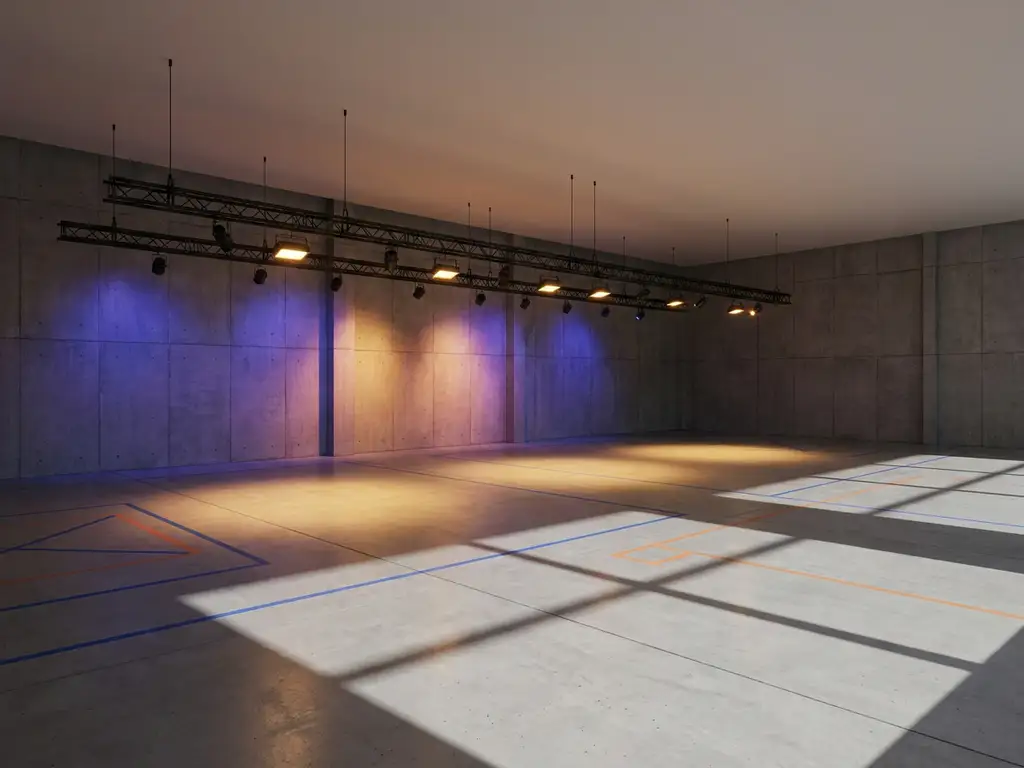
Building an immersive room involves a wide range of investment levels depending on the scale, technology, and purpose of the space. There is no single fixed price because the cost is shaped by factors like the type of technology used, the size of the room, the degree of interactivity, and whether the experience is custom-built or modular. The sections below break down each of these dimensions so you can approach your project with a clear and realistic picture.
What factors determine the cost of an immersive room?
The cost of an immersive room is determined by the combination of technology stack, spatial complexity, content production requirements, and the level of interactivity designed into the experience. These four pillars interact with each other, meaning a decision in one area almost always affects the budget in another. Understanding each factor individually helps you make smarter trade-offs.
The technology stack is typically the largest cost driver. Projection systems, LED volumes, spatial audio rigs, haptic elements, scent diffusion, and tracking hardware each carry their own hardware and integration costs. A room relying on a single projection surface is fundamentally different in complexity from one that synchronizes multi-surface projection with real-time motion tracking and generative audio.
Spatial scale matters because larger rooms require more hardware units, more cabling infrastructure, more calibration time, and often structural modifications to the venue. A compact pop-up installation designed for a trade stand operates at a different order of magnitude than a permanent 360-degree dome built into a museum wing.
Content production is frequently underestimated. Even the most sophisticated hardware delivers a flat experience without compelling, purpose-built content. Custom 3D environments, interactive logic, multi-language adaptations, and narrative design all add to the production scope. Off-the-shelf content libraries can reduce this cost, but they rarely match the impact of bespoke storytelling.
Finally, interactivity and personalization add layers of software complexity. A passive cinematic experience requires a media server and playback software. An interactive experience that responds to visitor behavior, tracks multiple users simultaneously, or adapts content in real time based on AI-driven inputs requires a significantly more sophisticated technical architecture.
What are the different types of immersive rooms and how do they differ in price?
Immersive rooms span a broad spectrum from simple projection-mapped spaces to fully multisensory, AI-driven environments. Each type represents a different set of capabilities and a corresponding investment level. The main categories are passive projection rooms, interactive digital environments, multisensory installations, and full-scale custom builds.
Passive projection rooms use flat or curved projection surfaces to wrap visitors in visual content. They are the most accessible entry point into immersive space design. The experience is primarily visual and audio-driven, with limited or no interactivity. These spaces work well for brand storytelling, art exhibitions, and educational overviews.
Interactive digital environments add real-time responsiveness. Visitors can influence the content through movement, touch, voice, or gesture. This requires sensor arrays, interactive software platforms, and more sophisticated content design. The step up in complexity is significant, but so is the increase in visitor engagement and dwell time.
Multisensory installations layer in additional sensory channels: spatial audio, scent, temperature variation, haptic feedback, and tactile surfaces. These rooms are designed to activate the full sensory system, which research consistently shows deepens memory encoding and emotional impact. The hardware and integration required to synchronize these elements reliably adds meaningful cost.
Full-scale custom builds combine all of the above with bespoke architecture, permanent infrastructure, and often AI-driven personalization. These are purpose-built spaces designed for long-term use, typically in museums, visitor centers, or flagship brand environments. They represent the highest investment tier but also the most enduring impact.
How much does a basic immersive room cost to build?
A basic immersive room, typically a single-surface projection setup with pre-rendered content and minimal interactivity, sits at the more accessible end of the investment range. The cost is shaped primarily by the size of the projection surface, the quality of the projector hardware, and whether content is custom-produced or sourced from an existing library.
At this level, the main budget categories are hardware procurement, installation and calibration, content licensing or production, and a media server or playback system. Venues that already have suitable wall surfaces, controlled lighting conditions, and adequate power infrastructure will see lower setup costs than those requiring structural preparation.
Basic immersive rooms are a practical starting point for organizations that want to test visitor response to immersive formats before committing to a larger investment. They can often be designed for temporary or touring use, which spreads the cost across multiple activations. The trade-off is that they offer less differentiation and lower reuse potential compared to more sophisticated builds.
How much does a high-end or fully custom immersive room cost?
A high-end or fully custom immersive room represents a substantial investment that reflects the breadth of disciplines involved: spatial design, hardware engineering, software development, content production, and ongoing technical support. The cost scales with the ambition of the experience and the permanence of the installation.
At this level, budgets typically need to account for custom architectural elements, multi-surface or 360-degree projection systems, spatial audio engineering, interactive tracking infrastructure, bespoke content creation, and integration of additional sensory layers. Each of these components requires specialist expertise and often extended production timelines.
What distinguishes a high-end build is not just the technology but the depth of the experience design. Narrative structure, visitor journey mapping, accessibility considerations, and long-term content update strategies are all part of the scope. Organizations commissioning at this level are typically investing in a flagship experience intended to anchor a space for several years.
We design experiences at this level for clients ranging from global brands to public institutions, working from first concept through to final delivery under one roof. The investment reflects the full scope of that journey, and the result is an experience that cannot be replicated with off-the-shelf solutions.
What’s the difference between buying and renting an immersive room?
Buying an immersive room means commissioning or purchasing a permanent or semi-permanent installation that you own and operate. Renting means accessing a pre-built immersive environment or hiring modular technology for a defined period. The right choice depends on how frequently you need the space, how much control you want over the content, and your long-term strategic goals.
Buying makes sense when the immersive room is central to your ongoing operations, such as a museum gallery, a permanent brand experience center, or a training facility used regularly throughout the year. Ownership gives you full control over content updates, visitor flow, and technical customization. The upfront investment is higher, but the cost per use decreases significantly over time.
Renting is better suited to one-off activations, touring exhibitions, seasonal campaigns, or organizations testing immersive formats for the first time. Modular systems can be deployed, configured, and removed without permanent infrastructure changes. Rental also transfers technical maintenance responsibility to the provider, which reduces operational burden.
A hybrid approach is increasingly common: organizations rent modular hardware for events while investing in owned content that can be deployed across multiple activations. This model balances flexibility with creative consistency and is particularly effective for brands running recurring campaign cycles.
How does the intended use case affect immersive room costs?
The intended use case is one of the most direct determinants of immersive room cost because it defines the technical requirements, the content depth, the audience size, and the durability standards the installation must meet. A room built for a one-day product launch has fundamentally different demands than one designed to educate thousands of school groups over three years.
Brand activations and experiential marketing often prioritize visual impact, social shareability, and rapid deployment. The content cycle is shorter, and the hardware may be modular and reusable. Cost efficiency comes from reusing a platform across multiple campaign iterations.
Educational and training environments require deeper content development, accessibility features, and robust interactive logic. The experience must work reliably for repeated use across diverse learner groups, which demands higher software investment and more rigorous testing. Long-term content update capability is also a key consideration.
Museum and cultural installations combine permanence with the need for ongoing relevance. These spaces must withstand high visitor volumes, meet conservation standards, and often integrate with existing collection narratives. The design process is more consultative, and the production timeline longer, both of which are reflected in the overall investment.
NGO and public awareness campaigns frequently require multilingual content, emotionally sensitive narrative design, and deployment across varied venue types. Portability and scalability are priorities, and the experience must be capable of creating genuine empathy and behavior change, not just visual spectacle.
What hidden costs should you plan for when building an immersive room?
Several cost categories are consistently underestimated in immersive room projects. Planning for them upfront prevents budget overruns and ensures the experience performs as intended from day one. The most significant hidden costs fall into four areas: content maintenance, technical support, venue preparation, and accessibility compliance.
- Content updates and maintenance: Immersive content ages. Keeping an experience fresh requires periodic updates to visuals, narratives, and interactive logic. Budgeting for an annual content refresh cycle is a sound investment in long-term visitor relevance.
- Technical support and hardware maintenance: Projectors, sensors, audio systems, and interactive hardware require regular calibration and occasional replacement. Ongoing support contracts are often overlooked in initial budgets but become essential once the space is operational.
- Venue preparation: Achieving the right acoustic environment, lighting control, power supply, and structural mounting points often requires construction work that falls outside the technology budget. Site surveys early in the process help surface these costs before they become surprises.
- Accessibility and localization: Making an immersive experience accessible to visitors with sensory or mobility differences, and adapting it for multiple languages or cultural contexts, adds meaningful scope to both content and software development.
- Staff training and operational workflows: Running an immersive room requires trained staff who understand the technology and can troubleshoot basic issues. Onboarding and documentation are often left until the final stages of a project, when they should be planned from the start.
How do you get an accurate quote for an immersive room project?
Getting an accurate quote for an immersive room project requires more than a description of what you want. Providers need to understand your use case, audience, venue constraints, timeline, and content goals before they can produce a meaningful cost estimate. The more clearly you can articulate these parameters, the more precise and comparable your quotes will be.
Start by defining your core objectives: what should visitors feel, learn, or do as a result of the experience? This shapes every downstream decision from technology selection to content strategy. A brief that leads with outcomes rather than technology specifications tends to produce more creative and cost-effective proposals.
Next, document your venue in detail. Floor area, ceiling height, ambient light conditions, power availability, and any structural limitations all affect the scope of work. Providers who can visit the site before quoting will give you more accurate figures than those working from descriptions alone.
Be clear about your timeline and operational requirements. A permanent installation with a twelve-month production window is a different engagement than a touring activation that needs to be ready in eight weeks. Compressed timelines often carry premium costs that are avoidable with earlier planning.
Finally, ask providers to break their quotes into clear categories: hardware, content production, software development, installation, and ongoing support. This makes it easier to compare proposals and identify where trade-offs can be made without compromising the core experience.
If you are ready to explore what an immersive room could look like for your organization, we would be glad to work through the details with you. Reach out via contact and let us help you turn your vision into an experience that genuinely moves people.
Gerelateerde artikelen
- What are examples of immersive experiences?
- What exactly is experiential marketing?
- What are experiential marketing techniques?
- What are the benefits of immersive experiences?
- Why is my brand campaign not creating buzz?
- What is an immersive installation?
- How long does AR content production take?
- Should I use AR filters for my product launch?
- What are some examples of virtual reality?