
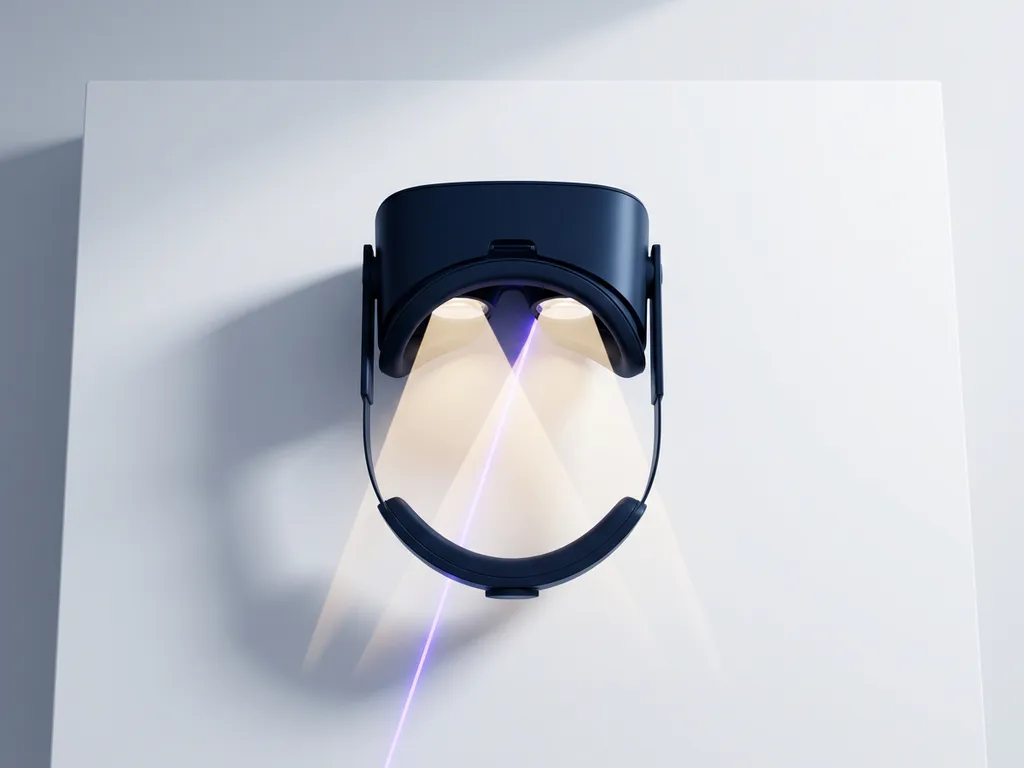
Creating a virtual reality experience involves designing and building an interactive, three-dimensional digital environment that users can explore through a VR headset. The process spans concept development, spatial storytelling, technical production in game engines like Unreal Engine or Unity, and hardware testing. Whether you are building for education, brand activation, or cultural engagement, the core steps remain consistent, though the scope, tools, and timeline vary considerably depending on your goals.
What does creating a VR experience actually involve?
Creating a VR experience involves translating a concept into a fully navigable three-dimensional world that responds to user movement and interaction in real time. It combines creative direction, spatial design, 3D asset production, audio engineering, and software development into a single unified product that runs on dedicated VR hardware.
Unlike traditional film or web content, VR places the viewer inside the experience rather than in front of it. This fundamentally changes how you approach every creative and technical decision. The camera is no longer a fixed point of view, it is the user’s head. The narrative is no longer linear, it unfolds in space. And the emotional impact is no longer delivered through a screen at a distance, it is felt from within.
The production process typically moves through several phases. Discovery and concept development come first, where goals, audience, and narrative are defined. This is followed by pre-production, which includes scripting, storyboarding, and environment planning. The main production phase covers 3D modelling, animation, interaction logic, and audio design. Finally, testing and deployment ensure the experience performs correctly across the intended hardware and context.
At Rooftop Immersive, we manage this entire journey under one roof, from the first creative conversation to the final deployment, which allows us to maintain coherence between the storytelling vision and the technical execution throughout.
What type of VR experience should you build?
The type of VR experience you should build depends on your audience’s role, your communication goal, and how much active participation you want users to have. The two primary categories are passive VR, where users observe a cinematic narrative, and interactive VR, where users make decisions and engage with the environment directly.
Passive VR experiences
Passive VR uses 360-degree video or rendered cinematic environments to guide users through a story. The viewer has no control over the narrative but is fully surrounded by it. This format works exceptionally well for empathy-building, brand storytelling, documentary content, and educational overviews where emotional immersion matters more than agency. NGOs frequently use this format to transport audiences into situations they would otherwise never encounter.
Interactive VR experiences
Interactive VR gives users agency, they can move through environments, pick up objects, answer questions, or make choices that affect the outcome. This format is ideal for training simulations, educational modules, and entertainment experiences where engagement and retention are the primary goals. Research in learning design consistently shows that active participation deepens comprehension and recall far more effectively than passive observation.
Beyond these two categories, there are also location-based VR experiences designed for groups, such as synchronised multi-headset setups for events and exhibitions, as well as VR installations that combine physical props with virtual environments for a fully multisensory effect.
What tools and software are used to develop VR experiences?
VR experiences are primarily developed using real-time 3D game engines, with Unreal Engine and Unity being the two dominant platforms in professional production. These engines handle rendering, physics, interaction logic, and hardware integration. Supporting tools cover 3D modelling, audio design, and performance optimisation.
Unreal Engine is widely favoured for high-fidelity, cinematic VR work due to its advanced lighting and rendering capabilities. Unity offers greater flexibility across hardware platforms and is commonly used for interactive and educational applications. Both support major VR headsets, including Meta Quest, PlayStation VR, and Apple Vision Pro.
The broader software stack typically includes tools such as Blender, Maya, or Cinema 4D for 3D asset creation, Substance Painter for texturing, and spatial audio tools like Wwise or FMOD for sound design. Photogrammetry software is used when real-world environments or objects need to be scanned and converted into digital twins. For AI-driven elements such as responsive characters or personalised learning paths, additional machine learning frameworks are integrated into the development pipeline.
How do you design compelling storytelling for VR?
Compelling storytelling in VR is built around spatial narrative, the idea that the story lives in the environment around the user rather than on a screen in front of them. Effective VR storytelling guides attention without forcing it, creates emotional investment through presence, and gives users a meaningful reason to explore.
The most important shift from traditional storytelling is relinquishing control over where the audience looks. In VR, you cannot cut to a close-up or use a camera angle to direct focus. Instead, you use sound, light, movement, and spatial composition to draw attention naturally. A character speaking to the left, a glow emanating from a doorway, or ambient audio pulling from a specific direction, these are the tools of VR narrative direction.
Emotional resonance in immersive experiences is amplified by multisensory design. When spatial audio, haptic feedback, temperature cues, or even scent are layered into an environment, the brain processes the experience as closer to reality. This is precisely why immersive experiences tend to be remembered far longer than equivalent content delivered through traditional media, the body is engaged, not just the eyes and ears.
Strong VR storytelling also requires a clear emotional arc. Even in an open exploration environment, users need a sense of purpose and progression. Whether that arc is built through narrative chapters, environmental changes, or character relationships, the underlying emotional journey must be intentional from the first design session.
How long does it take to create a VR experience?
Creating a VR experience typically takes between six weeks and twelve months, depending on the complexity of the environment, the level of interactivity, the volume of custom assets required, and whether the project involves live-action filming, AI integration, or bespoke hardware. Simpler passive experiences can be completed faster; fully interactive, multi-scene productions require significantly more time.
A focused passive VR piece with limited environments and a clear narrative can realistically be produced in six to ten weeks. A moderately interactive experience with custom 3D environments, branching logic, and localised audio typically requires three to six months. Large-scale productions, such as multi-user location-based experiences, training simulations with AI-driven characters, or touring exhibition installations, can take nine to twelve months or more to develop and deploy properly.
The timeline is also shaped by the feedback and approval process. Projects with multiple stakeholders, regulatory review requirements, or iterative testing phases will naturally take longer. Building in structured review milestones from the start helps keep production on track without sacrificing quality.
How much does it cost to produce a VR experience?
The cost of producing a VR experience is determined by a combination of creative, technical, and logistical factors rather than a single fixed price. Understanding what drives cost helps you scope your project realistically and allocate budget where it will have the greatest impact on the final experience.
The primary cost drivers include the length and complexity of the experience, the number of custom 3D environments and assets required, the level of interactivity and branching logic, whether live-action or volumetric video is involved, and the number of platforms or headsets the experience needs to support. AI integration, multilingual localisation, and ongoing content updates each add additional layers of development work.
Hardware and deployment also factor into the overall budget. A VR experience designed for a single venue with managed headsets has a very different cost profile than one distributed across schools, museums, or events globally. Support, maintenance, and content updates over the lifespan of the experience are worth planning for from the outset.
The most effective approach to budgeting for a VR production is to begin with a clear definition of your impact goal, what should users feel, know, or do differently after the experience, and then build the scope around that objective rather than starting with a wish list of features.
What hardware do users need to access a VR experience?
Users need a VR headset to access a virtual reality experience. The specific hardware required depends on the type of experience and how it is distributed. Standalone headsets like the Meta Quest series are the most accessible option for broad deployment, while tethered headsets connected to high-performance computers deliver greater visual fidelity for premium installations.
Standalone headsets are self-contained devices that do not require a connected computer or phone. They are portable, relatively affordable, and straightforward to distribute at scale, making them the preferred choice for educational programmes, touring exhibitions, and event-based activations. The Meta Quest range is the most widely deployed platform in this category.
Tethered headsets, such as those in the PC VR category, offer higher graphical performance and are better suited for fixed installations where visual quality is a priority, such as high-end brand experiences or permanent museum installations. Apple Vision Pro represents the next generation of spatial computing hardware, enabling mixed reality interactions that blend virtual content seamlessly with the physical environment.
For location-based group experiences, hardware logistics become part of the production itself, managing charging, synchronisation, hygiene, and reliability across multiple headsets simultaneously. This is a critical operational consideration for event producers and exhibition teams.
How do you measure the impact of a VR experience?
The impact of a VR experience is measured through a combination of behavioural data, user feedback, and outcome-based evaluation aligned to the original goals of the project. The right metrics depend entirely on whether the experience was designed for learning, emotional engagement, brand awareness, or behaviour change.
For educational and training applications, impact measurement focuses on knowledge retention, comprehension testing before and after the experience, and observable changes in behaviour or decision-making. Research in experiential learning consistently demonstrates that active, embodied learning improves retention significantly compared to passive instruction, measuring this effect requires structured assessment tools built into or alongside the experience.
For brand and marketing activations, measurement typically centres on engagement duration, social sharing, sentiment analysis, and downstream conversion or awareness metrics. Immersive experiences tend to generate strong dwell time and emotional recall, both of which contribute to brand memory in ways that passive advertising cannot replicate.
For NGO and awareness campaigns, impact is often assessed through attitude surveys, empathy scales, and self-reported intention to act. These qualitative measures, combined with reach data, give a fuller picture of whether the experience moved people beyond passive awareness toward genuine perspective shift.
The most meaningful measurement frameworks are designed at the brief stage, not after deployment. Defining what success looks like before production begins ensures that the right data is captured throughout the user journey. If you are ready to explore what a VR experience could achieve for your organisation, we would love to connect and help you define the right approach from the ground up.
Gerelateerde artikelen
- What are some ideas for interactive museum exhibits?
- How is augmented reality used in marketing?
- What are the types of immersive technology?
- What's the difference between VR and immersion?
- What is AR content production?
- Should I use AR filters for my product launch?
- What is VR content production?
- How do dome installations create immersive experiences?
- Are immersive and experiential the same?