
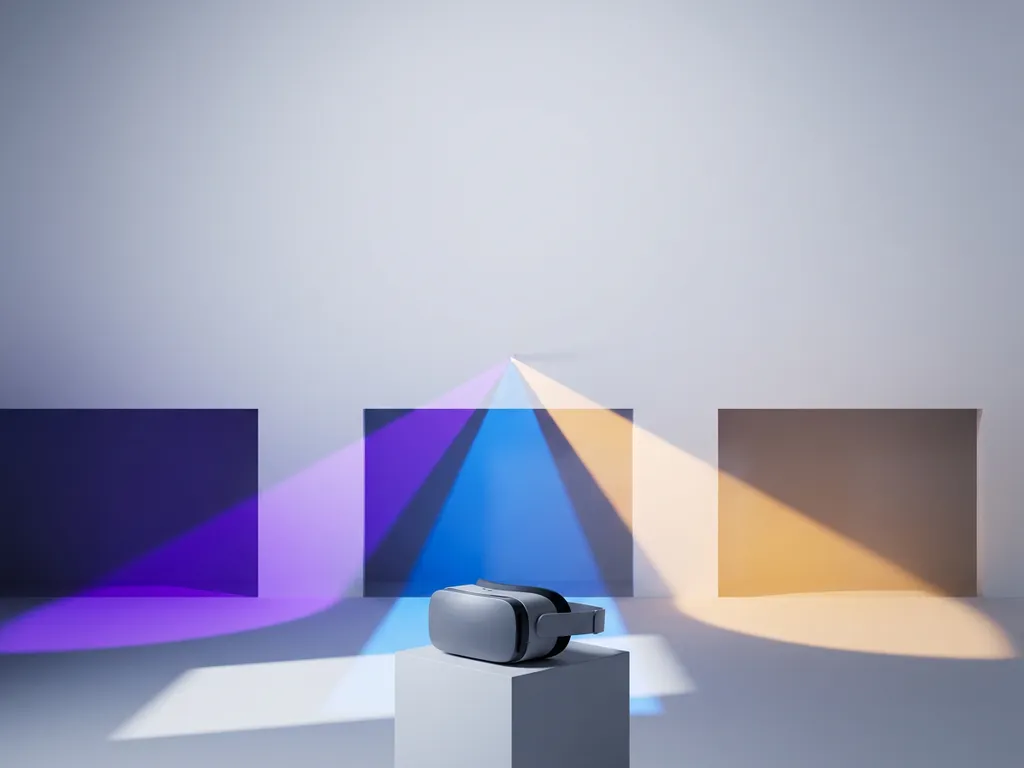
XR, VR, and AR are three distinct but related technologies that together form the spectrum of extended reality. VR (virtual reality) replaces your physical environment entirely with a digital one. AR (augmented reality) overlays digital content onto the real world. XR (extended reality) is the umbrella term that covers both, along with mixed reality and everything in between. Understanding the difference matters because each technology serves a different purpose, suits different hardware, and creates a fundamentally different experience for the audience. The sections below break down each question you’re likely asking.
How do VR, AR, and XR actually differ from each other?
VR, AR, and XR differ in how much of the real world remains visible to the user. In VR, the physical environment disappears entirely, you wear a headset that blocks out reality and replaces it with a fully rendered digital world. In AR, the real world stays visible and digital elements are layered on top of it. XR is the collective name for the entire spectrum, from fully physical to fully virtual.
Think of it as a sliding scale. At one end sits the unaltered physical world. At the other end sits pure virtual reality, where nothing real is visible. Everything between those two poles, AR, mixed reality, and spatial computing, lives within the XR spectrum. The term XR exists precisely because the boundaries between these technologies are blurring as hardware and software evolve. A single device like the Apple Vision Pro, for example, can shift fluidly between AR and VR modes depending on the experience.
For creators and organizations designing experiences, this distinction is not just technical, it is strategic. The choice between VR and AR determines where the experience lives, who can access it, what hardware is required, and how deeply a participant is immersed. Each sits on the same spectrum but delivers a meaningfully different emotional and cognitive impact.
What does ‘extended reality’ actually include?
Extended reality (XR) includes every technology that modifies or replaces human perception of the physical world using digital content. This encompasses virtual reality (VR), augmented reality (AR), mixed reality (MR), and spatial computing. XR is not a single product or platform, it is a category that describes any experience where digital and physical realities intersect or merge.
Within XR, the key components are:
- Virtual Reality (VR): Full immersion in a computer-generated environment, typically experienced through a headset that blocks out the physical world.
- Augmented Reality (AR): Digital content, 3D objects, animations, information overlays, placed on top of the real world, viewed through a smartphone, tablet, or AR glasses.
- Mixed Reality (MR): Digital objects that interact with and respond to the physical environment in real time, anchored to real surfaces and spatial coordinates.
- Spatial Computing: The broader computational framework that enables devices to understand and respond to three-dimensional space, the underlying technology powering MR and next-generation XR platforms.
In 2026, XR also increasingly includes AI-driven elements, haptic feedback, scent, and multi-user shared environments, expanding the definition beyond screens and headsets into fully multisensory design. The term is deliberately broad because the technology is evolving faster than any single label can contain.
What hardware do you need for VR, AR, and XR?
The hardware you need depends on which part of the XR spectrum you are working with. VR requires a headset that fully covers your vision, standalone devices like Meta Quest or tethered PC-connected headsets. AR can run on a smartphone or tablet with no additional hardware, or on dedicated AR glasses for hands-free experiences. Mixed reality and advanced XR typically require spatial computing devices like the Apple Vision Pro.
VR hardware
Standalone VR headsets are the most accessible entry point, they require no external computer and are increasingly used for location-based experiences, group VR cinema setups, and educational deployments. High-fidelity VR for training simulations or cinematic storytelling may still use PC-tethered headsets for greater processing power and visual quality.
AR hardware
For consumer-facing AR experiences, a smartphone is often sufficient. This makes AR exceptionally scalable, no audience needs to purchase new hardware. For more precise, hands-free, or enterprise AR applications, dedicated glasses and headsets offer greater spatial awareness and field of view. Geospatial AR, which pins digital content to GPS coordinates without QR codes, works entirely on mobile devices and is ideal for outdoor campaigns and city-scale activations.
Mixed reality and spatial computing hardware
Devices like the Apple Vision Pro represent the current frontier of mixed reality hardware. They blend high-resolution passthrough video of the real world with rendered digital objects, enabling real-time interaction between virtual elements and physical surfaces. These platforms are designed for professional, high-engagement contexts where the quality of integration between digital and physical matters most.
Which industries are using XR, VR, and AR right now?
In 2026, XR, VR, and AR are actively deployed across education, cultural institutions, healthcare, brand marketing, defense, and social impact sectors. The technology has moved well beyond gaming and novelty, it is now a core tool for training, behavior change, public engagement, and storytelling at scale.
Some of the most meaningful applications include:
- Education: Schools and universities use immersive VR and AR to teach subjects that are difficult to convey through text or video, from anatomy to historical events to environmental science.
- Museums and cultural institutions: AR layers bring static artifacts to life, while VR transports visitors inside historical moments or artistic works they could never physically enter.
- NGOs and public sector: Immersive experiences are used to build empathy around complex social issues, placing audiences inside situations they would otherwise never encounter.
- Brand and experiential marketing: AR activations at events and product launches create shareable, memorable moments that traditional advertising cannot replicate.
- Healthcare and training: VR simulations allow medical professionals, emergency responders, and corporate teams to practice high-stakes scenarios safely and repeatedly.
What unites these applications is a shared recognition that immersive experiences produce deeper engagement and stronger memory retention than passive media. When people do something rather than watch something, the impact lasts longer.
What’s the difference between mixed reality and augmented reality?
The key difference between mixed reality and augmented reality is the degree of interaction between digital content and the physical world. AR places digital content in front of the real world, it overlays rather than integrates. Mixed reality goes further: digital objects are spatially aware, anchored to real surfaces, and respond to physical objects and movement in real time.
In an AR experience, a 3D model might appear to float in front of you on your phone screen. If you move the phone, the object moves with it in a general sense, but it does not truly understand the room around it. In a mixed reality experience, that same 3D model might sit on your actual desk, cast a shadow based on your room’s lighting, and respond when you reach toward it.
The practical implication for designers and commissioners is significant. AR is more accessible and scalable, it runs on devices most people already own. Mixed reality creates a more convincing and spatially grounded experience, but requires more sophisticated hardware and more complex development. Both serve important roles depending on the context, audience, and intended depth of immersion.
When should you choose AR over VR for a project?
Choose AR over VR when accessibility, scale, and real-world context matter most. AR runs on smartphones, requires no headset, and allows participants to stay aware of their physical surroundings. It is the right choice for public campaigns, outdoor activations, museum overlays, and any experience where you need to reach a large or general audience without hardware barriers.
VR is the stronger choice when full immersion is the goal, when you want to remove distractions entirely and place someone inside a world, scenario, or story they could not otherwise enter. VR is particularly powerful for empathy-building exercises, high-stakes training simulations, and cinematic narrative experiences where environmental control is essential.
A few practical questions help clarify the decision:
- Does the audience need to remain physically mobile or socially present during the experience? AR is better suited.
- Is the experience designed to be shared with thousands of people across different locations? AR scales more easily.
- Does the emotional or educational impact depend on total environmental immersion? VR delivers more reliably.
- Is the experience anchored to a specific physical location or object? AR or mixed reality are the natural fit.
Many of the most effective immersive projects use both. A museum might deploy AR for its main gallery to reach every visitor with a smartphone, while offering a dedicated VR station for a deeper, more intensive experience for those who want it.
How is AI changing XR experiences?
AI is transforming XR by making experiences adaptive, personalized, and conversational in real time. Rather than following a fixed script, AI-powered XR experiences can respond to individual users, adjusting language, pacing, and content based on how someone interacts, what they know, or what they need. This shifts immersive experiences from broadcast to dialogue.
The most visible application is AI avatars and non-player characters (NPCs) that hold genuine conversations. Instead of selecting from a menu of pre-written responses, a learner in a VR training simulation can speak naturally with a virtual character that understands context, answers follow-up questions, and adapts its guidance. This creates a level of personalization that was previously impossible to deliver at scale.
Beyond conversation, AI is changing XR in several other important ways:
- Personalized learning paths: AI can track what a participant has understood and redirect the experience toward areas that need reinforcement, making educational XR far more effective than a linear module.
- Real-time content generation: AI can generate or modify 3D environments, dialogue, and scenarios dynamically, reducing production costs and enabling experiences that feel different each time.
- Accessibility and language adaptation: An AI layer can translate content, adjust complexity, or switch communication style based on the user’s profile, making a single XR experience genuinely inclusive across diverse audiences.
- Behavioral insight: AI can analyze how users move through and interact with an XR environment, providing creators and commissioners with rich data about engagement, attention, and impact.
We see AI-driven personalization as one of the most powerful developments in immersive experience design. When a VR or AR experience can truly respond to the individual in front of it, the line between technology and genuine human connection begins to blur in the best possible way. If you are exploring what an intelligent, adaptive immersive experience could look like for your organization, we would love to talk, reach out through our contact page and let us explore it together.
Gerelateerde artikelen
- What is an example of augmented reality advertising?
- How does AR work in retail?
- How much does augmented reality cost?
- What is an immersive brand experience?
- How much does it cost to create a VR experience?
- What are 360-degree experiences?
- How to create an immersive experience?
- Is immersive the same as virtual reality?
- Do 3D artists get paid well?