
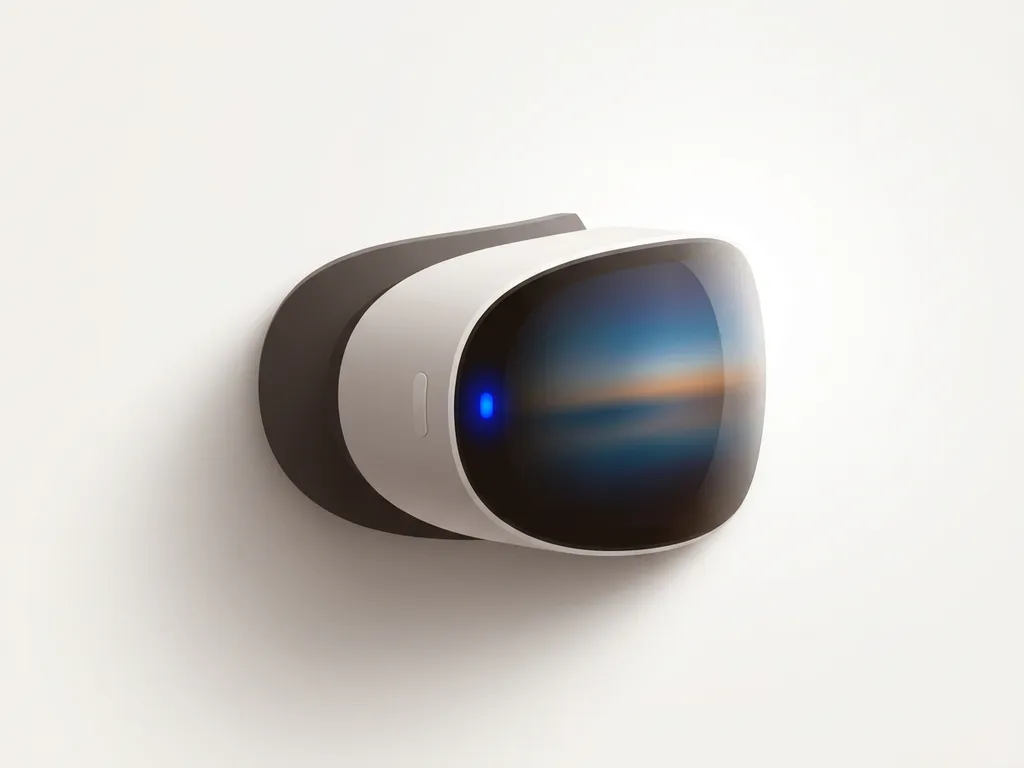
A 360-degree video is a spherical recording that captures every direction simultaneously, allowing viewers to look up, down, left, right, and behind them as if they were physically present in the filmed location. Unlike standard video, which frames a fixed perspective, 360 video places the viewer at the center of the scene. The sections below unpack how the technology works, where it is used, and when it is the right tool for your project.
How does 360-degree video actually work?
360-degree video works by recording all directions at once using multiple camera lenses arranged in a sphere. The separate footage streams are then stitched together into a single equirectangular image, which maps the full sphere onto a flat frame. When played back through a compatible player or headset, the viewer’s head movements control which part of the sphere they see at any given moment.
The stitching process is where most of the technical work happens. Dedicated software aligns each lens’s field of view, blends the overlapping edges, and corrects for color and exposure differences between lenses. The result is a seamless panoramic image that responds in real time to how the viewer moves their head or drags the frame on a touchscreen.
Playback relies on a projection method called equirectangular mapping. Imagine peeling the surface of a globe and laying it flat, the way a world map works. The player then wraps that flat image back around a virtual sphere and places the viewer at the center. The device’s gyroscope or mouse input determines which portion of that sphere is visible at any moment, creating the sensation of presence.
What equipment is used to film 360-degree video?
360-degree video is filmed using dedicated omnidirectional cameras that house multiple wide-angle lenses pointing outward in every direction. Consumer options like the Insta360 and GoPro MAX use two back-to-back fisheye lenses, while professional productions rely on rigs that mount six to sixteen individual cameras in a spherical array. The choice of equipment directly affects resolution, stitching quality, and production cost.
At the consumer end, dual-lens cameras are compact, affordable, and handle stitching automatically in-camera or via a companion app. They suit social media content, real estate walkthroughs, and live event streaming. At the professional end, multi-camera rigs such as the GoPro Omni or custom builds using cinema cameras deliver much higher resolution and dynamic range, which matters when the footage will be experienced on a large screen or inside a VR headset at close range.
Beyond the camera itself, a professional 360 production also requires specialized stabilization rigs, spatial audio microphones that capture sound from all directions, and powerful editing workstations capable of handling the large file sizes that spherical footage generates. Post-production tools such as Adobe Premiere Pro, DaVinci Resolve, and dedicated stitching software like Mistika VR or Autopano Video are standard parts of the workflow.
What’s the difference between 360 video and virtual reality?
The key difference is interactivity. 360-degree video is a passive, pre-recorded experience where the viewer can look around but cannot move through or interact with the environment. Virtual reality is a fully interactive, computer-generated environment that responds to the viewer’s actions, position, and choices in real time. Both can be experienced through a VR headset, but they are fundamentally different technologies.
360 video: presence without agency
In a 360 video, the world is fixed. The camera captured a real moment, and the viewer is a spectator within it. You can turn your head to watch a speaker on your left or look up at a cathedral ceiling, but you cannot walk forward, pick up an object, or change what happens next. This makes 360 video powerful for storytelling, documentary work, and empathy-building because it places viewers inside a real situation without requiring them to make decisions.
Virtual reality: presence with agency
True VR environments are built in real-time 3D engines such as Unreal Engine or Unity. Because the environment is rendered live, it can respond to what the user does. A training simulation can let a medical student practice a procedure. An interactive immersive experience can branch based on the choices a learner makes. This interactivity is what distinguishes VR from 360 video and is why interactive VR tends to require significantly more development time and investment.
The two formats are often confused because both are consumed on the same hardware. A headset like the Meta Quest can play a 360 video filmed on a beach and also run a fully interactive VR game, but the underlying technology and production process are entirely different.
Where is 360-degree video used?
360-degree video is used across education, journalism, healthcare, tourism, marketing, and cultural institutions. Any context where placing someone inside a situation, location, or moment creates more understanding or emotional impact than watching from outside is a strong candidate for the format. Its ability to generate empathy and a sense of presence makes it especially valuable for storytelling around social issues, training, and heritage.
In education, schools and universities use 360 video to take students on virtual field trips, inside historical events, or into environments that would otherwise be inaccessible. In healthcare, the format is used to reduce patient anxiety by immersing them in calming environments, and to train clinical staff by placing them inside simulated ward scenarios.
Museums and cultural institutions use 360 video to extend the reach of their collections, letting remote audiences step inside an exhibition or visit a heritage site that no longer physically exists. NGOs use it to place donors and policymakers inside the realities faced by the communities they serve, a technique that research consistently shows generates a stronger emotional response and higher donation intent than traditional documentary formats.
In brand marketing, 360 video appears at product launches, trade shows, and digital campaigns where the goal is to give audiences an experience of a place, vehicle, property, or event that they cannot physically attend. It also serves as a cost-effective alternative to full interactive VR when a brand needs an immersive format with a shorter production timeline.
What platforms support 360-degree video playback?
The major platforms that support 360-degree video playback include YouTube, Facebook, Vimeo, and any WebGL-capable web browser. VR headsets from Meta, Apple, Sony, and HTC also play 360 video natively. This broad platform support makes 360 video one of the most accessible immersive formats available, requiring no specialist app or hardware for basic playback on a smartphone or desktop.
On YouTube and Facebook, 360 videos play directly in the browser or mobile app. Viewers drag the image with a mouse or tilt their phone to look around. When viewed through a compatible headset, the platform automatically enables stereoscopic mode, splitting the image for each eye to create a sense of depth and presence.
For branded or institutional deployments, 360 video can also be embedded on custom websites using lightweight JavaScript players such as A-Frame, Pannellum, or Three.js. This gives organizations full control over the viewing environment, branding, and any interactive hotspots layered on top of the footage. WebXR support in modern browsers means that a viewer can move from watching on a laptop to experiencing the same content in a headset without downloading a separate application.
What are the limitations of 360-degree video?
The main limitations of 360-degree video are its passive nature, high file sizes, resolution constraints, and the challenge of directing viewer attention. Because the camera records everything simultaneously, the viewer can look away from the intended focal point at any moment, making narrative control difficult. Stitching errors, visible camera rigs, and motion sickness in poorly stabilized footage are also common production challenges.
Resolution is a persistent issue. A standard 4K video concentrates all its pixels on a single frame. A 4K 360 video spreads those same pixels across a full sphere, meaning the portion of the image visible at any one time is significantly lower in quality. Professional productions often shoot at 8K or higher specifically to maintain acceptable sharpness in the viewer’s field of view.
Directing attention is another real challenge. Filmmakers working in standard video use framing, cuts, and composition to guide the eye. In 360 video, the viewer controls their own gaze. Effective 360 storytelling requires spatial sound design, movement, and carefully placed action to guide attention without forcing it, skills that differ significantly from conventional cinematography.
Finally, bandwidth and storage demands are substantial. High-resolution 360 video files are large, and streaming them smoothly requires adaptive bitrate delivery and well-optimized compression. For organizations deploying 360 content at scale, these technical requirements add meaningful infrastructure considerations to the production budget.
When should you use 360 video instead of standard video?
You should use 360 video instead of standard video when the sense of being physically present inside a location, situation, or moment is central to the impact you want to create. If the goal is to generate empathy, convey scale, simulate an environment, or place an audience inside an experience they cannot access in person, 360 video delivers something standard video cannot. If the goal is primarily narrative storytelling with tight editorial control, standard video is often more effective.
Strong use cases for 360 video include training scenarios where context and spatial awareness matter, such as safety drills, surgical preparation, or crisis response. They also include awareness campaigns where placing a viewer inside another person’s reality is the message itself. Heritage and tourism applications benefit when a location is remote, fragile, or no longer accessible. Product and property showcases gain from the format when scale, environment, and atmosphere are key selling points.
Standard video remains the stronger choice when precise narrative sequencing, emotional pacing through editing, or high production value in a controlled frame are priorities. A brand film, for example, benefits from the cinematic control that standard cinematography provides. A documentary exploring a refugee camp may benefit far more from 360 video because the spatial reality of that environment is inseparable from the message.
The decision ultimately comes down to whether presence or narrative control is the primary driver of impact. When presence wins, 360 video is the right format. When storytelling precision wins, standard video serves better. In many of the most powerful immersive productions, the two are used together, with 360 video creating context and emotional grounding while standard footage carries the narrative forward. If you are weighing these options for an upcoming project, we are happy to help you find the right approach: feel free to contact us to explore what format best serves your goals.
Gerelateerde artikelen
- What is a full dome planetarium?
- What is the difference between brand activation and brand experience?
- How to attract people in an exhibition?
- How to make an exhibition stand stand out?
- What is immersive entertainment?
- What are the 4 elements of virtual reality?
- What is the salary of a 3D modeler?
- What is VR content production?
- What software is used for VR content production?