
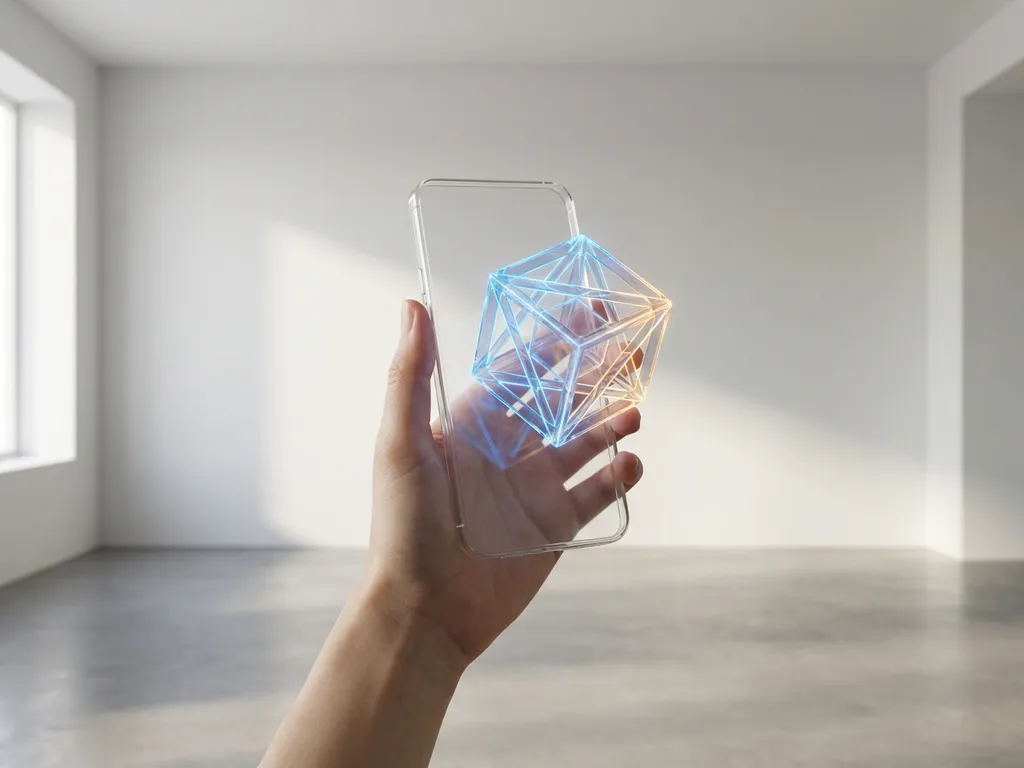
AR content production is the process of creating digital experiences that overlay interactive, three-dimensional elements onto the real world, viewable through smartphones, tablets, or dedicated headsets. Unlike traditional video or graphic design, AR content must respond to physical environments in real time, which makes the production process fundamentally different in both tools and thinking. The sections below break down every key question, from what makes AR content distinct to who builds it and why it works.
How is AR content different from traditional digital content?
AR content is different from traditional digital content because it exists in physical space rather than on a flat screen. A video plays the same way regardless of where you are. AR content, by contrast, anchors to real-world surfaces, locations, or objects and responds to the viewer’s movement and environment in real time. This spatial, reactive quality changes everything about how the content is designed and experienced.
Traditional digital content, a social media post, a website banner, a promotional video, is consumed passively. The viewer watches or reads. AR content demands physical participation. You move around it, interact with it, and in many cases trigger it through your own actions. This shift from passive viewing to active engagement is precisely why AR experiences tend to leave a stronger impression than conventional media.
There is also a technical distinction worth understanding. Traditional content is rendered once and delivered identically to every viewer. AR content must be rendered dynamically, adapting to lighting conditions, camera angles, and spatial coordinates in real time. That requires a fundamentally different production pipeline, one that combines 3D design, spatial computing, and software development alongside the creative and storytelling work.
What types of AR content can brands and organisations produce?
Brands and organisations can produce a wide range of AR content formats, each suited to different goals and contexts. The most common types include marker-based AR triggered by images or QR codes, location-based AR anchored to GPS coordinates, face and body tracking experiences, 3D product visualisations, AR portals that transport users into another environment, and volumetric hologram experiences featuring real people.
For marketing and brand campaigns, popular formats include AR activations at product launches and events, interactive AR posters and packaging, and AR games that drive engagement at physical locations. These formats are designed to create shareable moments and extend the reach of a campaign beyond its physical footprint.
Educational institutions and NGOs tend to favour different formats. AR portals that place learners inside a historical event or crisis scenario, AR miniatures that visualise complex systems or data, and AR children’s books that animate storytelling are all powerful tools for deepening comprehension and building emotional connection with difficult subject matter.
Museums and cultural institutions increasingly use AR art activations that layer additional narrative or perspective onto physical works, as well as geospatial AR that guides visitors through a space with contextual information anchored to exact locations. The common thread across all formats is that the AR layer adds something the physical environment alone cannot deliver: depth, interaction, and a reason to stay engaged longer.
What does the AR content production process involve?
AR content production involves five core phases: strategic briefing and concept development, content design and 3D asset creation, technical development and platform integration, testing across devices and environments, and deployment with ongoing support. Each phase builds on the last, and skipping any one of them typically results in an experience that looks impressive in isolation but fails in real-world conditions.
Concept and creative development
The process begins with a clear understanding of the objective. What should the audience feel, learn, or do? Who are they, and where will they encounter the experience? These questions shape every creative and technical decision that follows. At this stage, the team defines the narrative arc, the interaction model, and the visual language of the experience.
Asset creation and technical build
Once the concept is approved, 3D artists, animators, and developers begin producing the assets and building the underlying logic. This includes modelling and rigging 3D objects, creating animations, recording or generating audio, and writing the code that governs how the experience responds to user input and environmental conditions. For more complex projects, this phase also involves volumetric video capture, photogrammetry scanning of real locations or products, and AI integration for personalised or conversational elements.
Testing and refinement
AR content must be tested extensively across different devices, lighting conditions, and physical spaces. An experience that works perfectly in a controlled studio environment can behave unpredictably in a busy exhibition hall or outdoors in variable light. Rigorous testing and iteration are not optional steps, they are what separates a polished, reliable experience from one that frustrates users and undermines the campaign or programme it was built to support.
What tools and technologies are used to produce AR content?
AR content production relies on a combination of 3D design software, game engines, AR development platforms, and specialised hardware. The most widely used game engines are Unreal Engine and Unity, both of which support real-time rendering and AR deployment across multiple platforms. Design and modelling work is typically done in tools such as Blender, Maya, or Cinema 4D, while AR-specific development frameworks include Apple’s ARKit, Google’s ARCore, and Niantic’s Lightship for geospatial experiences.
For web-based AR that requires no app download, platforms built on WebXR and frameworks like 8th Wall allow experiences to run directly in a mobile browser. This dramatically lowers the barrier to entry for audiences, which is particularly valuable for brand campaigns targeting broad consumer audiences.
More advanced productions draw on additional technologies. Photogrammetry software such as RealityCapture or Metashape is used to create accurate 3D scans of real environments and objects. Volumetric video capture rigs record real people as three-dimensional data rather than flat video, enabling the creation of AR hologram experiences. AI tools are increasingly integrated into AR pipelines to power dynamic content personalisation, real-time language adaptation, and conversational AR avatars.
How long does it take to produce AR content?
AR content production timelines range from two to three weeks for a simple marker-based activation to six months or more for a fully interactive, multi-scene experience with custom 3D assets and AI-driven personalisation. The single biggest factor is scope: the more complex the interaction model, the more bespoke the assets, and the more platforms the experience must support, the longer the production will take.
A straightforward AR poster or image-tracking activation, where a printed image triggers a short animation, can be produced relatively quickly once the creative concept and assets are approved. An interactive VR or AR educational module with branching scenarios, multilingual support, and integration with physical hardware sits at the other end of the spectrum and requires careful phased planning.
The timeline is also affected by how clearly the brief is defined at the outset. Projects where the objective, audience, and success criteria are well established from day one move through production significantly faster than those where the concept evolves during development. Co-creation between the production team and the commissioning organisation at the briefing stage is one of the most effective ways to protect timelines and budget.
Who should be involved in an AR content production team?
An effective AR content production team typically includes a creative director, a 3D artist or animator, an AR developer, a UX designer, and a project manager. For larger or more complex productions, the team expands to include narrative designers, sound designers, volumetric capture specialists, and AI engineers. The right team composition depends entirely on the format and ambition of the experience being built.
What distinguishes strong AR production teams from weaker ones is not the size of the team but the depth of integration between disciplines. AR content sits at the intersection of storytelling, spatial design, and software engineering. When those three areas operate in silos, the result is often technically functional but emotionally flat, or creatively ambitious but technically unstable. The most effective teams build in structured collaboration between creative and technical leads from the earliest stages of concept development.
For organisations commissioning AR content rather than building it in-house, the most important consideration is finding a production partner who works across the full pipeline, from initial concept through to deployment and device support. Fragmented production, where creative work is handled by one supplier and technical development by another, introduces coordination risk and often results in a compromised final experience.
What makes AR content production effective for education and brand campaigns?
AR content production is effective for both education and brand campaigns because it transforms passive audiences into active participants. When people physically interact with content, moving around it, triggering it, making choices within it, they process and retain the experience more deeply than they would through watching or reading. This is not a feature unique to AR, but AR achieves it in a way that works within everyday physical environments, without requiring a dedicated space or device.
For educational applications, the effectiveness of AR comes from its ability to make abstract concepts tangible. A student who can walk around a 3D model of a cell, explore a historical site through an AR portal, or interact with a simulated scenario involving real-world consequences is engaging with the material in a fundamentally different way than a student reading a textbook. The experience creates a memory anchor that supports long-term retention and genuine comprehension rather than surface-level familiarity.
For brand campaigns, AR works because it generates the kind of engagement that passive advertising cannot manufacture. An AR activation at a product launch, a geospatial AR campaign in a city centre, or an AR game tied to an event gives audiences something to do rather than something to watch. That active participation creates a stronger emotional association with the brand, and it generates the social sharing behaviour that extends campaign reach organically.
We design AR experiences that serve both purposes, building campaigns and educational programmes that use the technology not as spectacle, but as a genuine vehicle for connection and meaning. If you are exploring what AR content production could look like for your organisation or campaign, we would welcome the conversation. Contact us to discuss your brief.
Gerelateerde artikelen
- Can an audience interact with a projection show?
- What are the benefits of experiential marketing?
- What is the strongest trigger to memory?
- What part of the brain is responsible for sensory memory?
- How do immersive experiences work?
- How much to build an immersive room?
- Why is my brand campaign not creating buzz?
- What is an immersive installation?
- What are the technical requirements for immersive installations?