
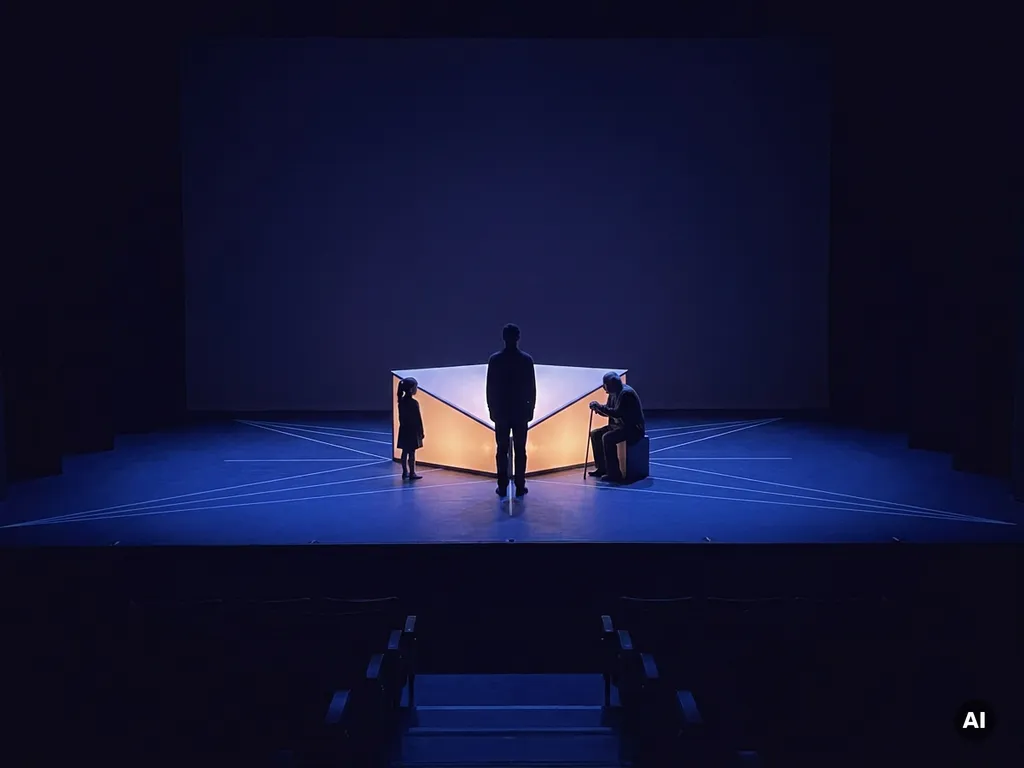
You adapt a visitor show for different audiences by designing it from the start with flexibility built in, through modular content structures, layered storytelling, and technology that responds to who is actually in the room. The core experience stays consistent, but the depth, tone, sensory intensity, and language shift depending on whether you are hosting school groups, international tourists, corporate guests, or specialist researchers. The sections below unpack each dimension of that adaptation process, from content architecture to real-time AI personalisation and measurement.
What makes a visitor show difficult to adapt for multiple audiences?
The core challenge is that most visitor shows are built around a single assumed audience, one age range, one level of prior knowledge, one cultural frame of reference. When that assumption breaks down, the entire experience can feel either too simple or too dense, too familiar or too foreign. Adapting for multiple audiences means solving for this mismatch without fragmenting the show into something unrecognisable.
Several specific tensions make this difficult in practice. Narrative pacing that works for adults often loses children within the first few minutes. Emotional storytelling calibrated for general audiences can feel reductive to domain experts. Language, both literal and metaphorical, that resonates in one culture may carry entirely different connotations in another. And sensory elements like sound volume, visual complexity, and physical interaction thresholds vary significantly across age groups, accessibility needs, and cultural norms.
There is also an institutional tension. Museums, cultural institutions, and event producers invest heavily in a show’s design and production. Rebuilding that show from scratch for each audience segment is rarely feasible. The real challenge is finding a design philosophy that accommodates variation without multiplying production costs, which is precisely why modular architecture and adaptive technology have become central to how we approach immersive experience audience adaptation.
Which audience dimensions matter most when redesigning a show?
The most important audience dimensions when redesigning a visitor show are age and developmental stage, prior knowledge, language and cultural background, accessibility requirements, and group composition. These five factors shape how people process information, what emotional triggers are effective, and what level of physical or cognitive engagement is appropriate.
Age and developmental stage affect everything from attention span to the types of interactivity that feel natural. A show designed for primary school children needs shorter narrative arcs, tactile interaction, and visual storytelling that does not rely on reading. A show for adult professionals can sustain longer conceptual threads and benefits from contextual depth that children would find overwhelming.
Prior knowledge is equally significant. Visitors arriving with subject expertise want precision and nuance; general audiences need accessible entry points that do not condescend. Group composition, whether visitors arrive alone, as families, as school classes, or as corporate teams, changes the social dynamics of engagement. People in groups interact with content differently than individuals do, and a show that ignores this will feel misaligned regardless of how polished its production is.
Accessibility requirements deserve particular attention. Cognitive accessibility, sensory sensitivities, mobility considerations, and neurodivergent visitor needs are not edge cases, they represent a meaningful proportion of any audience. Building these into the adaptation strategy from the beginning, rather than retrofitting them later, produces far better results.
How does modular content design enable audience flexibility?
Modular content design enables audience flexibility by breaking a visitor show into discrete, interchangeable components, narrative segments, interactive layers, sensory sequences, that can be recombined, extended, or simplified depending on who is experiencing them. Instead of one fixed show, you have a repertoire of building blocks that can be assembled differently for each audience context.
In practice, this means separating the core story from its delivery mechanisms. The central narrative or educational message remains constant, but the medium through which it is communicated, spoken narration, on-screen text, physical interaction, ambient soundscape, can shift. A section that uses dense explanatory text for adult specialists might be replaced by an animated sequence for younger visitors, while the underlying information being conveyed stays the same.
Modular design also makes operational management far more efficient. Rather than maintaining entirely separate versions of a show, production teams work with a shared library of content modules. Curators and experience designers can configure the appropriate combination before each session, or, increasingly, allow the system itself to assemble the right sequence based on audience signals gathered at arrival. This is the foundation on which real-time personalisation is built.
How can AI personalise a visitor experience in real time?
AI can personalise a visitor experience in real time by processing signals about who is present, age indicators, language preferences, interaction pace, prior responses within the experience, and adjusting content delivery accordingly, without any manual intervention between sessions. The result is a show that feels tailored even when the audience changes from one group to the next.
The inputs AI systems use vary depending on the installation. Some systems draw on data collected at ticketing or registration, language preference, age group, accessibility needs. Others use interaction data gathered during the experience itself: how long a visitor lingers on a particular element, which interactive prompts they engage with, how quickly they move through a space. These signals inform the system’s decisions about what content to surface next, at what pace, and in what format.
We integrate AI-driven personalisation into our immersive projects precisely because it solves the scaling problem that modular design alone cannot fully address. A human facilitator can adapt their delivery to a room of twenty people; an AI-powered system can do the equivalent for hundreds of simultaneous visitors across a large installation. The adaptation happens at the level of individual visitor journeys, not just group-level configuration.
Importantly, effective AI personalisation in visitor contexts is not about surveillance or data collection for its own sake. It is about responsiveness, creating an experience that meets people where they are rather than expecting them to meet the experience on its own terms.
What’s the difference between localising and personalising a visitor show?
Localisation adapts a visitor show for a specific cultural or linguistic group as a whole, translating language, adjusting cultural references, and recalibrating tone for a defined regional or demographic audience. Personalisation adapts the experience for an individual visitor based on their specific behaviour, preferences, or needs in the moment. Both matter, but they operate at different levels of granularity.
Localisation is typically done in advance. It involves decisions about which languages to support, which cultural examples to use, which visual or symbolic references will land differently across communities. A show designed for audiences in the Netherlands will make different narrative choices than the same show adapted for audiences in Southeast Asia, not because the core message changes, but because the cultural context through which that message is received is different.
Personalisation happens during the experience. It responds to individual signals rather than group-level assumptions. A visitor who moves quickly through introductory content might be offered an accelerated path to more advanced material. A visitor who pauses repeatedly at a particular exhibit might receive additional contextual depth on that specific element. Personalisation does not require knowing anything about a visitor’s identity in advance, it responds to behaviour as it unfolds.
The most effective tailored cultural experiences combine both. Localisation ensures the show speaks the right cultural language; personalisation ensures it speaks to the right person within that cultural context.
How do sensory elements change across different audience groups?
Sensory elements in a visitor show need to be calibrated differently for different audience groups because sensory thresholds, preferences, and tolerances vary significantly by age, neurological profile, and cultural background. What creates excitement and immersion for one group can cause discomfort or disengagement for another.
Volume and sound intensity are the most immediately obvious variables. Children and visitors with sensory sensitivities often respond negatively to high sound levels that adult general audiences find energising. Spatial audio design that works beautifully in a large installation may feel overwhelming in a smaller venue with a different group composition. Adaptive sound systems that allow volume and frequency profiles to shift between sessions, or even within a session, address this directly.
Visual intensity follows a similar pattern. High-contrast, rapidly changing visuals are engaging for some audiences and disorienting for others. Younger children and visitors with photosensitivity or certain neurological differences benefit from slower visual pacing and lower contrast ratios. Scent, where it is used, requires particular care: what reads as evocative and atmospheric for one cultural group may be unfamiliar or even unpleasant for another.
Physical interaction thresholds also differ. Audiences who are accustomed to hands-on museum experiences will approach interactive elements confidently; first-time visitors to immersive formats may need more guidance and lower-stakes entry points before they feel comfortable engaging physically with the environment. Designing sensory elements with adjustable parameters, rather than fixed settings, is what makes genuine audience flexibility possible.
Should a show have one version or multiple audience-specific versions?
A visitor show should have one core version with configurable layers rather than multiple entirely separate versions. Building distinct shows for each audience segment multiplies production costs, complicates operational logistics, and creates maintenance burdens that most institutions cannot sustain. A single, well-architected experience with audience-responsive components delivers better results at lower long-term cost.
The key is distinguishing between what must stay constant and what can vary. The show’s central narrative, its spatial layout, its primary interactive mechanics, and its core visual identity should remain consistent across all audience configurations. These elements represent the majority of the production investment and define the show’s identity. What varies is the layer of content delivered on top of that foundation: the language of narration, the depth of explanatory text, the intensity of sensory elements, the complexity of interactive challenges.
There are situations where a second distinct version is genuinely warranted, a dedicated schools programme with a fundamentally different pedagogical structure, for instance, or a specialist research access mode that exposes content not appropriate for general audiences. But these should be exceptions driven by clear audience need, not the default approach to audience segmentation.
The practical implication is that the decision about versions should be made at the design stage, not retrofitted after production. Institutions that engage with immersive show customisation early in the development process, before the content architecture is locked, have far more flexibility than those who try to adapt a finished show after the fact.
How do you measure whether an adaptation is actually working?
You measure whether a visitor show adaptation is working by tracking engagement depth, comprehension outcomes, emotional response indicators, and return intent, and comparing these metrics across different audience configurations. Measurement should be designed before the adaptation is deployed, not added as an afterthought once the show is running.
Engagement depth goes beyond footfall or session completion rates. It asks how long visitors spend with specific content elements, which interactive features they return to, and where they disengage or exit the experience early. These behavioural signals reveal whether the adapted content is landing with the intended audience or creating friction points that the original design did not anticipate.
For educational and NGO contexts, comprehension outcomes matter most. Pre- and post-experience assessments, even brief, low-friction ones, can reveal whether the adapted show is actually transferring knowledge or shifting attitudes in the intended direction. Emotional response can be captured through exit surveys, facilitated reflection sessions, or in some installations through biometric indicators that measure physiological engagement in real time.
Qualitative feedback remains irreplaceable. Visitor comments, facilitator observations, and structured interviews with audience representatives often surface insights that quantitative metrics miss entirely. A show that scores well on engagement time but consistently generates comments about cultural misalignment has a problem that the numbers alone would not reveal.
The most important principle is iteration. Adaptation is not a one-time event, it is an ongoing process of refinement based on what the data and feedback reveal. Institutions that build measurement into their operational rhythm, rather than treating it as a post-launch audit, consistently produce visitor experiences that improve meaningfully over time. If you are ready to explore what a genuinely adaptive immersive experience could look like for your institution or campaign, we would welcome the conversation, contact us to start.
Gerelateerde artikelen
- What are the key elements of a successful exhibition?
- What are examples of immersive experiences?
- What is an immersive art installation?
- What does XR stand for?
- How much do brand activations cost?
- What is the primary goal of experiential marketing?
- What is the 20 20 20 rule for VR?
- What is AR content production?
- What makes interactive storytelling effective?