
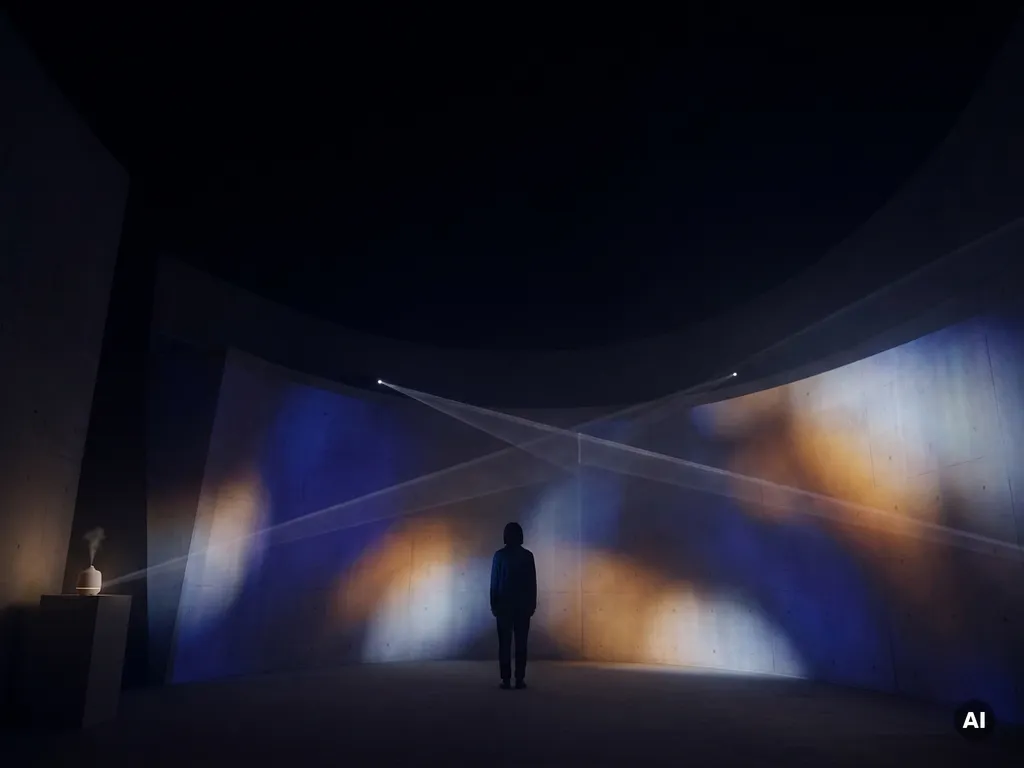
A well-designed show improves the overall visitor experience by transforming passive observation into active participation, pulling audiences into a narrative rather than leaving them on the outside looking in. When sensory design, storytelling, and spatial layout work together, visitors leave with memories that last far longer than any brochure or screen-based campaign. The questions below unpack exactly how that transformation happens, from the mechanics of immersive technology to the practical challenge of measuring real-world impact.
What makes a show experience memorable for visitors?
A show experience becomes memorable when it engages visitors emotionally, physically, and intellectually at the same time. Memorable experiences share three qualities: they surprise the visitor, they make the visitor feel something genuine, and they give the visitor a sense of agency, the feeling that their presence in the space actually matters. Without at least one of these, a show risks becoming forgettable background.
Emotion is the most reliable memory anchor. When a visitor feels awe, curiosity, or empathy during a show, the brain encodes that moment differently than it does neutral information. This is why purely informational displays, panels of text, static objects behind glass, rarely stick, while a well-crafted immersive experience can stay with someone for years.
Sensory depth also plays a significant role. Experiences that engage smell, touch, spatial awareness, and sound alongside vision create richer, more layered memories. A visitor who hears rain, feels cool air, and smells damp earth while watching a rainforest projection is having a fundamentally different, and more memorable, encounter than one who watches the same footage on a flat screen.
Finally, personalization matters. When a show responds to a visitor’s choices, pace, or language, it signals that the experience was made for them specifically. That sense of recognition is itself memorable, and it dramatically increases the likelihood that visitors will share the experience with others.
How does immersive technology improve visitor engagement?
Immersive technology improves visitor engagement by replacing passive consumption with active participation. Technologies such as augmented reality, virtual reality, interactive projection, and spatial audio remove the barrier between the visitor and the content, inviting people to step inside a story rather than observe it from a distance. The result is deeper attention, longer dwell time, and stronger emotional connection.
AR overlays, for example, can bring a historical artifact to life by layering animated context directly onto the physical object. A visitor pointing a device at a centuries-old map can watch trade routes animate across it in real time. That interaction is inherently more engaging than reading a caption, because it rewards curiosity with immediate, visible results.
VR goes further by transporting visitors entirely. A 360-degree cinematic experience can place a museum visitor inside a reconstructed ancient city or give a school group a first-person perspective on a humanitarian crisis. This kind of perspective-shifting is difficult to achieve through any other medium, and it consistently produces stronger empathy and retention than traditional formats.
Interactive screens and AI-driven elements add another layer by making the experience responsive. When the show reacts to what a visitor does, adjusting pace, offering new paths, responding to questions, engagement rises because the visitor becomes a participant rather than an audience member. This responsiveness is central to how we design experiences at Rooftop Immersive, where AI-driven personalization allows a single installation to serve very different visitors in meaningfully different ways.
What types of shows create the strongest audience impact?
Shows that create the strongest audience impact are those that combine emotional storytelling with genuine interactivity and a clear sense of purpose. The format matters less than the intention behind it. Whether a show is a large-scale dome projection, an intimate VR pod experience, or a location-based AR journey, impact is highest when visitors feel the show was made with them, not just for them, in mind.
Experiential shows with physical presence
Shows that occupy real physical space consistently outperform screen-only formats in terms of emotional impact. When visitors can walk through an environment, touch elements, or move freely within a narrative, their sense of presence increases dramatically. Interactive 360-degree dome installations, for instance, can accommodate hundreds of visitors simultaneously while maintaining an atmosphere of intimacy and wonder. The shared physical experience also creates social memory, visitors discuss what they saw with the people around them, reinforcing the impact further.
Shows built around perspective-shifting
Experiences that deliberately place visitors inside another person’s perspective, a refugee’s journey, a child’s view of the world, a scientist’s encounter with an endangered ecosystem, generate some of the strongest measurable impact in terms of attitude change and behavioral intention. The mechanism is empathy: when a visitor genuinely inhabits another viewpoint, even briefly, it changes how they relate to the subject matter long after the show ends.
How can shows be designed for different types of visitors?
Shows can be designed for different types of visitors through layered content architecture, adaptive technology, and flexible physical design. Rather than building one linear experience, the strongest shows are structured so that a child, an expert, and a casual visitor can each find an entry point that matches their knowledge level, physical ability, and available time, without any of them feeling underserved.
Layered content means that surface-level information is always accessible, but deeper content is available for those who seek it. A visitor can engage with a compelling visual narrative at face value, while another visitor who wants more can interact with additional layers, detailed data, extended stories, or expert commentary, without the two experiences conflicting.
Adaptive technology takes this further. AI-powered systems can detect visitor behavior and adjust the pace, language, or complexity of content in real time. A show designed for a school group can automatically simplify language for younger audiences, while the same installation can offer more nuanced material to adult professionals. This kind of personalization was once logistically impossible at scale; today it is one of the defining advantages of modern immersive technology.
Physical design also plays a role. Accessible pathways, multiple sensory channels, and variable interaction points ensure that visitors with different abilities and learning styles can all participate meaningfully. A show that relies entirely on audio, for example, excludes a significant portion of potential visitors. Designing with all the senses in mind from the outset is both an ethical choice and a practical one, it broadens the audience without diluting the experience for anyone.
What role does storytelling play in a great visitor experience?
Storytelling is the structural backbone of any great visitor experience. Technology, spatial design, and sensory elements are all delivery mechanisms, but without a coherent narrative thread, they remain impressive without being meaningful. Storytelling gives visitors a reason to care about what they are seeing, a framework for understanding it, and an emotional journey that carries them from beginning to end.
The most effective show narratives follow a recognizable arc: they establish a world, introduce a tension or question, and resolve it in a way that leaves the visitor changed. This does not require fiction. A documentary exhibition about climate change, a brand experience celebrating a product’s origin story, or a cultural show exploring a community’s history can all follow a narrative arc that makes the visitor feel they have been on a journey rather than simply received information.
Character is another powerful storytelling tool in spatial contexts. When a show introduces a specific person, real or fictional, whose perspective the visitor can follow, it creates an emotional anchor. Visitors orient themselves through that character’s eyes, which makes abstract or complex subject matter far more accessible. AI avatars and holographic hosts are increasingly used to fulfill this role in interactive exhibitions, providing a consistent narrative guide that adapts to each visitor’s pace and questions.
Crucially, storytelling in a spatial context must account for non-linear movement. Unlike a film, a show cannot guarantee that every visitor will encounter content in the intended sequence. Strong spatial storytelling is therefore designed to work from multiple entry points, with each element carrying enough narrative weight to be meaningful on its own while also contributing to the larger whole.
How do you measure whether a show improved the visitor experience?
Measuring whether a show improved the visitor experience requires a combination of quantitative data and qualitative insight, gathered before, during, and after the show. No single metric tells the full story. The most reliable picture comes from triangulating behavioral data, self-reported feedback, and longer-term outcome tracking, each of which captures a different dimension of impact.
Behavioral and engagement metrics
Dwell time is one of the clearest behavioral signals: visitors who spend significantly longer in a show than in comparable spaces are demonstrating engagement through action rather than words. Interaction rates, how often visitors engage with interactive elements, how deeply they explore content layers, how many return to specific moments, provide additional granularity. For digital installations, these metrics can be tracked with precision and used to refine the experience in real time.
Self-reported and qualitative feedback
Post-visit surveys, structured interviews, and net promoter scores capture what visitors felt and remember. The most valuable qualitative data comes from open-ended questions that invite visitors to describe the experience in their own words, these responses often reveal emotional resonance that quantitative metrics miss entirely. For educational or social impact shows, pre- and post-assessments can measure whether attitudes, knowledge, or behavioral intentions actually shifted as a result of the experience.
Social sharing is also a meaningful proxy for impact. When visitors photograph, film, or discuss a show on their own initiative, they are signaling that the experience exceeded their expectations enough to want to share it. This organic amplification is both a measurement of success and a driver of future visitor engagement, making it one of the most commercially and culturally valuable outcomes a show can produce.
If you are ready to design a show that genuinely moves your audience, we would love to explore what that could look like for your context. Contact us and let’s start the conversation.
Gerelateerde artikelen
- What are the benefits of integrating immersive technologies with STEM education?
- What are the 5 sensory memories?
- How to create a virtual reality experience?
- Can immersive experiences reduce anxiety?
- Why is immersive art so popular?
- Is VR an immersive experience?
- What is the difference between experiential learning and immersive learning?
- What are the benefits of immersive experiences?
- How do immersive experiences help brands connect with Gen Z?