
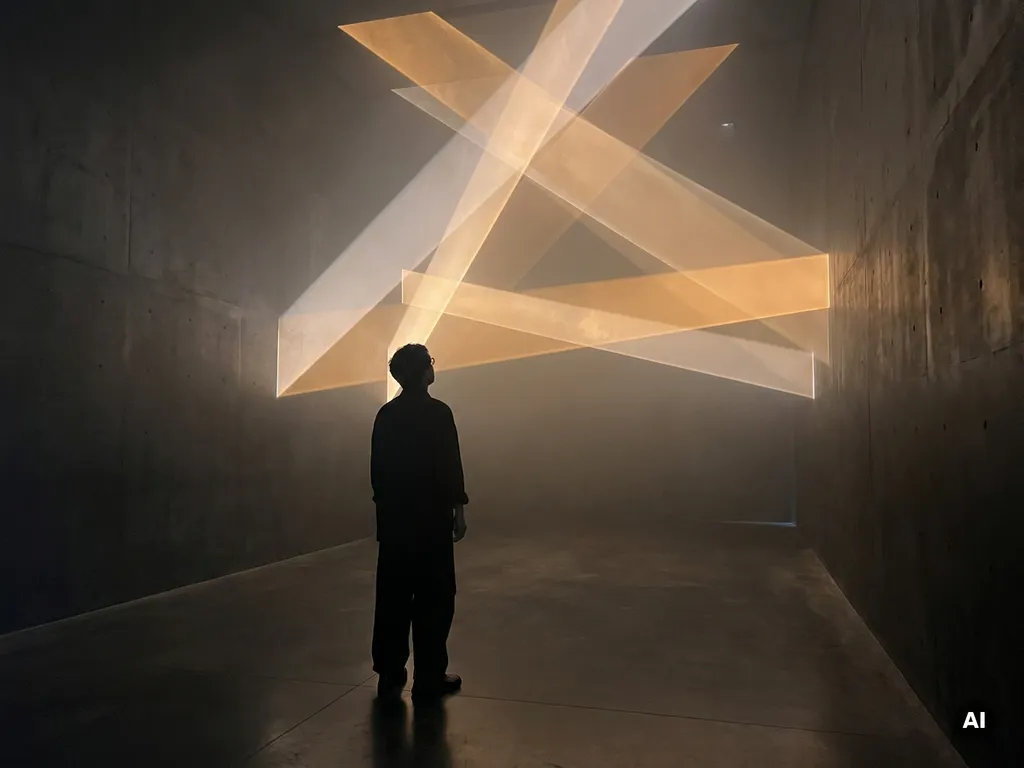
To attract people to an exhibition, you need to create moments of genuine curiosity — experiences that compel visitors to stop, look closer, and participate rather than simply pass by. The most effective exhibitions combine sensory design, compelling storytelling, and interactive technology to transform passive observers into active participants. The questions below unpack exactly how to make that happen, from spatial layout to measuring real engagement.
What makes visitors stop and engage at an exhibition stand?
Visitors stop at exhibition stands when something disrupts their expected path — a sound, a movement, an unexpected visual, or an invitation to touch or interact. The trigger must be immediate and legible within two to three seconds, because that is roughly how long a person takes to decide whether to engage or move on. Novelty, relevance, and a clear entry point are the three non-negotiable ingredients.
Beyond the initial hook, sustained engagement depends on layered depth. A stand that looks impressive from ten meters but offers nothing once you arrive will lose visitors as quickly as it attracted them. The most effective exhibition stands operate on two levels simultaneously: a bold, perceptible outer signal that draws people in, and a richer inner experience that rewards those who stay.
Practical elements that reliably stop visitors include:
- Motion and animation — the human eye is wired to track movement, making dynamic displays far more attention-grabbing than static ones
- Sound design — ambient audio or directional sound creates an invisible boundary that signals “something is happening here”
- Tactile invitations — physical surfaces, buttons, or objects that clearly signal “touch me” lower the barrier to participation
- Social proof — seeing other people engaged with something is one of the most powerful draws in a crowded exhibition hall
- Personalized prompts — a screen or installation that reacts to the visitor’s presence creates an immediate sense of being seen
The goal is not spectacle for its own sake. Every stopping mechanism should connect directly to the story or message you want visitors to carry with them after they leave.
How does immersive technology change visitor behavior at exhibitions?
Immersive technology fundamentally shifts visitor behavior from passive observation to active participation. When people can step inside a story — through virtual reality, augmented reality, or responsive spatial installations — they move from audience members to protagonists. This shift produces deeper emotional engagement, longer dwell times, and significantly stronger memory retention compared to traditional display formats.
The behavioral change operates on several levels. First, immersive environments remove the psychological distance between the visitor and the subject matter. A museum visitor reading a panel about climate change remains an observer. That same visitor standing inside a simulated flooded city feels the weight of the issue in a way that text and photographs cannot replicate. Empathy, not just information, becomes the outcome.
Second, interactive technology introduces agency. When visitors can make choices — navigate a virtual environment, trigger different narrative threads, or manipulate a 3D model — they become invested in the outcome. This sense of agency dramatically increases time spent at an installation and the likelihood that visitors will share the experience with others, extending the exhibition’s reach well beyond the physical venue.
Third, immersive formats generate behavioral data that traditional exhibitions cannot. Dwell time, interaction patterns, and navigation choices all become measurable signals that exhibition organizers can use to refine the experience in real time or across future iterations.
What types of interactive experiences work best for exhibitions?
The interactive experiences that work best for exhibitions are those that match the complexity of the content to the appropriate level of participation — not every exhibition needs full virtual reality, and not every audience wants to put on a headset. The most effective formats are those that lower the barrier to entry while offering genuine depth for visitors who choose to go further.
Experiences that work across broad audiences
Touchscreen and gesture-based installations remain highly accessible because they require no equipment and are immediately intuitive. When paired with compelling content — layered narratives, interactive timelines, or configurable 3D models — they deliver strong engagement without friction. Augmented reality activated through a smartphone sits in a similar category: visitors use a device they already own and understand, which removes the learning curve entirely.
Experiences that create peak moments
For exhibitions aiming to create memorable, shareable highlights, more immersive formats deliver outsized impact. VR cinema experiences where small groups share a synchronized journey work exceptionally well for emotional storytelling — UNICEF and similar organizations have used this format to build genuine empathy around complex humanitarian issues. Interactive 360-degree dome projections create collective spectacle that draws crowds and generates social sharing. AR portals, which allow visitors to step through a virtual doorway into another world or time period, produce the kind of “wow moment” that defines a visit and drives word-of-mouth.
The key principle is sequencing: use accessible, low-barrier experiences to draw visitors in, then offer deeper immersive options for those who want more. This tiered approach ensures no one feels excluded while still delivering peak experiences to those who seek them.
How can storytelling be used to draw people into an exhibition?
Storytelling draws people into an exhibition by giving them a reason to care before they fully understand what they are looking at. A well-constructed narrative creates an emotional contract with the visitor — it signals that something meaningful is unfolding, and that their presence matters to how the story plays out. The most powerful exhibition storytelling begins before the visitor even crosses the threshold.
Effective exhibition storytelling is spatial and sequential. Unlike a book or film, an exhibition allows the story to unfold across physical space, with each zone or installation functioning as a chapter. This means the narrative architecture must be designed into the spatial layout itself — visitors should feel the story progressing as they move through the space, not encounter disconnected fragments.
Character and perspective are particularly powerful tools. When an exhibition gives visitors a specific point of view to inhabit — a historical figure, a community member, a future generation — it creates identification rather than observation. This is especially effective for exhibitions dealing with social issues, history, or scientific concepts where abstract information needs to become emotionally real.
Sensory storytelling amplifies the effect further. Scent, sound, temperature, and texture can all carry narrative meaning. A story about a forest becomes more resonant when the air carries the faint smell of pine. A historical reconstruction becomes more credible when the soundscape matches the era. These sensory layers are not decoration — they are storytelling tools that operate below conscious awareness and create the feeling of genuine presence.
What role does spatial design play in attracting exhibition visitors?
Spatial design is the silent architecture of visitor attraction — it shapes where people look, how they move, and how long they stay, often without them realizing it. A well-designed exhibition space guides visitors naturally through a curated journey, creating moments of discovery, pause, and revelation that feel organic rather than forced. Poor spatial design, by contrast, creates confusion, bottlenecks, and premature exits.
The entrance experience is disproportionately important. The first five to ten seconds inside an exhibition space set the emotional register for everything that follows. A strong entrance communicates scale, atmosphere, and intention simultaneously — it tells visitors that something worth their time is ahead. This can be achieved through lighting, height, sound, or a single powerful visual anchor that draws the eye inward and forward.
Flow and pacing are equally critical. Exhibition spaces that funnel all visitors through a single linear path create crowding and frustration. Spaces that offer multiple routes allow visitors to self-select their depth of engagement — some will explore every corner, others will follow the main thread. Both journeys should feel intentional and satisfying.
Contrast is one of spatial design’s most underused tools. Alternating between intimate, enclosed zones and open, expansive areas creates emotional rhythm. A quiet, reflective alcove following a high-stimulation interactive installation gives visitors space to process what they have experienced — and makes both zones more memorable by contrast.
How do you attract younger or harder-to-reach audiences to exhibitions?
Attracting younger and harder-to-reach audiences to exhibitions requires meeting them at the intersection of their existing behaviors and genuine curiosity — not simply adding technology as a veneer over traditional formats. Younger audiences in particular are sophisticated consumers of digital experience, and they will disengage immediately if an exhibition feels like it is performing relevance rather than delivering it.
Several approaches consistently prove effective:
- Social shareability built into the design — create moments that visitors instinctively want to photograph or film, and ensure the space accommodates this rather than discouraging it. An exhibition that travels through social media reaches audiences who may never have considered visiting otherwise.
- Participatory formats over passive ones — younger audiences expect to contribute, not just consume. Co-creation elements, voting mechanisms, or experiences that change based on visitor input create a sense of ownership and investment.
- Culturally relevant content framing — the same subject matter can attract or alienate depending on how it is framed. Connecting exhibition themes to issues that younger audiences already care about — identity, sustainability, social justice, technology — creates immediate relevance.
- AI-driven personalization — experiences that adapt to language, pace, or interest level ensure that diverse audiences each find a meaningful entry point. This is particularly valuable for multilingual communities or audiences with varying levels of prior knowledge.
- Off-site and hybrid reach — extending the exhibition experience through AR activations accessible via smartphone, or through digital companion content, allows harder-to-reach audiences to engage before committing to a physical visit.
For institutions working with schools or youth organizations, partnerships that bring exhibitions into educational contexts — rather than waiting for young people to come to the venue — dramatically expand reach and lower the participation barrier.
What should exhibition organizers measure to know if visitor attraction is working?
Exhibition organizers should measure visitor attraction through a combination of behavioral, experiential, and outcome metrics — not footfall alone. The number of people who enter an exhibition tells you very little about whether your attraction strategy is working. What matters is the quality of engagement those visitors experience and the actions they take as a result.
Key metrics worth tracking include:
- Dwell time per zone — how long visitors spend at specific installations or areas reveals which elements are genuinely engaging versus which are being bypassed
- Interaction rates — for interactive installations, the percentage of visitors who actively engage versus those who observe passively is a direct measure of the experience’s accessibility and appeal
- Return and referral rates — visitors who return, or who bring others, signal that the experience delivered genuine value beyond a single visit
- Social reach and sharing — organic social media activity generated by visitors is both a reach metric and a quality signal; people share experiences that genuinely moved or surprised them
- Comprehension and attitude shift — for educational or purpose-driven exhibitions, pre- and post-visit surveys measuring knowledge gain or attitude change provide direct evidence of impact
- Conversion to deeper engagement — whether visitors sign up for newsletters, make donations, purchase memberships, or take another defined action connects the exhibition experience to measurable organizational outcomes
The most useful measurement frameworks combine quantitative data — captured through sensors, ticketing systems, and digital interaction logs — with qualitative feedback gathered through brief exit surveys or facilitated conversations. Together, these sources give exhibition organizers a complete picture of what is working, what needs refinement, and where the greatest opportunities for improvement lie.
Designing an exhibition that genuinely attracts and holds people is one of the most rewarding creative challenges in the cultural and experiential sector — and it is one we approach with both technical rigor and deep storytelling instinct. If you are rethinking how your exhibition engages visitors, we would love to explore what is possible together. Contact us to start the conversation.
Gerelateerde artikelen
- What is experiential marketing theory?
- How does AR work in retail?
- What is an immersive experience?
- What makes something an immersive experience?
- How much does it cost to create a VR experience?
- Is immersive the same as virtual reality?
- What are examples of immersive technology?
- How do you create an immersive experience?
- How do you create compelling interactive narratives?