
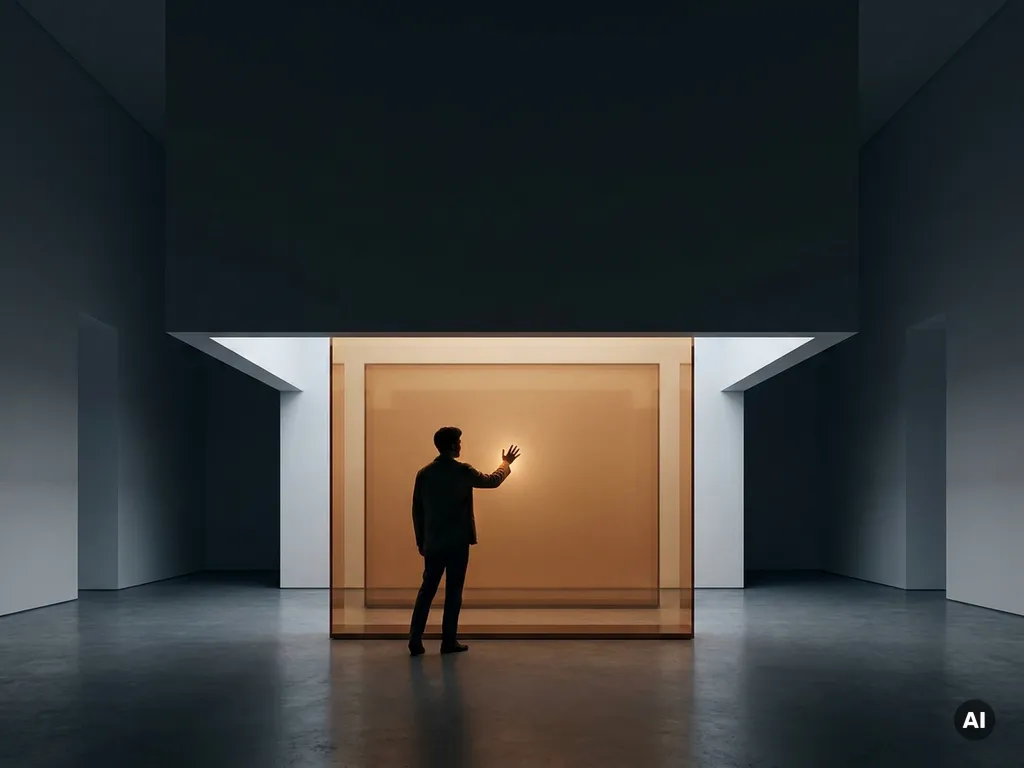
To make an interactive exhibit, you design a physical or digital environment where visitors actively participate rather than passively observe, through touch, movement, choice, or sensory engagement. The key is building meaningful interaction into every layer of the experience, from spatial layout to the technology that responds to visitors in real time. This article walks through everything from planning and technology to budget considerations and measuring success.
What makes an exhibit truly interactive?
An exhibit is truly interactive when it responds to the visitor, when the experience changes based on what someone does, touches, chooses, or feels. Interactivity is not simply adding a screen or a button; it means designing a two-way relationship between the visitor and the content, where participation shapes the outcome. The most effective interactive exhibits create a sense of agency, curiosity, and emotional investment.
Several qualities define genuine interactivity in exhibit design:
- Responsiveness: The exhibit reacts to visitor input in a meaningful, perceptible way.
- Accessibility: Participation is intuitive enough that visitors of different ages and backgrounds can engage without instruction.
- Emotional resonance: The interaction connects to a story, idea, or feeling, not just a mechanical action.
- Replayability: Visitors are drawn to try again, explore differently, or share the experience with others.
The difference between a passive and an interactive exhibit often comes down to authorship. In a passive exhibit, the institution tells a story. In an interactive one, the visitor becomes part of it. That shift in dynamic is what creates lasting memory and genuine engagement.
What types of interactive exhibits exist?
Interactive exhibits span a wide spectrum, from simple touch-based displays to fully immersive environments that engage all five senses. The right type depends on your audience, space, budget, and the story you want to tell. Understanding the categories helps you make informed decisions during the planning phase.
Technology-driven interactive formats
- Augmented Reality (AR) exhibits: Visitors use smartphones or headsets to overlay digital content onto physical objects or spaces, adding layers of storytelling to artifacts, artworks, or architectural elements.
- Virtual Reality (VR) experiences: Fully immersive environments that transport visitors to another time, place, or perspective, particularly powerful for historical reconstructions or empathy-building narratives.
- Interactive projection and 360-degree domes: Large-scale environments where motion sensors or touch triggers alter projected visuals in real time, creating shared group experiences.
- AI-powered installations: Exhibits featuring intelligent avatars or responsive environments that adapt to visitor input through natural language or gesture.
Participation-driven interactive formats
- Hands-on physical stations: Tactile displays, working models, or maker-style activities where visitors build, assemble, or experiment.
- Game-based exhibits: Treasure hunts, puzzles, or quiz formats that embed learning within play.
- 4D sensory environments: Spaces that combine sound, scent, temperature, and movement to create full-body immersion.
- Digital twin installations: Photorealistic 3D replicas of objects, buildings, or environments that visitors can explore interactively.
The most memorable interactive museum exhibits often blend multiple formats, pairing a physical artifact with an AR layer, or combining a VR journey with a tactile element visitors can hold.
How do you plan an interactive exhibit from scratch?
Planning an interactive exhibit starts with a clear brief: who is the audience, what should they feel or understand, and what action or change do you want to inspire? Every design decision flows from those three questions. A structured planning process prevents costly revisions later and ensures the technology serves the story rather than the other way around.
Follow this sequence when building your plan:
- Define the core experience goal: What is the single most important thing a visitor should take away? Ground the entire concept in this outcome.
- Map the visitor journey: Consider entry, exploration, peak moment, and exit. Design the emotional arc deliberately.
- Choose interaction modalities: Decide which senses and actions you want to engage, touch, movement, voice, sight, smell, and match them to your content.
- Assess the space: Ceiling height, floor area, lighting conditions, power access, and visitor flow all constrain and shape your design options.
- Select technology partners: Identify studios or suppliers with proven experience in immersive exhibit design who can deliver from concept to installation.
- Build in testing cycles: Prototype early, test with real users from your target audience, and iterate before finalizing.
- Plan for operations: Every interactive installation needs a maintenance plan, staff training, and a contingency for technical failure during live operation.
Co-creation with stakeholders, curators, educators, community members, produces richer outcomes than designing in isolation. The planning phase is also the right moment to align on accessibility standards, ensuring the exhibit works for visitors with different abilities.
What technology is used in interactive exhibits?
Interactive exhibits draw on a broad toolkit of digital and physical technologies, often combining several in a single installation. The choice of technology should always be driven by the experience goal, not by novelty. The most effective immersive exhibit designs are ones where visitors barely notice the technology because they are too absorbed in the experience.
Core technologies used in modern interactive exhibit design include:
- Augmented and Mixed Reality: AR overlays digital content onto the physical world via smartphones, tablets, or headsets like Apple Vision Pro, enabling exhibits to add invisible layers of information or animation to real objects.
- Virtual Reality: Headset-based VR creates fully enclosed digital environments, ideal for perspective-taking, historical immersion, or scenario-based learning.
- Motion tracking and gesture control: Cameras and sensors detect visitor movement and translate it into on-screen or spatial responses without requiring physical contact.
- Projection mapping: High-resolution projectors transform irregular surfaces, walls, sculptures, facades, into dynamic, responsive canvases.
- AI and natural language processing: Intelligent systems allow exhibits to hold real-time conversations, adapt content to individual visitors, or personalize the experience based on prior choices.
- Spatial audio: Directional sound design places visitors inside a sonic environment that shifts as they move through the space.
- Haptic and olfactory elements: Vibration feedback, temperature variation, and scent diffusion extend interactivity beyond the visual into the full sensory register.
We regularly combine these technologies at Rooftop Immersive to build layered experiences where digital and physical elements reinforce each other, creating something neither medium could achieve alone.
How do you design for multi-sensory engagement?
Designing for multi-sensory engagement means deliberately activating sight, sound, touch, smell, and sometimes taste as part of a unified experience rather than treating them as separate add-ons. When multiple senses are engaged simultaneously, memory retention and emotional impact increase significantly. The key is coherence, every sensory element should reinforce the same narrative or emotional tone.
Practical principles for multi-sensory exhibit design:
- Start with the dominant sense, then layer: Most exhibits are visually anchored. Build the visual experience first, then ask which sounds, textures, or scents would deepen the same feeling.
- Use contrast deliberately: A moment of silence before a sound climax, or a cool texture after warm lighting, amplifies emotional impact through contrast.
- Design spatial transitions: The experience of moving from one zone to another, a change in temperature, scent, or acoustic quality, can signal a shift in narrative without any words.
- Consider sensory accessibility: Not all visitors process sensory input the same way. Design pathways that allow visitors to engage at different intensities, and avoid overwhelming combinations that exclude sensitive visitors.
- Test with real bodies in real space: Multi-sensory design cannot be fully evaluated on a screen. Physical prototyping and live testing are essential to calibrate the balance between elements.
The most powerful immersive installations are ones where visitors cannot easily separate what they saw from what they heard or felt, because the experience was designed to be felt as a whole.
How much does it cost to build an interactive exhibit?
The cost of building an interactive exhibit varies enormously depending on a range of interconnected factors. There is no single price point that applies across all projects, but understanding what drives cost helps you scope your project realistically and allocate budget where it creates the most impact.
The primary cost drivers in interactive exhibit design are:
- Scale and complexity: A single interactive kiosk and a full 360-degree immersive dome are fundamentally different scopes. The physical footprint, number of interaction points, and technical complexity all scale the budget accordingly.
- Technology stack: Custom hardware, bespoke software development, and proprietary AI systems require more investment than off-the-shelf solutions. The more tailored the technology, the higher the development cost.
- Content creation: High-quality 3D modelling, volumetric video, spatial audio design, and professional storytelling are significant contributors to total project cost, and they are also what visitors remember most.
- Installation and integration: On-site installation, structural modifications, cabling, and system integration add to the build cost, particularly in heritage or listed buildings with restrictions.
- Longevity and maintenance: An exhibit designed to run for five years requires more robust hardware, software licensing, and ongoing support than a temporary activation.
- Accessibility and localization: Multilingual content, accessibility features, and AI-driven personalization add development overhead but significantly expand audience reach.
- Team and expertise: Working with an experienced immersive design studio that handles concept, technology, and delivery under one roof reduces coordination costs and risk, even if the day rate appears higher.
The most effective approach is to define your experience goals first, then work with a creative technology partner to identify which technologies and production choices deliver the most impact within your available resources. Explore our past projects to see how different scopes and approaches translate into finished experiences.
What are the most common mistakes in interactive exhibit design?
The most common mistake in interactive exhibit design is letting technology lead the concept rather than the story. When a team starts with “we want to use VR” rather than “we want visitors to feel this,” the result is often technically impressive but emotionally hollow. Avoiding this trap requires disciplined creative leadership throughout the process.
Other frequent pitfalls include:
- Overcomplicating the interaction: If a visitor needs more than a few seconds to understand how to engage, most will disengage. Intuitive design is harder to achieve than complex design, but it is far more effective.
- Ignoring visitor flow: An exhibit that creates bottlenecks, forces linear progression, or leaves groups waiting destroys the experience regardless of how good the content is.
- Underestimating maintenance: Interactive installations break. Touchscreens get dirty, sensors drift, software crashes. Exhibits without a robust maintenance plan deteriorate quickly and damage institutional credibility.
- Designing for the launch, not the lifespan: Many exhibits are spectacular on opening day and neglected six months later. Build content update cycles and operational routines into the project from the start.
- Failing to test with the actual audience: Designers and curators are not representative visitors. Testing with real members of your target audience, including children, older visitors, and people unfamiliar with the subject matter, reveals problems that internal review never catches.
- Treating accessibility as an afterthought: Retrofitting accessibility features after design is complete is expensive and often ineffective. Inclusive design from the outset produces better outcomes for all visitors.
How do you measure the success of an interactive exhibit?
The success of an interactive exhibit is measured by how well it achieves its defined experience goals, which is why defining those goals clearly at the outset is so important. Metrics should be chosen to reflect what the exhibit was designed to do: inform, inspire, change behavior, build empathy, or drive engagement. No single metric tells the full story.
Quantitative measures
- Dwell time: How long do visitors spend with the exhibit? Longer dwell time generally indicates genuine engagement rather than passing curiosity.
- Interaction rate: What percentage of visitors who encounter the exhibit actually engage with it? Low interaction rates often signal a design or visibility problem.
- Return visits and sharing: Do visitors come back, bring others, or share the experience on social media? These behaviors indicate that the exhibit created a lasting impression.
- Completion rates: For narrative or game-based exhibits, what percentage of visitors complete the intended journey?
Qualitative measures
- Exit interviews and surveys: Direct feedback from visitors about what they felt, learned, or remembered captures dimensions that sensor data cannot.
- Observed behavior: Trained observers or video analysis can reveal how visitors actually navigate and interact with the space, often differently from how designers intended.
- Learning or behavior change assessment: For educational exhibits, pre- and post-visit assessments measure whether the experience shifted understanding or attitude.
- Emotional response tracking: Emerging tools can measure physiological indicators of engagement and emotional arousal, providing objective data on which moments land hardest.
The strongest exhibit evaluation programs combine quantitative data with qualitative insight, feeding findings back into iterative improvements. An exhibit that is measured, refined, and updated over time consistently outperforms one that is treated as finished at launch.
If you are ready to move from concept to creation, we would love to help you build something that genuinely moves people. Contact us to start the conversation.
Gerelateerde artikelen
- What is 360-degree dome projection?
- What are examples of immersive experiences?
- How big is the immersive experience market?
- How do I measure the success of an AR marketing campaign?
- What is an example of an immersive experience?
- Can ChatGPT do 3D modeling?
- How do you create compelling interactive narratives?
- How do you create educational immersive content?
- Are immersive and experiential the same?