
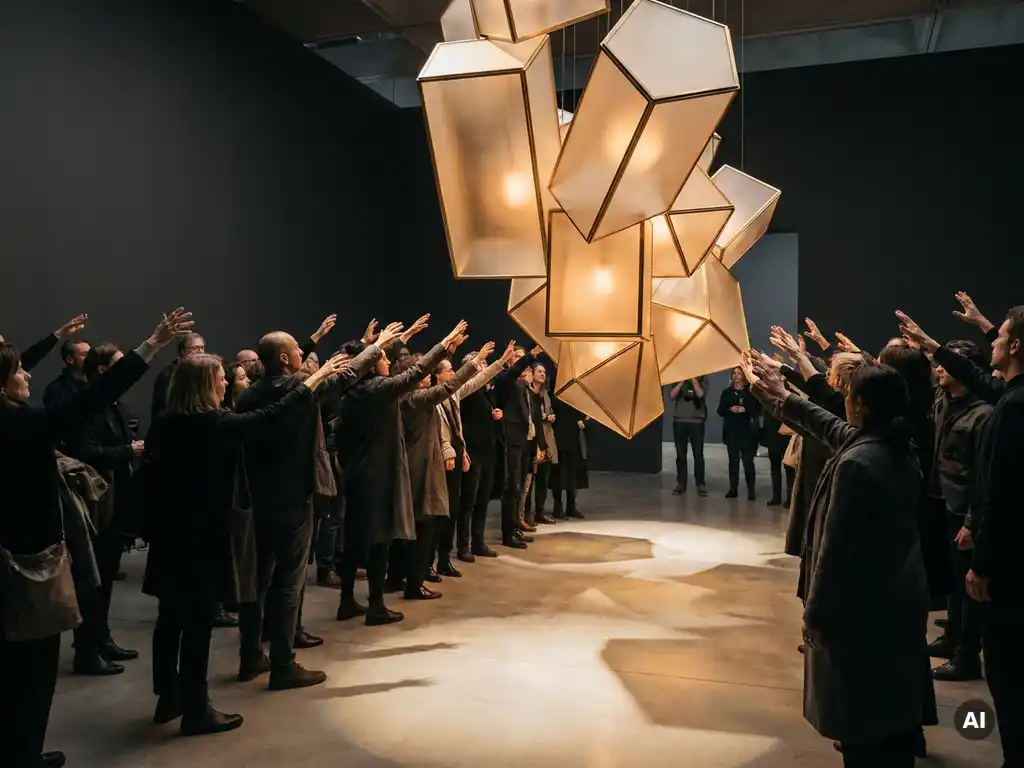
A brand activation is any experience, event, or campaign that brings a brand to life by inviting real, direct participation from its audience. One well-known example is a pop-up installation where visitors physically interact with a brand’s products or story in a memorable, sensory environment. Unlike a billboard or a digital ad, a brand activation turns passive observers into active participants who walk away with a genuine emotional connection to the brand.
Brand activations span a wide range of formats, from immersive physical installations and live events to augmented reality experiences and interactive digital campaigns. What unites them is the intent to create a moment that people remember, talk about, and associate with a specific brand feeling. The sections below unpack what defines a brand activation, what the best examples look like, and how to choose the right approach for your goals.
What makes a brand activation different from regular advertising?
Brand activation is different from regular advertising because it demands participation rather than passive consumption. Where a traditional ad delivers a message to an audience, a brand activation puts the audience inside the experience, making them the protagonist of the brand story. The result is a memory formed through doing, not just seeing or hearing.
Traditional advertising relies on repetition and reach. You see a logo, hear a jingle, or scroll past a sponsored post enough times that the brand embeds itself in your memory by volume. Experiential marketing, the broader discipline to which brand activations belong, works on a fundamentally different principle: one powerful, lived moment can outperform hundreds of passive impressions.
The distinction also shows up in how people talk about the experience afterward. A well-designed brand activation gives people a story to tell. They describe what they touched, how it felt, what surprised them. That word-of-mouth amplification is something no display ad can reliably generate. For brands operating in saturated media environments, this difference is not just philosophical. It is strategic.
What are some well-known examples of brand activations?
Some of the most recognizable brand activation examples include Coca-Cola’s “Happiness Machine” vending installations, Nike’s interactive flagship stores, and IKEA’s life-sized room pop-ups in unexpected public spaces. Each of these turned a brand idea into a physical, participatory moment that audiences could experience firsthand rather than simply observe.
Across industries, the most effective activations tend to share a few qualities: they are rooted in a clear brand idea, they invite genuine interaction, and they are designed to be shared. Here are several formats that have proven consistently effective:
- Pop-up experiences: Temporary branded environments that immerse visitors in a world built around the brand’s identity or a specific campaign theme.
- Product sampling with a twist: Rather than simply handing out a product, brands create a ritual or context around the first interaction that amplifies the sensory impression.
- AR and mixed reality activations: Digital layers placed over physical environments that reveal hidden content, tell brand stories, or gamify a product encounter.
- Live stunts and installations: Large-scale, unexpected moments in public spaces that generate organic media coverage and social sharing.
- Interactive digital campaigns with a physical anchor: Campaigns that start online but connect to a real-world touchpoint, bridging digital reach with physical resonance.
The most memorable brand activation examples are not necessarily the most expensive. They are the ones most precisely aligned with what the brand actually stands for and what its audience genuinely wants to feel.
What types of brand activations work best for different goals?
The type of brand activation that works best depends on whether the primary goal is awareness, product trial, community building, or emotional brand repositioning. Each objective calls for a different format, scale, and level of audience involvement.
Activations built for awareness and reach
When the goal is to reach as many people as possible and generate buzz, large-scale public installations, anamorphic outdoor displays, and social-first stunts tend to perform best. These formats are designed to stop people mid-stride, generate organic sharing, and earn media coverage. The experience itself may be brief, but the visual impact and shareability extend its reach far beyond the physical location.
Activations built for depth and conversion
When the goal is to shift perception, drive trial, or build lasting loyalty, immersive and interactive formats outperform passive spectacles. Guided brand experiences, VR storytelling environments, and hands-on product encounters give audiences enough time and depth to genuinely connect with a brand idea. These activations work especially well for product launches, repositioning campaigns, or brands entering new markets where they need to establish credibility rather than just visibility.
For brands targeting specific communities, co-created activations where the audience contributes to the experience tend to generate the strongest sense of belonging and long-term advocacy. The format matters less than the degree to which participants feel genuinely involved.
How does immersive technology change what brand activations can do?
Immersive technology expands what a brand activation can do by removing the physical and logistical limits of traditional experiential marketing. With augmented reality, virtual reality, and spatial computing, brands can transport audiences to places that could never exist in a conventional event space, tell stories that unfold in real time around the viewer, and personalize each participant’s experience based on their choices and responses.
The practical implications are significant. An AR activation can be deployed at a trade show, a retail location, and a public outdoor space simultaneously, without the cost of building three separate physical installations. A VR experience can place a hundred people inside the same brand narrative at once, each feeling as though the story is happening specifically to them. Mixed reality environments, such as those built for platforms like Apple Vision Pro, blend digital brand content with the participant’s real-world surroundings in ways that feel genuinely magical rather than gimmicky.
What immersive technology changes most fundamentally is the depth of emotional engagement it makes possible. When someone steps inside a brand story rather than observing it from the outside, the experience registers differently in memory. Sensory immersion, spatial presence, and interactive agency combine to create the kind of impression that traditional marketing activation formats simply cannot replicate.
We design immersive brand activations that work across all of these formats, from AR-driven product launches to fully realized VR environments, always with the brand’s core story at the center rather than the technology itself.
How do you measure the success of a brand activation?
The success of a brand activation is measured through a combination of engagement metrics, reach data, sentiment analysis, and downstream brand or business outcomes. The right metrics depend on the activation’s original objective, which is why defining success before the activation launches is essential rather than optional.
Common measurement frameworks include:
- Footfall and dwell time: How many people participated, and how long did they stay engaged? Longer dwell times typically indicate stronger emotional investment.
- Social reach and earned media: How much organic sharing, tagging, and coverage did the activation generate? This reflects the activation’s cultural resonance beyond its physical footprint.
- Brand sentiment shifts: Post-activation surveys and social listening can reveal whether perceptions of the brand changed in the intended direction.
- Lead generation and conversion: For commercially oriented activations, tracking how many participants moved further down the purchase journey provides a direct ROI signal.
- Content and data capture: Interactive activations often generate first-party data, user-generated content, and behavioral insights that have value beyond the event itself.
One of the advantages of technology-driven brand experiences is that measurement can be built directly into the experience. Interaction patterns, completion rates, and response data can all be captured in real time, giving brands a far richer picture of what worked than a traditional event debrief could provide.
When should a brand invest in a brand activation?
A brand should invest in a brand activation when it needs to create a shift, not just maintain visibility. The most productive moments for a marketing activation are product launches, brand repositioning, market entry, milestone anniversaries, and campaign peaks where a single powerful moment can amplify everything else the brand is doing.
Activations are particularly valuable when a brand faces one of three specific challenges. First, when the target audience has become desensitized to the brand’s existing communication formats and passive advertising is no longer generating meaningful engagement. Second, when the brand needs to demonstrate a value or quality claim that cannot be conveyed through description alone and must be felt directly. Third, when the brand wants to reach a new audience segment that responds to experience and community rather than traditional media.
Budget and scale matter, but they are not the primary deciding factor. A precisely designed, smaller activation that reaches the right people in the right moment will consistently outperform a large-scale event that lacks a clear brand idea at its core. The question to ask is not whether the budget is large enough for an activation, but whether the activation concept is strong enough to justify the investment at whatever scale is available.
If you are exploring what a brand activation could look like for your next campaign or product moment, we would welcome the conversation. Reach out through our contact page and let us show you what is possible when technology and storytelling work together.
Gerelateerde artikelen
- What are some examples of interactive museum exhibits?
- What are the guiding principles of immersive learning?
- What are the pros and cons of experiential marketing?
- What are the challenges of creating immersive experiences?
- What is the immersive learning method?
- How much does augmented reality cost?
- What are the three levels of immersion?
- What are branded immersive experiences?
- What is an example of an immersive experience?