
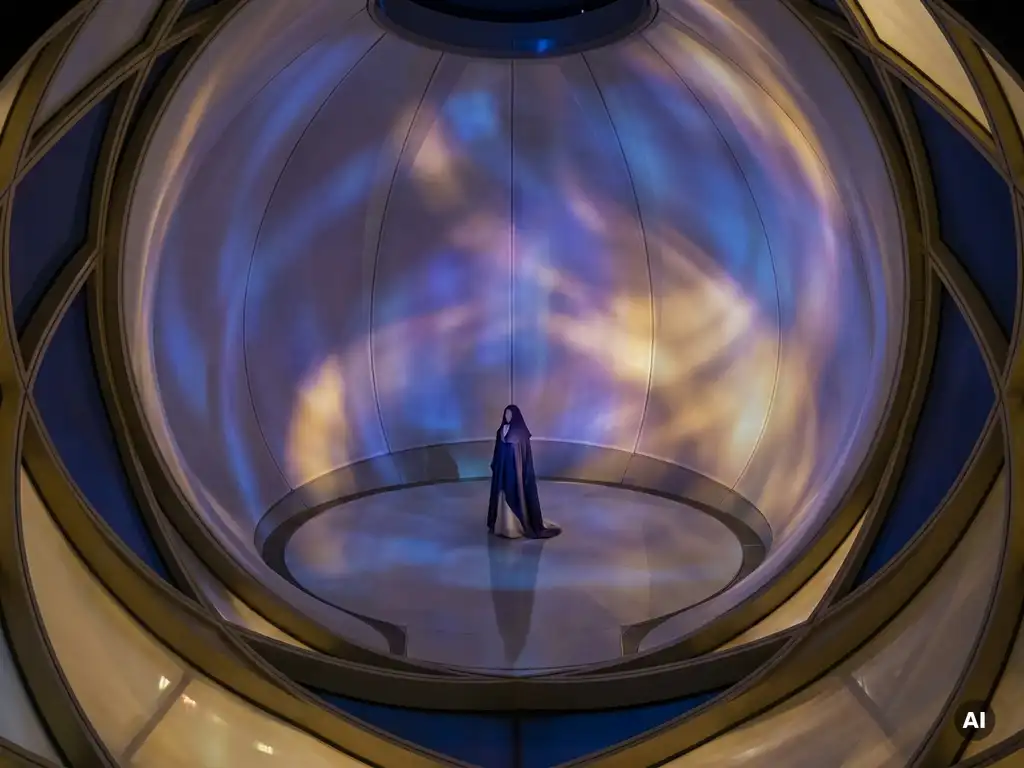
An immersive experience is one that surrounds and engages a person so completely that they feel transported into another world, narrative, or perspective. Rather than passively watching content on a screen, participants become active inhabitants of the experience itself. The most recognizable examples range from large-scale VR installations and AR museum exhibitions to multisensory brand activations and interactive educational simulations.
What unites all of these formats is the deliberate design of presence: the sense that you are inside the experience rather than observing it from a distance. The sections below explore the most compelling examples, the technologies that power them, and what separates a truly memorable immersive experience from one that simply looks impressive.
What types of experiences count as truly immersive?
A truly immersive experience is one that engages multiple senses simultaneously, creates a sense of presence within an environment, and invites active participation rather than passive observation. This includes virtual reality simulations, augmented reality installations, physical multisensory environments, interactive exhibitions, and location-based experiences that blend digital and physical elements.
The word “immersive” is used broadly, but not every visually rich or technologically advanced experience qualifies. True immersion requires at least three overlapping qualities:
- Sensory engagement: Sound, sight, touch, smell, or spatial awareness are deliberately activated, not just one channel in isolation.
- Agency or interactivity: The participant influences what happens, rather than watching a fixed sequence of events.
- Emotional or cognitive investment: The experience provokes genuine feeling, curiosity, or reflection, not just surface-level wonder.
A 360-degree video viewed on a headset may feel immersive visually, but without interactivity or sensory depth, it sits closer to passive cinema. By contrast, an AR portal that places you inside a historical location, where sound design, spatial audio, and physical props reinforce the narrative, creates genuine immersion. The spectrum runs from passive cinematic experiences at one end to fully interactive, multisensory environments at the other.
What are the most well-known examples of immersive experiences?
The most well-known immersive experience examples include VR storytelling installations, AR-enhanced museum exhibitions, 4D cinema environments, interactive brand activations, and location-based experiences like escape rooms or immersive theatre productions. Each format uses different technology and spatial design to create the feeling of being inside a story or world.
Some landmark examples that have shaped public understanding of immersive technology include:
- VR documentary experiences: Headset-based films that place viewers inside conflict zones, ecosystems, or historical events, creating empathy through first-person perspective.
- Immersive theatre: Productions where audiences move freely through a space, encountering performers and narratives at their own pace, a format pioneered by companies like Punchdrunk.
- AR-activated public art: Murals, sculptures, or landmarks that come to life through a smartphone, adding animated layers, hidden stories, or interactive games.
- 360-degree dome projections: Large-format environments where visitors stand inside a sphere of projected imagery, used in science centers, festivals, and brand events.
- 4D cinemas: Theatrical spaces that add physical sensations, wind, scent, vibration, temperature, to synchronized audiovisual content.
What these examples share is a commitment to designing the entire environment as part of the experience, not just the screen or headset. The physical space, the transitions between moments, and the sensory cues all contribute to whether a person feels genuinely transported.
How do museums and cultural institutions use immersive experiences?
Museums and cultural institutions use immersive experiences to deepen visitor engagement with collections, attract younger and more diverse audiences, and make abstract or historical content emotionally accessible. Common applications include AR layers over physical artifacts, VR reconstructions of lost heritage sites, interactive 360-degree installations, and multisensory exhibitions that go beyond display cases and informational panels.
The challenge for cultural institutions is always the same: how do you make objects and ideas that are centuries old feel urgent and relevant today? Immersive technology answers that question by collapsing the distance between visitor and subject.
AR and VR in heritage contexts
Augmented reality allows a visitor to point a device at a painting and see it animated, hear the artist speak, or view the scene it depicts come alive in three dimensions. VR reconstructions take this further, placing visitors inside ancient buildings, lost cities, or historical moments that no longer exist physically. These tools transform passive viewing into active exploration.
Multisensory and participatory installations
Beyond headsets, cultural institutions are increasingly commissioning full-room installations where light, sound, scent, and spatial design work together to evoke a period, an ecosystem, or an emotional state. Visitors do not just look at the past, they inhabit a version of it. This approach is particularly effective for engaging school-age visitors and audiences who find traditional exhibition formats distancing.
We work directly with museums and cultural institutions to design these kinds of layered experiences, combining digital technology with physical space in ways that respect the integrity of the collection while dramatically expanding its emotional reach.
What does an immersive brand experience actually look like?
An immersive brand experience is a physical or hybrid activation in which audiences engage with a brand through direct sensory participation rather than passive advertising. Examples include AR product launches, interactive pop-up installations, volumetric hologram presentations, and location-based brand worlds that visitors can walk through, touch, and interact with.
The distinction from traditional marketing is fundamental. A billboard communicates at a person. An immersive brand experience invites that person to step inside the brand’s world and make their own discoveries. This shift from broadcast to participation is what drives the emotional impact and social sharing that brands increasingly need.
In practice, an immersive brand experience might look like any of the following:
- A product launch where attendees use AR headsets to see a new vehicle appear in the room around them, exploring its interior and engineering in three dimensions before the physical model is revealed.
- A trade show activation where a brand’s values are expressed through a walk-through environment, spatial audio, scent design, and interactive screens working together to tell a coherent story.
- A geospatial AR campaign that places branded content at specific city locations, turning a public space into a discovery experience for consumers with a smartphone.
The most effective brand experiences are not about spectacle for its own sake. They are designed to create a specific emotional association, curiosity, trust, excitement, belonging, that persists long after the activation ends. Explore our immersive brand projects to see how this translates in practice.
How are immersive experiences used in education and training?
Immersive experiences are used in education and training to make abstract concepts concrete, increase information retention, build empathy, and allow learners to practice skills in realistic simulated environments without real-world risk. VR training simulations, AR-enhanced learning materials, and interactive educational installations are among the most widely applied formats.
The case for immersive learning is rooted in a straightforward principle: people learn more deeply when they experience something than when they read or hear about it. This is particularly true for complex or emotionally charged subjects, medical procedures, conflict resolution, environmental science, historical injustice, where lived experience creates understanding that text alone cannot.
Practical applications in education and training include:
- VR safety training: Simulating hazardous environments, construction sites, chemical facilities, emergency scenarios, so learners can practice responses without exposure to real danger.
- Empathy-building experiences: First-person VR narratives that place learners inside the perspective of another person, used in diversity training, humanitarian education, and social impact programs.
- Interactive AR learning materials: Textbooks, posters, or physical models that trigger 3D animations, video explanations, or interactive quizzes when viewed through a device.
- Gamified immersive curricula: AR treasure hunts, VR puzzle environments, and interactive story-driven modules that make learning an active, rewarding process.
Institutions like UvA and Yuverta have worked with us to develop immersive educational programs that meet learners where they are, adapting to different learning styles, languages, and paces through AI-driven personalization.
What’s the difference between VR, AR, and mixed reality experiences?
VR (virtual reality), AR (augmented reality), and mixed reality (MR) differ in how much they replace or enhance the physical world. VR replaces the real environment entirely with a digital one. AR overlays digital content onto the real world. Mixed reality blends both, allowing digital and physical objects to interact with each other in real time.
Virtual reality
In a VR experience, the user wears a headset that blocks out the physical world and replaces it with a fully rendered digital environment. This creates the highest degree of presence and is ideal for storytelling, training simulations, and experiences where complete transportation to another place or time is the goal. The trade-off is that VR requires dedicated hardware and creates a degree of physical isolation from the surrounding space.
Augmented reality
AR experiences keep the real world visible and layer digital content on top of it, through a smartphone camera, a tablet, or AR glasses. This makes AR highly accessible (most people already own a compatible device) and well-suited to activations in public spaces, museums, retail environments, and educational settings. AR portals, image-tracking activations, and geospatial campaigns all fall within this category.
Mixed reality
Mixed reality, as seen on platforms like Apple Vision Pro, goes further by allowing digital objects to respond to and interact with the physical environment in real time. A virtual character can walk around a real table. A digital product can cast a shadow on a real floor. This creates the most seamless integration of physical and digital worlds and represents the frontier of immersive technology in 2026.
What makes an immersive experience memorable rather than just spectacular?
An immersive experience becomes memorable rather than just spectacular when it creates genuine emotional resonance, gives participants a sense of agency, and connects to something personally meaningful. Spectacle alone, impressive visuals, elaborate technology, fades quickly. What endures is the feeling of having understood something new, felt something real, or seen the world from a perspective you could not access before.
Several design principles separate experiences that linger from those that impress briefly and then disappear:
- Emotional truth: The experience must feel authentic to its subject, not just visually polished. A VR experience about climate change that makes you feel the scale of loss is more powerful than one that simply shows dramatic imagery.
- Participant agency: When people make choices inside an experience, even small ones, they invest in the outcome. Interactivity transforms a visitor into a protagonist.
- Sensory coherence: The most memorable experiences use multiple senses in ways that reinforce each other. Scent, spatial audio, temperature, and tactile elements are not decorative additions, they anchor the experience in the body and make memory formation stronger.
- Meaningful narrative: Technology is the vehicle, not the destination. The most enduring immersive experiences tell stories that matter, stories about human experience, identity, history, or possibility.
At Rooftop Immersive, this is the distinction we design toward in every project: not the experience that impresses in the moment, but the one that changes how someone thinks, feels, or acts afterward. If you are ready to create something that truly resonates with your audience, we would love to explore what that could look like together, contact us to start the conversation.
Gerelateerde artikelen
- How much does it cost to build an interactive museum?
- How much does experiential marketing cost?
- How to make an interactive exhibit?
- How to create a brand activation?
- What are the benefits of multisensory learning?
- What is an immersive brand experience?
- What are the psychological effects of immersion?
- How does interactive storytelling engage audiences?
- Are immersive and experiential the same?