
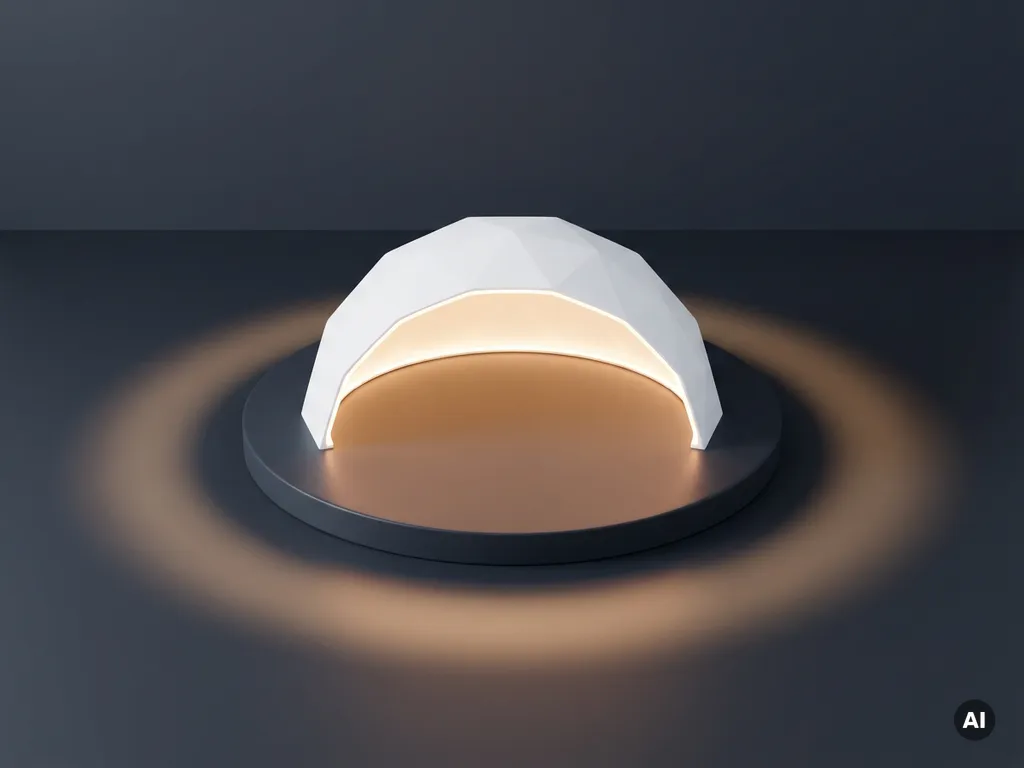
A 360-degree dome projection is an immersive display system that projects imagery across the entire curved interior surface of a hemispherical or full-sphere structure, completely surrounding viewers with visuals in every direction. Unlike flat or curved screens, a dome wraps the image around the audience so there is no frame, no edge, and no boundary, just an unbroken visual field that fills human peripheral vision. The sections below answer the most common questions about how dome projection works, what it takes to produce and run one, and where it is being used today.
How does 360-degree dome projection actually work?
360-degree dome projection works by using multiple high-powered projectors positioned around the interior of a dome structure, each covering a portion of the curved surface. Specialized warping and blending software stitches the individual projector outputs into a single, seamless image that conforms to the geometry of the dome. The result is a continuous visual environment that surrounds every viewer simultaneously.
The technical foundation relies on a process called geometric correction. Because a dome surface is curved rather than flat, any image projected onto it would appear distorted without correction. Projection software pre-warps the content in the opposite direction so that, when it lands on the curved surface, it appears natural and proportional to the human eye. Edge blending then softens the overlap zones between adjacent projectors so the seams become invisible.
Modern full-dome projection systems are typically driven by a central media server that synchronizes all projectors in real time, ensuring there is no lag or misalignment between channels. The number of projectors in a system depends on the dome’s diameter and the desired resolution. A small portable dome might use a single fisheye projector, while a large permanent installation can involve six or more ultra-high-resolution units working in concert. Audio is treated with the same spatial logic: a multi-channel speaker array surrounds the audience so sound appears to come from any direction, reinforcing the sense of total immersion.
What types of content work best inside a projection dome?
Content that fills the entire field of view and rewards spatial exploration works best inside a projection dome. This includes fulldome astronomy and planetarium shows, immersive nature and travel experiences, abstract visual art, educational simulations, and branded storytelling experiences. The dome format rewards content designed for peripheral vision, imagery that would be cropped or lost on a flat screen becomes the most powerful element in a dome.
Narrative content performs particularly well when it places the viewer at the center of the story rather than in front of it. Environments like deep ocean floors, outer space, ancient historical sites, or microscopic biological worlds translate naturally into dome experiences because the surrounding imagery makes the viewer feel physically present rather than like an observer. Educational institutions and museums use this quality to make abstract concepts tangible, a student placed inside a beating human heart or a storm system understands scale and process in a way a textbook cannot replicate.
On the commercial side, brands use dome content for product launches, experiential activations, and large-scale events where impact and memorability are the primary goals. Abstract motion graphics, brand worlds, and cinematic sequences that pulse with music work exceptionally well because the dome amplifies emotional intensity. Content that loops or responds to live interaction, such as real-time generative visuals tied to audience movement or sound, represents the frontier of what dome environments can deliver in 2026.
What’s the difference between a dome and a standard IMAX or 360° screen?
The key difference between a dome and an IMAX or standard 360° screen is the geometry of the viewing surface and how that affects the viewer’s sense of immersion. An IMAX screen is large and slightly curved but still fundamentally flat in orientation, it fills a viewer’s forward field of vision. A 360° cylindrical screen wraps around the audience horizontally but leaves the ceiling and floor untouched. A dome, by contrast, curves overhead and around the viewer simultaneously, eliminating the visual frame in all directions, including above.
IMAX vs. dome projection
IMAX is designed for forward-facing, cinematic storytelling. The screen is enormous and the image quality is exceptional, but the audience still sits in rows facing a defined front. The experience is powerful but directional, you are watching something in front of you. A dome removes that directionality entirely. There is no front, no back, and no preferred viewing angle. Every seat is equally surrounded by the image, which fundamentally changes the psychological relationship between viewer and content.
360° cylindrical screens vs. dome projection
A 360° cylindrical screen, such as those used in some museum installations and live event venues, wraps the audience horizontally. This creates strong peripheral immersion at eye level but leaves the ceiling visible and unaddressed. A dome closes that gap by curving the projection surface overhead, which is where the most psychologically powerful immersion happens. The overhead component activates a sense of scale and spatial presence that cylindrical screens cannot replicate. For content that involves sky, space, or any environment where looking up matters, the dome is the more complete format.
What are the main uses of 360-degree dome projection?
The main uses of 360-degree dome projection span science education, cultural entertainment, brand experiences, and large-scale public events. Planetariums and science centers were the original application, but the technology has expanded far beyond astronomy to include museum exhibitions, corporate events, music and art festivals, training simulations, and immersive theatre.
- Education and science communication: Planetariums and natural history museums use full-dome projection to teach astronomy, biology, geology, and climate science through experiential visualization rather than passive instruction.
- Brand activations and experiential marketing: Companies deploy portable dome structures at festivals, trade shows, and product launches to create a contained, high-impact brand environment that draws crowds and generates social sharing.
- Cultural exhibitions and art installations: Artists and cultural institutions use domes to present immersive visual art, heritage experiences, and narrative exhibitions that place visitors inside the story rather than in front of it.
- NGO and social impact campaigns: Organizations working on issues like climate change, human rights, or public health use dome environments to build empathy at scale, surrounding audiences with the realities of distant or invisible crises in a way that statistics alone cannot achieve.
- Live events and entertainment: Music concerts, theatrical performances, and entertainment experiences use domes to create synchronized audiovisual environments that transform the audience’s relationship to the performance.
We work across several of these categories, designing dome-based experiences that serve both commercial and purpose-driven goals, from brand storytelling to educational impact campaigns.
How many people can experience a dome projection at once?
The audience capacity of a dome projection experience depends on the dome’s diameter. Small portable domes with a diameter of five to eight metres typically accommodate ten to thirty people at a time. Mid-sized domes of twelve to fifteen metres can hold fifty to one hundred and fifty people. Large permanent dome theatres, such as those found in science museums and planetariums, regularly host audiences of three hundred to five hundred people per show, and temporary event domes can be scaled to accommodate even larger groups.
Capacity is not purely a function of physical space. The quality of the experience changes depending on how the dome is configured for viewing. Some domes use tiered seating with reclining chairs angled toward the apex, optimizing every seat for overhead content. Others use flat floors with standing or freely moving audiences, which suits interactive or social experiences but reduces the per-person immersion of the overhead image. For events where scale and throughput matter, such as a festival activation or a touring exhibition, the flat-floor configuration allows organizers to cycle larger groups through the space continuously.
What equipment is needed to set up a dome projection system?
Setting up a dome projection system requires four core components: the dome structure itself, the projection hardware, the media server and software, and the audio system. Each element must be specified and calibrated to work together, and the scale of the dome determines the complexity and specification of every component.
The dome structure
Dome structures range from inflatable portable units that can be assembled in hours to permanent architectural installations built into a building. Inflatable domes are the most common choice for temporary events and touring productions because they are lightweight, fast to deploy, and available in a wide range of diameters. Permanent domes are constructed from rigid materials such as aluminium framing and fibreglass panels, offering superior acoustic properties and a higher-quality projection surface but requiring significant infrastructure investment.
Projection and media hardware
The projection hardware typically consists of one or more high-lumen projectors fitted with fisheye or ultra-wide lenses designed for dome geometry. For smaller domes, a single projector positioned at the base and pointed upward through a fisheye lens can cover the entire surface. Larger domes require multiple projectors arranged in a ring or cluster, each covering a segment of the dome surface. A media server runs the warping and blending software that corrects the geometry and synchronizes the projector outputs. The audio system uses a multi-channel or object-based spatial audio setup, typically six to twelve speakers distributed around the perimeter and overhead, to match the directionality of the visual environment.
How is content produced for a 360-degree dome?
Content for a 360-degree dome is produced in a fulldome format, which means the video frame is rendered or captured as a circular image using an equidistant fisheye projection. This circular frame, often called a dome master, represents the entire hemispherical field of view. When projected through the dome’s optical system, the circular image unfolds across the curved surface to fill the viewer’s complete visual field.
Production begins with the choice of capture or creation method. Live-action dome content is filmed using an array of cameras pointing in multiple directions, with the footage stitched together in post-production to form the dome master frame. Animated and computer-generated dome content is rendered directly in the fulldome format using 3D software such as Unreal Engine or Cinema 4D, with the virtual camera set to a 180-degree or 360-degree fisheye perspective. This approach offers complete creative control and is the most common method for educational, artistic, and branded dome experiences.
One of the most important production considerations is the fact that dome content must be designed for all viewing directions simultaneously. Unlike a flat-screen film where the director controls exactly what the audience sees, a dome experience allows viewers to look in any direction at any time. This means storytelling must be spatially authored, key narrative moments need to be signalled through sound, light, or movement so that audiences are guided without being forced. It is a fundamentally different creative discipline from linear filmmaking, and it is one we have developed deep expertise in through our immersive experience work across education, culture, and brand storytelling.
If you are exploring dome projection for an upcoming exhibition, event, or campaign and want to understand what is possible within your context and goals, we would be glad to talk it through, feel free to contact us and start the conversation.
Gerelateerde artikelen
- How much does it cost to build an interactive museum?
- What are the key components of a VR system?
- What are the disadvantages of augmented reality?
- What is an immersive brand experience?
- What is immersive and interactive media?
- How do I measure the success of an AR marketing campaign?
- What are branded immersive experiences?
- How can I create shareable brand moments without requiring app downloads?
- What technology is used in immersive installations?