
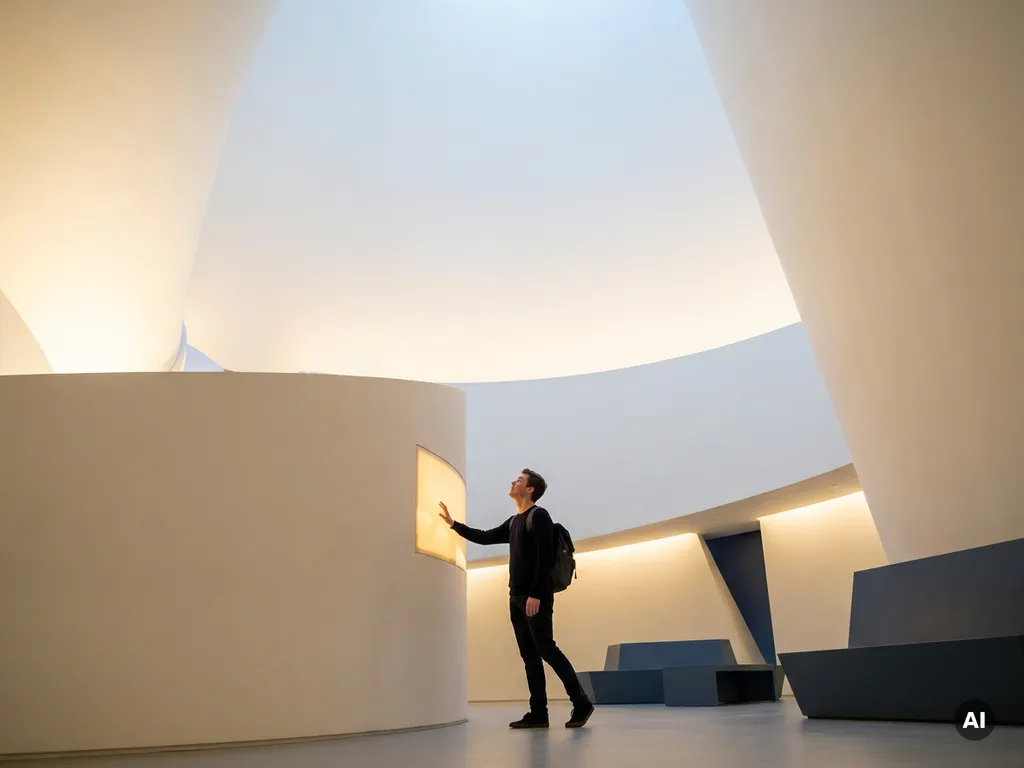
An immersive learning experience places learners inside the subject matter rather than in front of it. Instead of watching a video or reading a textbook, participants step into a simulated environment, interact with realistic scenarios, and engage multiple senses simultaneously. The result is deeper understanding, stronger emotional connection, and significantly better knowledge retention. This article unpacks what makes these experiences work, where they are already being applied, and how educators and organisations can evaluate their impact.
What makes a learning experience truly immersive?
A truly immersive learning experience is one that surrounds the learner with realistic context, demands active participation, and engages more than one sense at a time. Rather than passively receiving information, the learner must make decisions, respond to consequences, and navigate situations that mirror real life. This combination of presence, agency, and emotional engagement is what separates immersive education from conventional instruction.
Several qualities define genuinely immersive learning. First, there is environmental presence, the feeling of being inside a situation rather than observing it. Second, there is interactivity, the ability to influence outcomes through choices and actions. Third, there is multisensory stimulation, incorporating sound, visuals, spatial awareness, and sometimes touch or smell to deepen the sense of reality. Finally, there is narrative or emotional stakes, a story or scenario that gives the learner a reason to care about what happens next.
When all four elements align, learning stops feeling like a task and starts feeling like an experience worth remembering. Research in cognitive science consistently shows that emotional engagement strengthens memory encoding, which is precisely why immersive formats outperform passive ones when it comes to long-term retention.
What are some real-world examples of immersive learning experiences?
Real-world immersive learning examples span sectors from healthcare and emergency services to history education and corporate training. Common formats include VR surgical simulations, AR-enhanced museum exhibits, 360-degree documentary experiences, and location-based educational games. Each of these moves learners from passive observation to active participation within a meaningful context.
- Medical and healthcare training: Surgical teams use VR simulations to practise complex procedures in a risk-free environment, building muscle memory and decision-making skills before operating on real patients.
- History and heritage education: Museums use AR overlays to bring artefacts to life, allowing visitors to see how an ancient object was used or what a historical site looked like centuries ago.
- Empathy-building for NGOs: Organisations like UNICEF have used immersive 360-degree films and VR experiences to place audiences inside refugee camps or disaster zones, creating emotional understanding that text and photographs cannot replicate.
- Corporate and safety training: Companies simulate hazardous workplace scenarios in VR, allowing employees to practise emergency responses without physical risk or operational disruption.
- Language and cultural immersion: Educational platforms place learners in virtual environments where they must communicate in a target language to complete tasks, accelerating fluency through contextual practice.
We have developed immersive education projects across many of these categories, working with institutions such as UNICEF, PwC, and the University of Amsterdam to design learning experiences that go far beyond the screen.
How does VR create more effective learning than traditional methods?
VR creates more effective learning than traditional methods by triggering the brain’s experiential memory systems rather than its factual recall pathways. When a learner physically navigates a virtual environment, makes decisions, and experiences consequences, the brain processes that event similarly to a real lived experience. This produces stronger, more durable memories and builds transferable skills that classroom instruction alone rarely achieves.
The mechanism behind this is sometimes called learning by doing or experiential learning. Traditional methods ask learners to imagine how they would respond to a situation. VR puts them inside the situation and requires an actual response. That shift from hypothetical to experiential changes how knowledge is encoded and retrieved.
A VR learning experience also removes the fear of failure that often inhibits performance in real settings. Learners can attempt a difficult procedure, make a mistake, and immediately try again without real-world consequences. This creates a psychologically safe space for practice and iteration, which is particularly valuable in high-stakes fields such as medicine, emergency response, and industrial operations.
Finally, VR enables access to scenarios that would otherwise be impossible, prohibitively expensive, or ethically complex to recreate. A student can stand inside a functioning nuclear reactor, walk through a historical battle, or experience the perspective of someone living with a disability, all within a controlled, educational context.
What types of subjects benefit most from immersive learning?
Subjects that are abstract, emotionally complex, physically dangerous, or difficult to visualise benefit most from immersive learning. These are areas where traditional instruction struggles to bridge the gap between knowing something intellectually and understanding it experientially. Immersive formats close that gap by placing learners directly inside the subject matter.
The strongest candidates include:
- Sciences and engineering: Concepts like molecular biology, physics simulations, and structural engineering become tangible when learners can interact with scaled 3D models or virtual experiments.
- History and social studies: Periods and events that feel remote on a page come alive when learners can walk through reconstructed environments or witness historical moments from a first-person perspective.
- Healthcare and life sciences: Anatomy, surgery, patient care, and mental health scenarios all benefit from realistic simulation where mistakes carry no real-world cost.
- Social and ethical issues: Topics like climate change, poverty, discrimination, and refugee displacement gain emotional weight through perspective-shifting VR experiences that build genuine empathy.
- Vocational and technical skills: Trades, manufacturing, logistics, and emergency services all involve physical skills that can be safely practised and refined in simulated environments.
The common thread across all these subjects is the need to experience rather than simply understand. When the subject matter has emotional, spatial, or procedural dimensions that words and images cannot fully convey, immersive education becomes not just useful but essential.
How is immersive learning used in schools and universities?
Schools and universities use immersive learning to make difficult concepts tangible, increase student motivation, and prepare learners for real-world application of their knowledge. Implementations range from classroom-based VR headset sessions and AR-enhanced textbooks to dedicated immersive labs and location-based field experiences.
At primary and secondary level, immersive tools are often used to spark curiosity and make abstract topics concrete. A geography lesson might use an AR portal to transport students to a rainforest ecosystem. A history class might use a 360-degree film to place students inside a significant historical moment. These approaches are particularly effective for students who struggle with traditional text-based learning.
At university level, immersive education tends to focus on professional preparation and research. Medical faculties use VR surgical simulators. Law schools use interactive courtroom simulations. Architecture programmes use virtual walkthroughs of student designs. Business schools use decision-making simulations that replicate real market conditions.
The scalability of these tools has improved significantly. Institutions no longer need a dedicated VR room for every class. Lightweight headsets, tablet-based AR, and cloud-delivered interactive content mean that immersive experiences can be deployed across a curriculum with manageable infrastructure investment. We work closely with educational institutions to design experiences that integrate naturally into existing programmes, providing not just the technology but the pedagogical framework around it.
What’s the difference between AR and VR in educational settings?
In educational settings, the key difference between AR and VR is that AR adds digital content to the real world while VR replaces the real world entirely with a virtual one. AR enhances what learners can already see and touch; VR transports them somewhere else. Each format suits different learning objectives, and many effective programmes combine both.
Augmented Reality in education
AR overlays digital information, 3D models, animations, text, or interactive elements, onto the physical environment through a smartphone, tablet, or AR glasses. In a classroom, this might mean pointing a device at a diagram in a textbook and watching it animate into a rotating 3D model. In a museum, it might mean holding up a phone to an artefact and seeing it in its original context. AR is particularly effective for adding depth to physical materials, supporting spatial understanding, and making content accessible without removing learners from their environment.
Virtual Reality in education
VR places learners inside a fully constructed digital environment using a headset that blocks out the physical world. This total immersion is powerful for simulating scenarios that require presence and embodied experience, surgical procedures, historical reconstructions, hazardous environments, or empathy-building perspectives. VR demands more infrastructure than AR but delivers a deeper sense of presence and greater emotional intensity, which makes it particularly suited to high-stakes training and perspective-shifting educational content.
Choosing between AR and VR often comes down to the learning goal. If the objective is to enrich existing physical materials or support exploration in a real space, AR is usually the more practical and accessible choice. If the objective is full immersion, emotional impact, or simulation of an environment that cannot be recreated in the physical world, VR is the stronger tool.
How do you measure the impact of an immersive learning experience?
The impact of an immersive learning experience is measured through a combination of knowledge retention assessments, behavioural observation, engagement data, and self-reported outcomes such as confidence and attitude shifts. No single metric captures the full picture, so effective evaluation typically uses multiple methods aligned with the original learning objectives.
Practical measurement approaches include:
- Pre- and post-assessments: Testing knowledge or skill levels before and after the experience reveals how much learning has occurred and whether it persists over time when follow-up assessments are conducted weeks later.
- Behavioural transfer: Observing whether learners apply new knowledge or skills in real-world situations is the most meaningful indicator of impact, particularly in vocational or professional training contexts.
- Engagement analytics: Interactive platforms can capture time-on-task, decision pathways, error rates, and completion rates, data that reveals how learners engage with content and where understanding breaks down.
- Emotional and attitudinal surveys: Self-reported measures of empathy, confidence, motivation, and perspective change are especially important for experiences designed to shift attitudes rather than transfer procedural knowledge.
- Comparative performance: Where possible, comparing the performance of groups who received immersive instruction against those who received traditional instruction provides robust evidence of relative effectiveness.
The most valuable measurement frameworks are built into the design process from the start rather than added as an afterthought. When the learning objectives are clearly defined before development begins, it becomes much easier to select the right metrics and build the data collection mechanisms directly into the experience itself.
If you are exploring what immersive learning could look like for your institution, organisation, or programme, we would be glad to help you think through both the experience design and the impact framework. Contact us to start the conversation.
Gerelateerde artikelen
- What are the different types of interactive museums?
- What is 360-degree dome projection?
- What are the benefits of integrating immersive technologies with STEM education?
- Is VR bad for kids with ADHD?
- What are some examples of virtual reality?
- How does XR technology enhance brand experiences?
- What are the technical requirements for immersive installations?
- Do 3D artists get paid well?
- What equipment is needed for AR content production?