
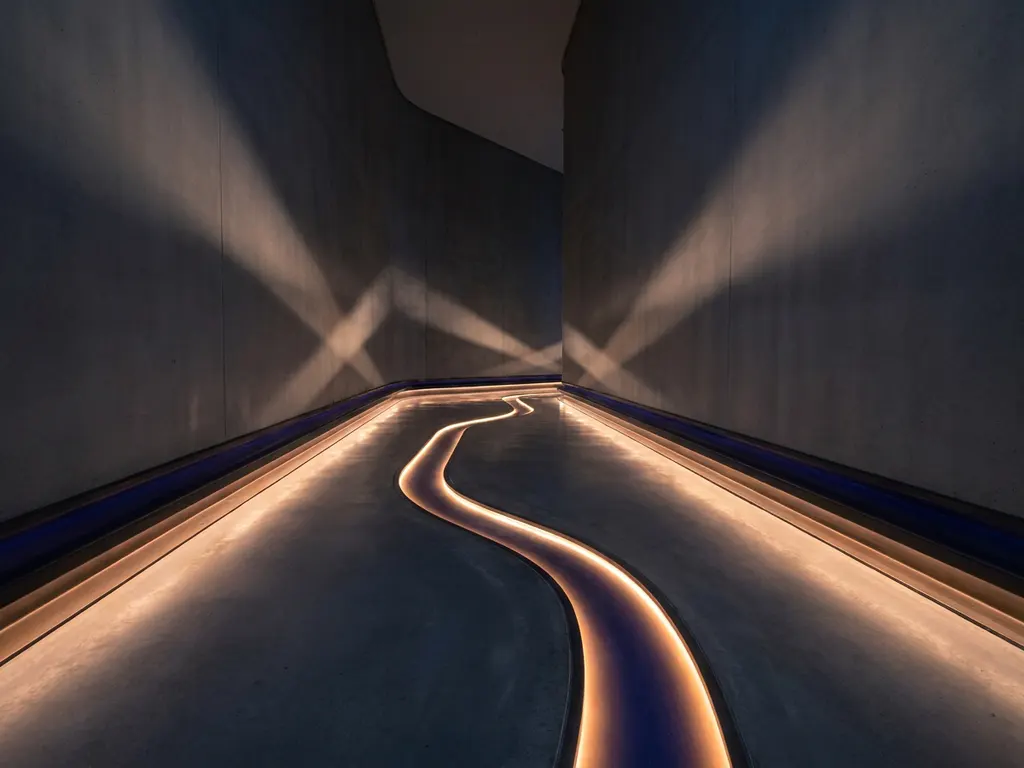
An immersive experience design track is a specialized field of study or professional practice focused on creating environments, narratives, and sensory systems that fully absorb a participant’s attention, presence, and emotional engagement. Unlike conventional design disciplines, it treats the entire surrounding space, including sound, scent, touch, and movement, as the canvas. This article unpacks the core skills, technologies, applications, and distinctions that define the field.
What skills does an immersive experience design track teach?
An immersive experience design track teaches a hybrid set of skills that spans spatial storytelling, sensory design, interactive technology, and audience psychology. Practitioners learn to orchestrate environments where every element, from lighting and sound to physical layout and digital content, works together to guide a participant through a meaningful journey. The discipline is inherently cross-disciplinary.
At its core, the track develops competency in the following areas:
- Spatial narrative design: structuring a physical or virtual environment so that movement through it tells a story
- Multisensory design thinking: deliberately engaging sight, sound, touch, scent, and proprioception to deepen presence
- XR production: building experiences in augmented reality, virtual reality, and mixed reality using platforms like Unreal Engine or Unity
- Interaction design for physical space: designing triggers, transitions, and feedback loops that respond to participant behavior
- Audience journey mapping: understanding how people move through, process, and emotionally respond to designed environments
- Project production and logistics: coordinating hardware, software, physical installation, and live operation
What distinguishes this track from more traditional design education is its emphasis on embodied experience. A participant is not looking at a screen; they are inside the work. That demands designers think about flow, pacing, and emotional arc in ways that are closer to theatre direction or exhibition curation than to graphic or product design.
How is immersive experience design different from UX or interaction design?
The key difference between immersive experience design and UX or interaction design is the medium. UX and interaction design primarily optimize how people navigate and use digital interfaces, screens, and flows. Immersive experience design operates in three-dimensional physical and hybrid spaces, where the body, not just the fingertip, is the primary input and the surrounding environment is the output.
In UX design, the goal is usually efficiency and clarity: reduce friction, improve task completion, guide the eye. In immersive design, friction, disorientation, and surprise can be deliberate tools. The designer is not removing obstacles between a user and a goal; they are engineering a state of presence, wonder, or empathy.
Interaction design shares some overlap, particularly around feedback systems and responsive environments, but it typically operates within a defined screen boundary. Immersive design has no such boundary. The walls, floor, air temperature, ambient sound, and even the smell of a space are all design decisions. This expands both the creative palette and the technical complexity considerably.
There is also a fundamental difference in success metrics. UX success is often measured through task completion rates, click paths, and conversion. Immersive experience success is measured through emotional recall, behavioral change, dwell time, and the depth of engagement participants report long after leaving. These are harder to quantify but often more meaningful in terms of real-world impact.
What types of projects do immersive designers typically work on?
Immersive designers work on a wide range of projects wherever deep engagement, emotional resonance, or behavioral change is the goal. Common project types include museum and gallery installations, brand activations, educational simulations, public awareness campaigns, live events, and location-based entertainment experiences.
In the cultural sector, immersive designers create exhibitions that bring historical events or artworks to life through projection mapping, spatial audio, and interactive AR layers. A visitor might walk through a reconstructed historical environment or explore a painting from the inside using virtual reality.
In the brand and marketing world, immersive designers build activations for product launches, trade shows, and retail environments where audiences physically interact with a brand’s story rather than passively watching an advertisement. These experiences are designed to generate emotional connection and shareable moments.
In education and the social sector, immersive designers develop training simulations, empathy experiences, and awareness campaigns. A VR experience that places a participant in the perspective of a refugee, a medical professional under pressure, or a child in a challenging learning environment can achieve a depth of understanding that no lecture or video could replicate.
Event producers also commission immersive designers to create multisensory environments that transform conferences, festivals, and ceremonies into memorable, participatory experiences rather than passive gatherings.
What technologies are central to immersive experience design?
The technologies central to immersive experience design include augmented reality, virtual reality, mixed reality, spatial audio, projection mapping, haptic systems, and increasingly, artificial intelligence. Together, these tools allow designers to construct environments that respond to participants in real time and engage multiple senses simultaneously.
Extended Reality (XR): AR, VR, and MR
Extended reality is the umbrella term covering the full spectrum from augmented reality to virtual reality and everything in between. Augmented reality overlays digital content onto the physical world through a smartphone or headset, making it ideal for enhancing physical spaces without replacing them. Virtual reality creates a fully digital environment that replaces the physical world entirely, enabling complete presence in a designed space. Mixed reality, as seen on platforms like Apple Vision Pro, allows virtual objects and real environments to interact in real time, opening up new possibilities for spatial computing and next-generation installations.
Spatial Audio and Multisensory Systems
Sound is one of the most powerful and underused tools in immersive design. Spatial audio systems position sound sources in three-dimensional space, so a participant hears a voice approaching from behind or rain falling to their left. Combined with scent diffusion systems, haptic feedback surfaces, and temperature control, these technologies create the multisensory conditions that make an experience feel genuinely real rather than merely visual.
AI and Personalization
Artificial intelligence is becoming a defining technology in the field. AI-driven avatars and non-player characters can hold real-time conversations with participants, adapting their responses based on what is said. Personalization engines can adjust the language, pacing, and emotional tone of an experience based on a participant’s profile or behavior. This transforms a fixed installation into a dynamic, responsive environment that feels uniquely relevant to each individual.
Who should pursue an immersive experience design track?
Anyone who wants to design experiences that go beyond screens and create genuine presence should consider an immersive experience design track. This includes creative technologists, architects, spatial designers, UX professionals looking to expand into physical environments, educators developing experiential learning programs, and storytellers seeking new formats for their narratives.
The field rewards people who are comfortable working across disciplines. A background in film, theatre, architecture, game design, or interactive media all translate well into immersive design, because the practice draws from all of them. What matters most is a genuine curiosity about how people feel and behave inside designed environments, and a willingness to learn the technical tools that make those environments possible.
For organizations rather than individuals, the question of who should invest in immersive design is equally clear. Museums facing declining attendance, brands struggling to cut through advertising noise, NGOs trying to communicate complex social issues, and educational institutions looking to improve learning outcomes all have strong, practical reasons to work with immersive designers. The discipline exists precisely because traditional media formats have reached the limits of their engagement potential.
How does immersive design create measurable impact?
Immersive design creates measurable impact by activating multiple senses simultaneously, which significantly deepens memory encoding, emotional response, and behavioral change compared to passive media. When a person is physically present inside an experience, their brain processes it more like a real event than a piece of content, which means the memory and emotional resonance last longer.
This is connected to a well-established principle in cognitive science: information tied to strong emotional and sensory context is retained far more effectively than information delivered through abstract text or passive video. The practical implication for educators, communicators, and marketers is that immersive experiences can achieve in minutes what conventional media struggles to achieve across entire campaigns.
Impact can be measured across several dimensions depending on the context:
- Learning outcomes: knowledge retention, skill application, and comprehension scores before and after an immersive educational experience
- Behavioral change: shifts in attitude, intention, or action following an awareness or empathy-building experience
- Engagement depth: dwell time, interaction rate, and return visits in museum or exhibition contexts
- Brand recall and sentiment: how vividly participants remember a brand experience and how positively they describe it
- Emotional response: qualitative feedback, self-reported empathy scores, and physiological indicators like heart rate during the experience
We design every project at Rooftop Immersive with impact measurement in mind from the outset, because a beautiful experience that cannot demonstrate its effect is ultimately harder to justify, fund, and scale.
What’s the difference between passive and interactive immersive experiences?
The difference between passive and interactive immersive experiences lies in the participant’s role. In a passive immersive experience, the participant is surrounded by the work but does not influence it. In an interactive immersive experience, the participant’s choices, movements, or responses actively shape what happens next.
Passive Immersive Experiences
Passive experiences, such as a 360-degree cinematic VR film or a large-scale projection dome, place the audience inside a designed environment without requiring them to make decisions. The experience unfolds on a fixed timeline. These formats are highly effective for emotional storytelling, brand films, and cultural installations where the designer wants precise control over the narrative arc. They also scale more easily, since the same experience can be delivered identically to large audiences simultaneously.
Interactive Immersive Experiences
Interactive experiences invite participants to make choices, explore freely, solve challenges, or engage in dialogue with AI-driven characters. The experience responds to them. This format is particularly powerful in educational contexts, where active participation deepens understanding, and in brand activations, where personalized engagement creates stronger emotional connection. Interactive experiences are more complex to design and produce, but they generate significantly higher engagement depth and personal relevance.
The most sophisticated immersive projects often combine both modes: a structured narrative arc that guides the overall journey, punctuated by interactive moments where participants make meaningful choices. This hybrid approach balances the designer’s control over emotional pacing with the participant’s desire for agency and personal relevance.
Whether you are exploring immersive design as a creative professional, an educator, a cultural institution, or a brand looking to connect with audiences in a more meaningful way, the field offers tools and approaches that simply do not exist in conventional media. If you want to explore what an immersive experience could look like for your specific context, we welcome you to contact us and start the conversation.
Gerelateerde artikelen
- What is digital cultural heritage?
- What is immersive experience and how does it work?
- What are the three types of VR?
- What is XR vs VR vs AR?
- Who uses mixed reality?
- What are experiential marketing techniques?
- What is the role of sound in immersive experiences?
- Does immersive mean 3D?
- What is AR content production?