
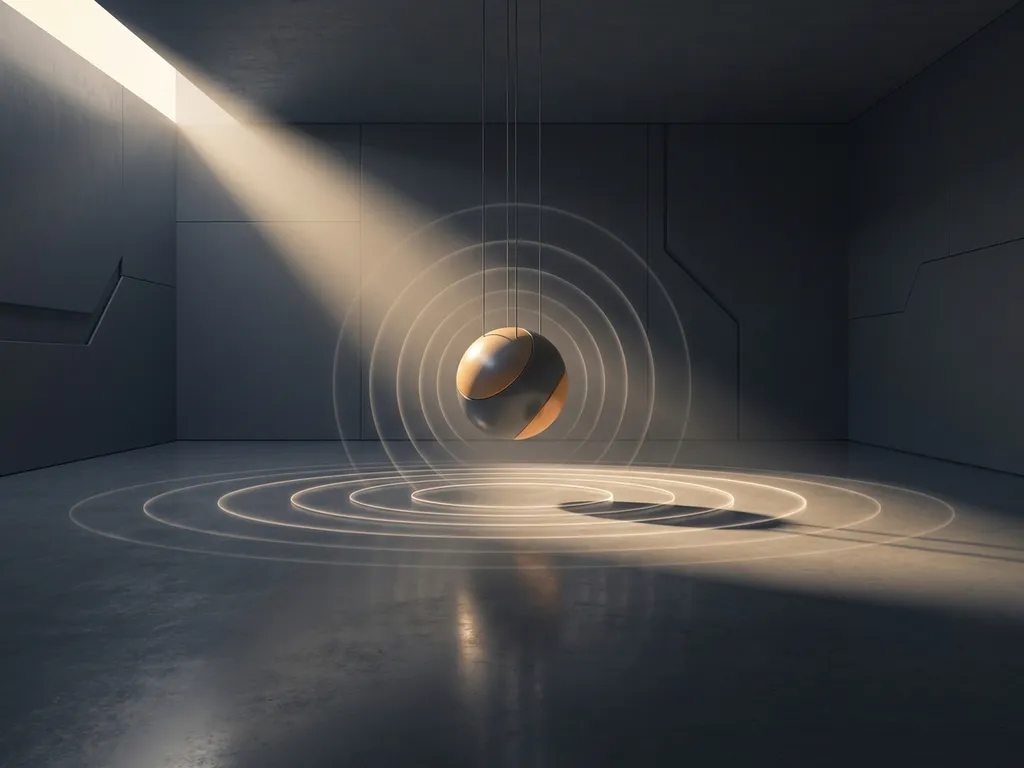
Sound is one of the most powerful forces shaping whether an immersive experience feels real or artificial. It works on the nervous system before the conscious mind catches up, triggering emotional responses, orienting attention, and convincing the brain that a constructed environment is genuine. In immersive experience design, audio is not a supporting layer added on top of visuals; it is a primary architect of presence. The sections below unpack exactly how sound operates across every dimension of immersive design, from spatial audio mechanics to the consequences of getting it wrong.
How does sound physically shape the sense of presence in immersive environments?
Sound shapes presence in immersive environments by triggering the brain’s spatial processing systems, convincing the nervous system that a virtual or constructed space is physically real. When audio cues align with what the eyes see and the body feels, the brain resolves the incoming information as a coherent environment rather than a simulation, and that resolution is what we experience as presence.
The human auditory system evolved to extract enormous amounts of environmental data from sound alone. The direction a sound arrives from, the way it reflects off surfaces, the subtle delays between when it reaches each ear: all of these cues tell the brain where it is in space. In an immersive environment, when those cues are accurate and consistent, the brain accepts the environment as real even when it knows intellectually that it is not.
This is why a technically impressive visual display can still feel hollow if the audio is flat or mismatched. The brain does not simply average the sensory inputs it receives; it uses audio to anchor and confirm spatial judgments made visually. Remove that confirmation, and presence collapses. Provide it convincingly, and even modest visuals can feel genuinely inhabitable.
In practice, this means immersive experience designers treat audio as a structural element. The acoustic signature of a space, whether it sounds like a stone cathedral, a forest clearing, or a cramped industrial corridor, is as important to the sense of place as anything rendered on screen or projected on a wall.
What is spatial audio and how does it work in VR and AR?
Spatial audio is a sound reproduction technique that positions audio sources in three-dimensional space around the listener, rather than delivering sound from fixed left and right channels. In VR and AR, it works by calculating how a sound would physically reach each ear based on the listener’s head position and orientation, then delivering those calculations in real time as the listener moves.
The core technology behind spatial audio is called Head-Related Transfer Function, or HRTF. Every person’s ears, head shape, and torso create a unique acoustic fingerprint; sounds arriving from different directions are filtered, delayed, and reflected in subtly different ways before they reach the eardrums. HRTF models approximate these filters mathematically, allowing a standard pair of headphones to simulate sound arriving from any point in three-dimensional space.
In VR headsets, spatial audio is tracked dynamically. As the user turns their head, the audio engine recalculates the position of every sound source in real time, so a sound that was in front of you remains in front of you even as you turn to face a different direction. This head-tracking is essential; without it, audio sources would rotate with the user’s head rather than staying fixed in the virtual world, which immediately breaks the sense of presence.
In AR applications, spatial audio works similarly but must also account for the real acoustic environment the user is standing in. Advanced AR audio systems blend virtual sounds with the real-world soundscape, ensuring that a virtual character speaking in a room sounds as though it is actually standing in that room rather than playing through a speaker attached to your face.
What types of sound are used in immersive experience design?
Immersive experience design uses four main categories of sound: ambience and environmental audio, diegetic sound effects, non-diegetic score and music, and interactive or reactive audio that responds to participant behaviour. Each category serves a distinct function, and the most effective immersive experiences layer all four with precision.
- Ambience and environmental audio establishes the acoustic identity of a space. The hum of a city, the creak of a ship, the distant sound of wind through trees: these continuous backgrounds signal where the participant is and keep the environment feeling alive between active moments.
- Diegetic sound effects are sounds that exist within the world of the experience: footsteps, doors opening, objects being handled, characters speaking. They ground actions in physical reality and provide feedback that makes interaction feel consequential.
- Non-diegetic score and music operates outside the world of the experience, shaping emotional tone without pretending to come from within the scene. A swelling score during a moment of revelation or a tense, low-frequency drone during a difficult scene guides emotional response without the participant necessarily noticing the manipulation.
- Reactive audio responds in real time to what participants do: volume changes as they approach a sound source, music shifts when they make a particular choice, ambient layers evolve based on how long they spend in a zone. This category is what separates immersive experiences from passive media: the environment listens back.
In multisensory installations, a fifth category becomes relevant: sonic texture used alongside physical sensation. Low-frequency sound can be felt as vibration in the chest and floor, reinforcing tactile and spatial elements in ways that conventional speakers cannot achieve. This is particularly powerful in 4D cinema environments and large-scale dome installations where the physical body becomes part of the audio experience.
How does sound influence emotion and behaviour in immersive settings?
Sound influences emotion and behaviour in immersive settings by bypassing rational processing and acting directly on the limbic system, the part of the brain responsible for emotional response, memory formation, and threat detection. This means audio can generate fear, calm, awe, or urgency faster than any visual element, and those responses shape how participants move through and engage with an experience.
The emotional power of audio is well documented in film and theatre, but in immersive environments it operates with even greater force because the participant is inside the soundscape rather than observing it from a distance. A threatening sound arriving from behind you in a VR environment triggers a genuine startle response. A warm, resonant voice guiding you through an educational simulation builds trust in ways that on-screen text cannot replicate.
Behaviour is equally susceptible to audio design. Research in environmental psychology consistently shows that sound tempo influences movement speed: faster rhythms accelerate pace while slower, more ambient audio encourages lingering and deeper engagement. In museum and exhibition settings, this is a practical tool: audio design can guide visitor flow, draw attention to specific artefacts, and signal transitions between thematic zones without a single piece of signage.
For NGOs and educational organisations using immersive experiences to drive behaviour change, audio is often the element that converts intellectual understanding into emotional commitment. Hearing a real person’s voice describing their experience, or being surrounded by the sounds of a crisis environment, creates an empathic response that data and statistics alone rarely achieve. This is central to how we approach purpose-driven immersive work: sound is the thread that connects information to feeling, and feeling to action.
What’s the difference between sound design for VR and traditional film audio?
The fundamental difference between VR sound design and traditional film audio is agency. In film, the director controls exactly where the audience looks and what they hear at every moment; audio is mixed for a fixed perspective. In VR, the participant can look and move in any direction at any time, so audio must be designed to function correctly from every possible position and orientation simultaneously.
This shift has profound implications for how sound is structured. Film audio is a linear mix delivered to a fixed point. VR audio is a dynamic, three-dimensional simulation that recalculates constantly based on the participant’s position and head orientation. Every sound source must have a location in three-dimensional space, and the audio engine must manage dozens or hundreds of those sources in real time without degrading performance or creating conflicts.
Narrative guidance presents another key difference. In film, audio cues the audience toward what the director wants them to notice: a sound off screen draws the eye in the intended direction. In VR, this tool still exists, but it must be used more carefully. If a participant is looking the wrong way when a critical narrative moment occurs, the sound design must either draw them back without feeling manipulative, or the experience must be designed to function regardless of where they are looking.
Mixing philosophy also differs significantly. Film audio is mixed for a specific playback environment: a cinema with calibrated speakers, a specific room size and acoustic treatment. VR audio must work across headphones, consumer speaker setups, and location-based installations with very different acoustic properties. Designers must build in flexibility and test across multiple playback contexts in a way that film sound editors rarely need to consider.
How does poor audio design break immersion?
Poor audio design breaks immersion by creating sensory conflicts that the brain cannot resolve: moments where what is heard contradicts what is seen, felt, or expected. The most common failures are audio that does not move with the visual environment, sound effects that do not match the acoustic properties of the virtual space, and silence where ambient sound should exist.
The brain is extraordinarily sensitive to audio-visual mismatch. When a sound appears to come from a fixed point in space while the visual source is moving, or when a footstep sounds like it was recorded in a carpeted studio while the virtual floor is clearly stone, the perceptual system flags the inconsistency immediately. This flagging does not always reach conscious awareness, but it consistently degrades the sense of presence; participants describe feeling that something is “off” without being able to articulate why.
Silence is equally damaging. Real environments are never truly silent; there is always some ambient acoustic texture, however subtle. When an immersive environment goes acoustically dead, it signals to the brain that the space is artificial. This is a surprisingly common mistake in early-stage VR productions where audio budgets are cut late in development, leaving environments that look rich but sound like an empty recording booth.
Latency is a third major failure mode. In tracked VR environments, audio must update in synchronisation with head movement. If there is a perceptible delay between a head turn and the corresponding shift in audio positioning, the brain experiences this as a disconnect between the body and the environment, a form of sensory conflict that can cause discomfort and rapidly erodes the feeling of being present in the virtual world.
Should immersive experiences include smell and touch alongside sound?
Yes, immersive experiences benefit significantly from incorporating smell and touch alongside sound, because multisensory engagement activates more of the brain’s memory and emotional processing systems simultaneously. When multiple senses confirm the same environment, the brain’s acceptance of that environment as real deepens considerably, and the memories formed during the experience become more durable and emotionally resonant.
Smell is particularly powerful because the olfactory system has a direct neural pathway to the hippocampus and amygdala, the brain structures most closely associated with memory and emotional response. A scent that matches the visual and audio environment of an experience does not just add detail; it triggers a qualitatively different kind of engagement. Participants who experience a forest environment with matching forest scents consistently report higher levels of presence and stronger emotional recall than those who experience the same environment without scent.
Touch, including vibration, temperature, air movement, and surface texture, adds a layer of physical confirmation that no amount of audio or visual fidelity can fully replace. Feeling the vibration of a passing vehicle through the floor, or a breath of warm air when entering a virtual desert, tells the body it is somewhere real in a way that engages proprioceptive and somatic systems that purely audiovisual experiences leave dormant.
That said, the value of adding these senses depends entirely on the purpose and context of the experience. For a brand activation designed to create a memorable emotional moment, the investment in scent and haptic design is often justified by the depth of engagement it produces. For a training simulation focused on procedural learning, the same investment might be better directed toward interactive audio and visual fidelity. The question is always whether the additional sensory layers serve the experience’s core purpose or simply add complexity for its own sake.
At Rooftop Immersive, we design with all the senses in mind from the very first concept stage, because we know that the experiences people carry with them longest are the ones that reached them through more than a screen. If you are thinking about what a fully immersive, multisensory experience could do for your audience, we would love to explore that with you. Contact us to start the conversation.
Gerelateerde artikelen
- What is XR vs VR vs AR?
- What part of the brain is responsible for sensory memory?
- How much does augmented reality cost?
- How do immersive experiences work?
- What is an immersive experience?
- What makes something an immersive experience?
- Can ChatGPT do 3D modeling?
- How do you create educational immersive content?
- What content works best for dome installations?