
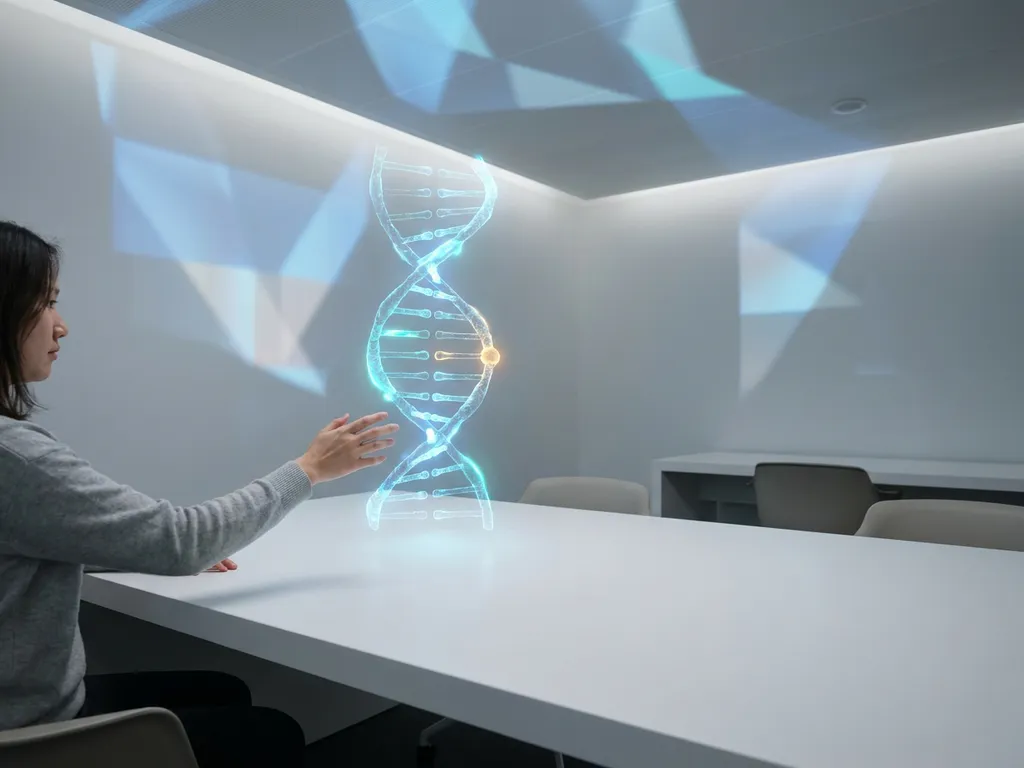
Integrating immersive technologies with STEM education delivers measurable benefits: students retain information more effectively, engage more deeply with abstract concepts, and develop practical problem-solving skills that traditional classroom methods struggle to cultivate. When learners can step inside a chemical reaction, manipulate a virtual ecosystem, or explore the geometry of a structure in three dimensions, understanding shifts from passive reception to active discovery. The questions below unpack exactly how this works, which subjects benefit most, and what institutions should consider before making the leap.
How do immersive technologies change the way students learn STEM?
Immersive technologies change STEM learning by transforming abstract, text-based concepts into spatial, interactive experiences that students can explore with their hands, eyes, and full attention. Instead of reading about molecular bonding or watching a teacher demonstrate Newton’s laws, learners inhabit the concept itself, manipulating variables and observing consequences in real time.
The fundamental shift is from passive reception to active participation. Traditional STEM instruction relies heavily on symbolic representation: equations, diagrams, and written descriptions that require students to mentally translate symbols into meaning. Many learners, particularly those who are visual or kinaesthetic thinkers, struggle with this translation. Immersive environments remove that barrier entirely by making the concept the environment.
This matters because the brain encodes experiential memory differently from declarative memory. When a student physically navigates the structure of the solar system in a virtual environment, the spatial and sensory cues attached to that experience create stronger, more durable memory traces than reading the same information in a textbook. The experience becomes the knowledge, not just a vehicle for delivering it.
There is also a motivational dimension. STEM subjects carry a reputation for being difficult, abstract, and disconnected from everyday life. Immersive learning directly challenges that perception by making STEM feel relevant, exploratory, and even playful. When curiosity replaces anxiety, students are more willing to attempt difficult problems, make mistakes, and try again.
What specific STEM subjects benefit most from immersive learning?
The STEM subjects that benefit most from immersive learning are those where spatial reasoning, scale, or invisible processes make traditional instruction particularly limiting. Chemistry, biology, physics, mathematics, and engineering consistently show the strongest gains when immersive tools are applied because these disciplines deal with phenomena that are either too small, too large, too fast, or too abstract to observe directly.
Science and biology
In biology, students can explore cellular structures, observe genetic processes, or walk through the human circulatory system at a scale that makes the invisible visible. Anatomy, which has historically required physical dissection or two-dimensional diagrams, becomes a fully three-dimensional, interactive experience. Students can isolate individual organs, examine them from every angle, and understand their spatial relationships within the body in a way no textbook illustration can replicate.
Chemistry and physics
Chemistry and physics benefit enormously because both disciplines involve processes that are either dangerous to replicate physically or impossible to observe at the human scale. In a virtual chemistry lab, students can conduct experiments with hazardous compounds without safety risks, repeat procedures as many times as needed, and observe molecular interactions that would otherwise require expensive equipment. Physics simulations allow learners to manipulate gravity, friction, and velocity in real time, building intuitive understanding of forces that normally require significant mathematical abstraction.
Mathematics and engineering
Mathematics, particularly geometry and spatial reasoning, becomes dramatically more accessible when students can build, rotate, and deconstruct three-dimensional shapes in a virtual space. Engineering design benefits from digital twin technology and simulation environments where students can test structural concepts, identify failure points, and iterate without physical materials or cost constraints.
How does VR improve student engagement and motivation in STEM?
Virtual reality improves student engagement and motivation in STEM by creating a state of presence, the feeling of genuinely being somewhere, that captures attention in a way screens and textbooks cannot. When a student feels they are standing on the surface of Mars or inside a functioning power plant, their brain responds as though the experience is real, triggering curiosity, emotional investment, and sustained focus.
Engagement in education is not simply about keeping students entertained. It is about reducing the cognitive and emotional resistance that prevents learning from taking hold. Many students approach STEM with pre-existing beliefs that they are not “science people” or that mathematics is beyond their reach. A well-designed VR experience can disrupt that self-narrative by placing learners in a context where they are capable, exploratory, and successful.
Motivation also benefits from the agency that interactive VR provides. When students can make meaningful choices within a simulation, such as selecting variables in an experiment or deciding how to solve an engineering challenge, they develop a sense of ownership over their learning. That ownership translates into persistence. Students who feel in control of a learning experience are more likely to push through difficulty rather than disengage.
The social dimension of VR is equally important. Shared virtual reality experiences, where small groups of students explore the same environment simultaneously, create collaborative learning opportunities that build communication skills alongside scientific understanding. The experience becomes a shared reference point that students can discuss, debate, and build on together.
What’s the difference between using AR and VR in STEM classrooms?
The key difference between AR and VR in STEM classrooms is that augmented reality overlays digital content onto the real world while virtual reality replaces the real world entirely. AR keeps students in their physical classroom environment and adds interactive digital layers, such as a 3D model of a DNA strand appearing on a desk. VR transports students into a fully simulated environment where the physical classroom disappears.
This distinction has practical implications for how each technology is deployed and what it does best. AR is generally more accessible and easier to integrate into existing classroom routines. It requires less specialist hardware, can often run on smartphones or tablets, and allows teachers to maintain normal classroom management while students interact with digital content. AR works particularly well for visualising objects at different scales, annotating physical specimens, or bringing static diagrams to life.
VR, by contrast, demands more from both infrastructure and instructional design. Students wearing headsets are fully immersed and temporarily disconnected from the classroom environment, which requires careful facilitation. However, this full immersion is also VR’s greatest educational strength. For experiences that require genuine presence, such as exploring a historical scientific site, conducting a dangerous experiment safely, or developing deep empathy for a real-world environmental challenge, VR delivers something AR fundamentally cannot.
The most effective STEM programmes do not treat AR and VR as competing tools but as complementary ones. AR supports conceptual exploration during regular lessons, while VR provides transformative, high-impact experiences at key moments in a learning journey. Together, they cover a broad spectrum of learning needs without either technology being overextended.
Can immersive STEM experiences improve learning outcomes and retention?
Yes, immersive STEM experiences can meaningfully improve learning outcomes and retention, particularly for complex concepts that rely on spatial understanding, procedural knowledge, or emotional engagement. The multisensory nature of immersive learning creates richer memory encoding, which means students are more likely to recall information accurately and apply it in new contexts.
The mechanism behind this improvement is well understood in cognitive science. Memory consolidation is strengthened when learning involves multiple sensory channels simultaneously. When a student sees, hears, and physically interacts with a concept, the brain creates multiple retrieval pathways to the same piece of knowledge. This redundancy makes forgetting harder and recall easier, particularly under the pressure of assessment.
Procedural knowledge, the kind of knowledge that governs how to do something rather than just what something is, benefits especially from immersive simulation. A student who has virtually performed a laboratory procedure multiple times will approach the real version with greater confidence and fewer errors. The simulation builds both cognitive understanding and physical muscle memory, which traditional instruction cannot replicate.
Retention over time is also influenced by emotional engagement. Experiences that carry emotional weight are remembered more vividly and for longer. An immersive experience that connects a scientific concept to a real-world consequence, such as exploring the effects of ocean acidification on a coral reef ecosystem, creates an emotional anchor that keeps the learning alive long after the headset comes off.
How does AI personalisation enhance immersive STEM learning?
AI personalisation enhances immersive STEM learning by adapting the pace, difficulty, language, and content of an experience to match each individual student’s needs in real time. Rather than delivering the same experience to every learner regardless of prior knowledge or learning style, an AI-driven system observes how a student interacts and adjusts the environment accordingly.
In practice, this means a student who grasps a concept quickly can be challenged with more complex scenarios immediately, while a student who is struggling receives additional scaffolding, alternative explanations, or a slower progression through the material. Neither student is held back or left behind by a one-size-fits-all curriculum pace.
Language personalisation is particularly valuable in diverse classrooms. An AI-powered immersive experience can deliver the same scientific content in multiple languages, adjusting vocabulary complexity based on a student’s reading level, or switching between more intuitive and more technical explanations depending on demonstrated comprehension. This makes high-quality STEM education more equitable across different linguistic and educational backgrounds.
We design our immersive education experiences with AI personalisation built in from the outset because we believe that truly effective learning cannot be generic. Every student arrives with different prior knowledge, different anxieties, and different strengths. An experience that adapts to those differences does not just improve outcomes for individual learners; it transforms the scalability of immersive education as a whole.
What should educational institutions consider before implementing immersive STEM technology?
Before implementing immersive STEM technology, educational institutions should consider four core areas: pedagogical alignment, infrastructure readiness, staff capability, and long-term sustainability. Technology that is not grounded in clear learning objectives, no matter how impressive, will not deliver lasting educational value.
Pedagogical alignment and learning objectives
The starting point must always be the learning outcome, not the technology. Institutions should identify the specific STEM concepts or skills that immersive experiences will address and ensure that the chosen technology genuinely serves those objectives better than existing methods. Immersive tools are most effective when they solve a real instructional problem, such as making an invisible process visible or enabling a dangerous experiment to be conducted safely, rather than when they are adopted for novelty alone.
Infrastructure and staff readiness
Hardware requirements, network capacity, device management, and physical space all need assessment before deployment. VR headsets require sufficient room for safe use, reliable wireless connectivity, and a charging and storage solution. AR applications need compatible devices and consistent lighting conditions. Equally important is teacher training. Even the most sophisticated immersive experience will underperform if educators do not feel confident facilitating it. Professional development should be built into the implementation plan from the beginning, not added as an afterthought.
Cost factors and sustainability
The investment in immersive STEM technology involves multiple layers: hardware, software licensing, content development, maintenance, and ongoing updates. Institutions should evaluate not just the initial outlay but the total cost of ownership over a realistic programme lifespan. Content that cannot be updated as curricula evolve will quickly become outdated. Partnering with a provider who offers ongoing support and content development, rather than a one-time delivery, significantly affects the long-term value of the investment.
Equity and access deserve careful attention as well. If immersive technology is only available to certain classes, year groups, or schools within a system, it risks widening rather than narrowing educational inequality. A thoughtful implementation plan considers how access will be distributed fairly and how the programme will be evaluated against measurable learning outcomes over time.
Immersive STEM education is not a distant future; it is a present and growing reality that institutions across Europe are already embracing in 2026. If you are exploring how to bring these experiences to your students or organisation, we would love to help you design something that genuinely transforms how your learners engage with science, technology, engineering, and mathematics. Contact us to start the conversation.
Gerelateerde artikelen
- How to make museums more interactive?
- What are the 5 C's of experiential marketing?
- What is the strongest trigger to memory?
- What are the pros and cons of experiential marketing?
- What is an immersive brand experience?
- What is an immersive experience?
- How do I measure the success of an AR marketing campaign?
- What makes a successful branded immersive experience?
- How much do immersive installations cost?