
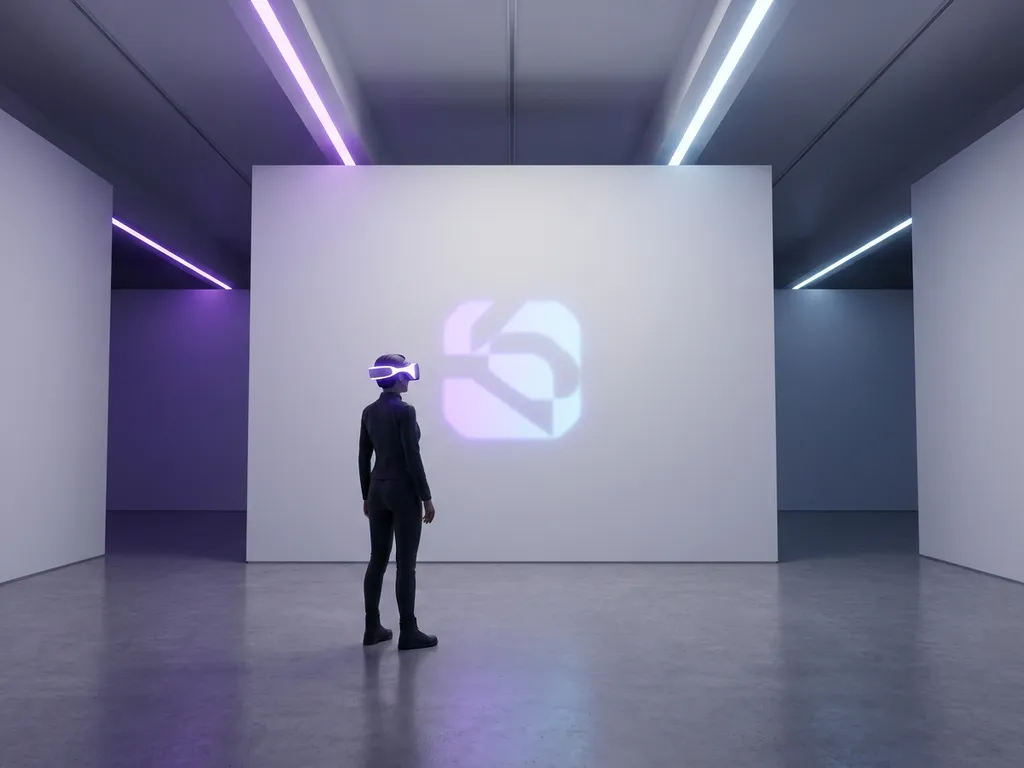
XR technology enhances brand experiences by transforming passive audiences into active participants. Extended reality, which spans augmented reality, virtual reality, and mixed reality, gives brands the power to place people inside their story rather than simply showing it to them. The result is deeper emotional engagement, stronger memory retention, and measurable audience action that traditional media cannot reliably produce. The questions below unpack exactly how XR achieves this and what it means for brands considering the leap.
What types of XR technology are used in brand experiences?
The main types of XR technology used in brand experiences are augmented reality (AR), virtual reality (VR), mixed reality (MR), and spatial computing platforms. Each operates differently, but all share the same core purpose: merging digital content with human perception to create an experience that feels real, responsive, and memorable.
Augmented reality overlays digital elements onto the physical world through a smartphone or headset. In brand contexts, this means product visualisations that appear in a customer’s living room, animated posters that come alive at events, or geospatial activations that trigger content at exact outdoor locations without a QR code in sight.
Virtual reality places the audience inside a fully constructed digital environment. Brands use cinematic 360-degree films and fully interactive VR experiences to put people at the heart of a product story, a social cause, or an entirely new world built around their identity.
Mixed reality, particularly on platforms like Apple Vision Pro, goes further still. Virtual objects interact with the physical environment in real time, meaning a brand’s digital content responds to the room a person is standing in. This creates a level of presence that neither AR nor VR alone can deliver.
Beyond these three pillars, brands are increasingly deploying AI-driven avatars that hold real-time conversations with visitors, volumetrically captured hologram twins of real people, anamorphic 3D animations on large-format outdoor screens, and interactive 360-degree dome projections that can immerse hundreds of visitors simultaneously.
How does XR create emotional connections with audiences?
XR creates emotional connections by engaging multiple senses simultaneously and placing people inside an experience rather than in front of it. When sight, sound, spatial awareness, and sometimes touch or smell are activated together, the brain processes the encounter more like a real memory than a piece of content, which dramatically increases emotional impact and recall.
Traditional advertising communicates at an audience. XR communicates with one. The shift from observer to participant is psychologically significant. When someone makes a choice inside a virtual environment, navigates a physical space enhanced by AR, or interacts with an AI character that responds to them personally, they form a genuine relationship with the brand behind the experience.
Empathy is one of the most powerful outcomes XR enables. By placing a person inside another perspective, whether that is the life of a product’s end user, the environment a brand is committed to protecting, or the story of someone affected by a cause the brand supports, XR builds understanding that no video or banner advertisement can replicate. This is why organisations working on social impact, from NGOs to public institutions, are turning to immersive formats with increasing urgency.
Multisensory design amplifies this effect. Adding scent, temperature, directional audio, and physical texture to a spatial experience does not merely add novelty. It deepens the neurological encoding of the moment. People remember what they felt, not just what they saw.
What measurable results can brands expect from XR activations?
Brands can expect measurable improvements in dwell time, content engagement, social sharing, and conversion intent from XR activations. Because immersive experiences are inherently interactive, they generate richer behavioural data than passive media, giving marketers a clearer picture of what captured attention and what drove action.
Dwell time is one of the most consistent gains. When an experience is genuinely engaging, people stay longer. At events and retail environments, extended dwell time correlates directly with stronger brand impression and higher likelihood of purchase consideration.
Social amplification is another reliable outcome. Immersive activations are inherently shareable because they are visually striking, novel, and personal. When someone photographs themselves inside an AR portal or shares a clip from a holographic brand activation, they become an organic advocate, extending the campaign’s reach far beyond the physical footprint.
Conversion intent and behaviour change are harder to isolate but increasingly well documented across educational and NGO applications. When people experience a brand’s values through a first-person immersive lens rather than a corporate message, the resulting attitude shift tends to be deeper and more durable. For brands with a purpose-driven identity, this translates directly into loyalty and advocacy.
The data layer itself is an asset. Interactive XR experiences can capture which moments held attention, where users paused, what choices they made, and how long each interaction lasted. This level of insight is simply not available from a display advertisement or a video view.
How does AR differ from VR for experiential marketing campaigns?
AR enhances the real world by layering digital content onto it, while VR replaces the real world entirely with a digital environment. For experiential marketing, this distinction determines where, how, and for whom each technology is most effective.
AR for experiential marketing
AR is frictionless by comparison. Most AR experiences run on a smartphone the audience already owns, requiring no headset, no queue, and no separate venue. This makes AR ideal for high-volume activations at events, outdoor campaigns, product launches, and retail environments where accessibility and scale matter. A geospatial AR campaign can reach thousands of people across multiple cities simultaneously. An AR-enabled poster or product packaging turns a passive touchpoint into an interactive one with no additional hardware required.
VR for experiential marketing
VR delivers a deeper, more controlled experience at the cost of accessibility. Because it requires a headset and typically a dedicated physical space, VR suits premium activations where depth of engagement matters more than volume. A VR cinema experience at a flagship event, a location-based installation at a trade show, or a synchronised group VR session for up to two hundred people creates an intensity of immersion that AR cannot match. VR is the right choice when the brand story demands total attention and the audience has opted in to a dedicated experience.
The most effective experiential campaigns often combine both. AR handles the wide-reach, low-barrier layer of the activation, while VR anchors a premium centrepiece that generates the most powerful impressions and the most shareable moments.
What industries are using XR for brand experiences right now?
In 2026, XR for brand experiences is being actively deployed across retail, automotive, fashion, FMCG, cultural institutions, education, NGOs, and live entertainment. The technology has moved well beyond early-adopter novelty and is now a mainstream tool for any sector that competes on audience engagement.
Automotive brands use volumetric product twins and interactive VR showrooms to let customers experience vehicles before they exist in physical form. Fashion and beauty brands use AR try-on and immersive brand films to bridge online and physical retail. FMCG companies deploy AR packaging and interactive screens to turn everyday products into brand storytelling platforms.
Museums and cultural institutions are among the fastest-growing adopters. Faced with the challenge of attracting younger and more diverse audiences, curators are using AR layers on physical artworks, VR journeys into historical periods, and interactive 360-degree dome projections to make heritage feel alive and relevant.
Education and NGO sectors are investing heavily in immersive formats because the evidence for their effectiveness in driving understanding and behaviour change is compelling. Training simulations, empathy-building VR experiences, and interactive awareness campaigns are replacing static presentations and printed materials in programmes that need to create genuine impact at scale.
How long does it take to produce an XR brand experience?
Production timelines for XR brand experiences typically range from six weeks for a focused AR activation to six months or more for a fully interactive VR production or large-scale immersive installation. The actual duration depends on the complexity of the concept, the volume of custom content required, and the degree of interactivity and personalisation involved.
A straightforward AR experience built around image tracking or a product visualisation can move from brief to launch relatively quickly, particularly when 3D assets already exist. The process involves concept development, asset creation, technical build, testing across devices, and deployment.
A fully interactive VR experience, a synchronised multi-headset event installation, or an AI-driven avatar system requires significantly more time. Each adds layers of narrative design, real-time rendering, hardware integration, and quality assurance that cannot be compressed without compromising the result.
Several factors consistently influence production time beyond technical complexity. The clarity of the brief at the outset, the speed of stakeholder feedback and approval cycles, the availability of brand assets and source materials, and whether the experience needs to be localised for multiple languages or adapted for different venues all shape the timeline. Working with a studio that manages concept, content, and technical delivery under one roof removes the coordination overhead that fragments timelines when multiple suppliers are involved.
Should brands invest in XR technology or partner with a specialist studio?
Most brands should partner with a specialist studio rather than build XR capabilities in-house. Developing the technical infrastructure, creative expertise, and production workflows required to deliver high-quality immersive experiences is a significant long-term investment that only makes sense for organisations whose core business is XR itself.
For brand teams and marketing departments, the value of a specialist partner lies in speed, depth, and accountability. A studio that has already solved the technical challenges of real-time rendering, multi-device AR deployment, spatial audio design, and AI-driven personalisation can deliver in weeks what an in-house team would spend months learning to attempt.
There is also a creative dimension that pure technology investment cannot buy. The most effective immersive brand experiences are not primarily technology projects. They are storytelling projects that happen to use technology as their medium. The craft of spatial narrative design, sensory layering, and audience journey mapping requires accumulated creative experience that cannot be replicated by purchasing a software licence.
That said, brands benefit from developing internal literacy around XR even when they partner externally. Understanding what the technology can and cannot do, how to brief a studio effectively, and how to measure outcomes enables a far more productive collaboration and ensures the brand’s strategic intent is genuinely reflected in the final experience.
We work closely with brand teams, marketing directors, and creative agencies from the first spark of an idea through to delivery and beyond, combining technical capability with the kind of purposeful storytelling that makes immersive experiences genuinely memorable. If you are exploring what XR could do for your next campaign or activation, we would love to hear about it. Contact us to start the conversation.
Gerelateerde artikelen
- Which questions should you ask an immersive agency?
- How can a show improve the overall visitor experience?
- How do you design an immersive installation for public spaces?
- What is an example of experiential marketing?
- What are the challenges of creating immersive experiences?
- How much does it cost to create a VR experience?
- How to create an immersive event?
- What is the difference between WebAR and app-based AR for marketing?
- How do you align immersive experiences with brand identity?