
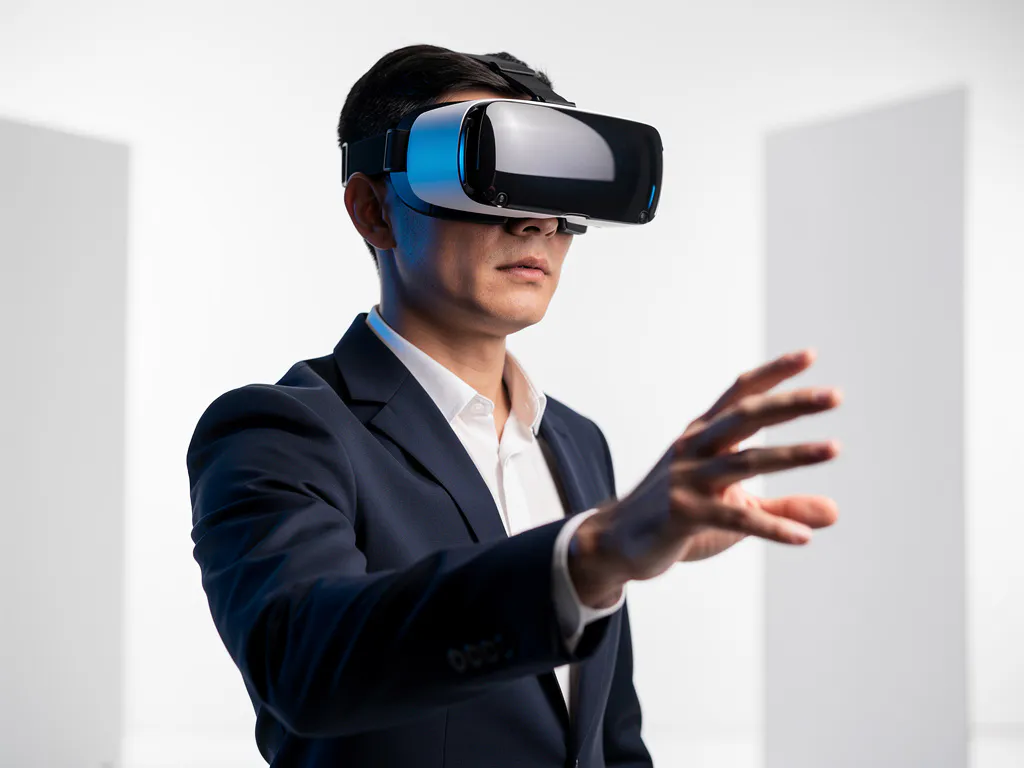
Virtual reality is no longer a technology reserved for gaming studios or science fiction. Across Europe and beyond, forward-thinking organisations are using business VR experiences to transform the way they train employees, engage customers, and communicate complex ideas. Whether you are a brand manager looking to create unforgettable activations or an educational institution searching for more effective ways to reach learners, immersive VR offers something that screens and slides simply cannot: the feeling of truly being there.
This article answers the most common questions about zakelijke VR ervaringen — from what they actually are and why companies invest in them, to how they are built, what hardware they require, and how you measure their impact. If you are exploring virtual reality for business for the first time, or looking to deepen your understanding before commissioning a project, you will find clear, practical answers here.
What are business VR experiences? aaa
Business VR experiences are purpose-built virtual reality applications designed to serve a specific organisational goal — such as training, brand engagement, education, or public awareness. Unlike consumer VR entertainment, corporate VR is structured around measurable outcomes: knowledge retention, behavioural change, emotional connection, or decision-making practice. They can be passive (cinematic, 360-degree storytelling) or fully interactive, and are typically deployed at scale across teams, events, or institutions.
At their core, these experiences place a person inside a digitally constructed environment where they can look around, interact with objects, make decisions, and respond to scenarios in real time. This sense of presence is what separates VR from any other medium. A training video tells you what to do. A VR training experience makes you do it, feel the consequences, and learn through action rather than instruction.
Business VR experiences span a wide range of formats. Some are designed for a single user wearing a headset in a quiet room. Others are built for groups of up to 200 people using synchronised headsets in a live event setting. The common thread is intentionality: every element of the virtual environment, from the narrative arc to the spatial audio, is designed to serve the organisation’s specific communication or learning objective.
Why are companies investing in VR experiences?
Companies are investing in immersive VR because traditional communication formats are losing their effectiveness. In an environment saturated with screens, notifications, and competing messages, a virtual reality experience cuts through by demanding full sensory attention. VR removes distractions entirely and places the participant inside the story, making it far more likely that the message will be remembered and acted upon.
There is also a practical dimension to this investment. For training purposes, VR allows organisations to simulate high-stakes, dangerous, or expensive real-world scenarios without any of the associated risk or cost. A logistics company can train employees to handle emergency procedures. A healthcare provider can rehearse complex patient interactions. A financial services firm can run compliance simulations. These scenarios are difficult or impossible to replicate safely in a traditional classroom setting.
Beyond training, brands are discovering that corporate VR creates a level of emotional engagement that conventional marketing cannot replicate. When a potential customer steps inside a virtual product experience or brand world, they form a personal, embodied memory of that brand. That kind of emotional imprint drives loyalty and advocacy in ways that a brochure or a banner ad simply cannot achieve.
What types of business VR experiences exist?
Business VR experiences fall into several distinct categories, each suited to different organisational goals. The main types include passive cinematic VR, interactive VR, location-based VR, and simulation-based training VR. Each type differs in the level of user agency, the technology required, and the kind of impact it is designed to create.
Passive and cinematic VR
Passive VR experiences use 360-degree video or rendered environments to tell a story without requiring the user to make decisions. These are ideal for brand storytelling, awareness campaigns, and emotional narratives where the goal is to shift perspective or build empathy. NGOs and public sector organisations frequently use this format to transport audiences into situations they would never otherwise encounter.
Interactive and simulation-based VR
Interactive VR places the user in a scenario where their choices shape the outcome. This format is the backbone of most VR training applications. Participants can practise conversations, navigate emergencies, operate equipment, or work through ethical dilemmas in a fully safe and repeatable environment. The interactivity is what drives deeper learning and behavioural change.
Location-based and group VR
Location-based VR experiences are designed for shared, physical spaces such as events, museums, or exhibitions. Multiple participants can share the same virtual environment simultaneously, making this format powerful for team-building, live brand activations, and large-scale educational programmes. We design and deploy experiences of this kind for groups ranging from small teams to audiences of hundreds.
How does VR training differ from traditional training?
VR training differs from traditional training in one fundamental way: it creates experiential learning rather than instructional learning. Instead of being told about a situation, participants are placed inside it. They make decisions, experience consequences, and build procedural memory through action. This activates a deeper level of cognitive and emotional engagement than reading, watching, or listening ever can.
Traditional training formats — lectures, e-learning modules, printed manuals — rely on the learner’s ability to imagine how they would behave in a given situation. VR removes that gap entirely. When a participant has already navigated a difficult customer interaction or responded to a safety incident in VR, their brain has formed a memory of doing it. That memory influences real-world behaviour in a way that theoretical knowledge does not.
There are also practical advantages in terms of consistency and scalability. Every participant in a VR training programme encounters exactly the same scenario under exactly the same conditions. There is no variation in trainer quality, no scheduling conflicts, and no risk of real-world consequences during practice. For organisations with distributed teams across multiple locations, this consistency is enormously valuable.
Which industries benefit most from business VR?
The industries that benefit most from virtual reality for business are those where experiential learning, emotional engagement, or high-stakes simulation provides a clear advantage over conventional methods. These include healthcare, education, manufacturing, financial services, retail, defence, and the cultural and non-profit sectors.
- Healthcare and life sciences use VR for surgical training, patient communication practice, and mental health therapy.
- Education and EdTech use immersive VR to make abstract or difficult subjects tangible, particularly in science, history, and social studies.
- Manufacturing and logistics use VR to simulate equipment operation, safety protocols, and complex assembly processes.
- Retail and brand marketing use interactive VR experiences to create memorable product launches and customer engagement moments.
- NGOs and government use VR to build public empathy around social issues, making campaigns more persuasive and emotionally resonant.
- Museums and cultural institutions use VR to bring heritage to life and attract younger, digitally native audiences.
The common factor across all these industries is a need to communicate something complex, emotional, or high-stakes in a way that genuinely changes how people think, feel, or act. That is precisely where immersive VR delivers its greatest value.
How does a business VR experience get made?
A business VR experience is made through a structured creative and technical process that moves from discovery and strategy through concept design, content production, development, and finally deployment and evaluation. The process typically begins with a deep understanding of the organisational goal, the target audience, and the context in which the experience will be used.
Discovery and strategy
The first phase involves defining the experience’s purpose with precision. What behaviour or understanding should change as a result? Who is the audience, and what do they already know? What constraints exist around hardware, location, or budget? These questions shape every subsequent decision in the production process.
Concept design and storytelling
Once the strategic brief is clear, creative teams develop the narrative architecture of the experience. This includes the environment design, the interaction model, the character or scenario structure, and the emotional journey the participant will take. For educational or social impact projects, subject matter experts are often brought in at this stage to ensure accuracy and depth.
Production and development
The production phase involves building the virtual environment using game engines such as Unreal Engine or Unity, creating 3D assets, recording voice-overs or capturing volumetric video, and developing the interactive logic that governs how the experience responds to user input. This phase requires close collaboration between creative directors, developers, sound designers, and the commissioning organisation.
Testing, deployment, and support
Before launch, the experience undergoes rigorous user testing to identify technical issues, pacing problems, or moments of confusion. Deployment may involve setting up dedicated hardware at a fixed location, distributing headsets to multiple sites, or integrating the experience into an existing event infrastructure. Ongoing technical support and content updates are often part of the long-term partnership.
What hardware is needed to run business VR experiences?
The hardware needed to run business VR experiences depends on the type of experience, the deployment context, and the number of simultaneous users. Most corporate VR applications run on standalone headsets, PC-tethered headsets, or mobile-based devices, each offering a different balance of visual fidelity, portability, and cost.
Standalone headsets such as the Meta Quest series are the most common choice for business deployments because they require no external computer, are relatively portable, and are straightforward to manage at scale. They are well suited to training simulations, interactive experiences, and location-based group events. For experiences that demand the highest possible visual quality, PC-tethered headsets connected to a powerful workstation deliver superior rendering but require more infrastructure.
For next-generation mixed reality applications that blend virtual content with the physical world in real time, devices such as the Apple Vision Pro represent the frontier of what is possible. These platforms open up new possibilities for product visualisation, spatial computing, and hybrid physical-digital environments. The right hardware choice is always determined by the experience’s goals, not the other way around.
How do you measure the impact of a VR experience?
The impact of a business VR experience is measured through a combination of behavioural data, knowledge assessments, engagement metrics, and qualitative feedback. The right measurement framework depends on the experience’s intended outcome: a training simulation is measured differently from a brand activation or an awareness campaign.
For training and educational applications, the most meaningful metrics are knowledge retention, task performance improvement, and transfer of learning to real-world behaviour. These can be assessed through pre- and post-experience testing, observation of on-the-job performance, and follow-up surveys at intervals after the experience. Interactive VR has a particular advantage here because the experience itself generates data: every decision a participant makes, every moment they hesitate, and every scenario they repeat can be captured and analysed.
For brand and engagement applications, relevant metrics include time spent in the experience, interaction rates, emotional response indicators gathered through post-experience surveys, and downstream behaviours such as purchase intent or advocacy. For social impact campaigns, measures of attitude shift, empathy, and stated intention to act are typically used alongside reach and participation data.
What matters most is defining success criteria before the experience is built, not after. When the goal is clear from the outset, the experience can be designed with measurement embedded from the start, making evaluation far more accurate and meaningful. If you are ready to explore what a purpose-built VR workplace experience could achieve for your organisation, we would love to help you shape that vision. Contact us to start the conversation.